
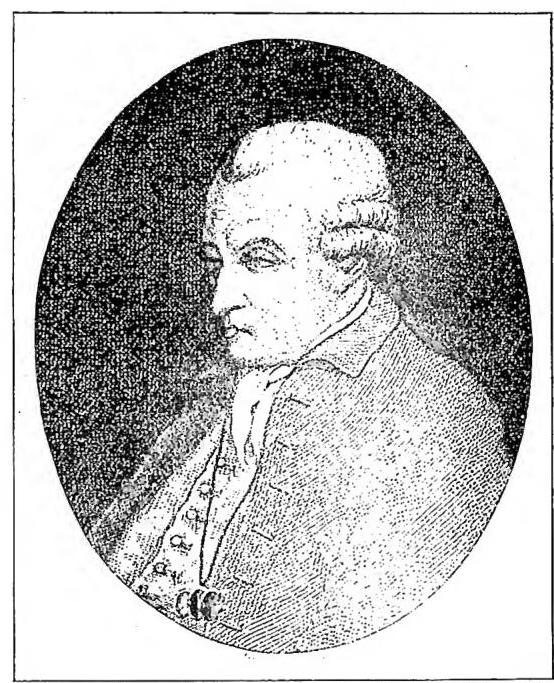
BARETTI, GIUSEPPE. — Polygraph, born in Turin on 25 April 1719, died in London on 5 May 1789. At Guastalla he received from Carlo Cantoni his first literary education and his taste for Bernesque poetry; in Turin he was a pupil of Tagliazucchi. A true literary gypsy, he made more or less lengthy stays in Parma, Mantua, Venice, and Milan, where he was enrolled among the Trasformati. In Venice, in 1747–48, he published an unsuccessful translation of P. Cornelio’s Tragedie; in 1750, in Turin, his finest Piacevoli poesie, and in Milan, in the same year, the Primo cicalamento against the regio professor Giuseppe Bartoli, his first battle against the antiquarians who «wasted their days». The seizure of the copies of this cicalamento that had not yet been distributed was not the least among the causes of the decision he made the following year to leave his homeland for a freer land. There he was, in 1751, in London, where he was appointed to oversee the Italian Theatre, and set about teaching his native language and studying English, French, and Spanish—languages that he mastered so thoroughly that he was able to write in them as in his own. He became a friend of Samuel Johnson; and in the art of rapid, sparkling, aggressive conversation he soon competed with the master. He published in English didactic and polemical works on the Italian language and literature, the most celebrated of which is an English–Italian dictionary still appreciated today (1760). After its publication, he accompanied a young «English madman» on a journey through Portugal, Spain, and France; and finally returned to Italy.
In Milan he began writing an account of his journey in the form of Lettere familiari a' suoi tre fratelli:
and Flanders; and then, once again on his own, visited Spain, completing the Lettere a' fratelli in English (A journey from London to Genoa, through England, Portugal, Spain and France, London 1770). For this book B. is judged the most original and brilliant Italian describer of Spain and revealer of the Spanish soul and poetry. He returned to Italy in ’70; but, when his attempt to remain there permanently failed, he went back to London the following year and never again left England. He continued always to work and publish with tireless energy: mention should be made of his critical masterpiece, the
Discours sur Shakespeare et sur Monsieur de Voltaire (London 1777), a discourse of European importance, in which, in polemic against Voltaire, he extols the excellence of the greatest modern poet; and the Scelta di lettere familiari (London 1779), intended for English students of Italian, all written by him under different names (since he found—though he exaggerated!—no tolerable letters by others), with the exception of the first, which is by Caro.
The man, with all his faults, is highly likeable. Frank, loyal, sincere, strong in adversity, proud in poverty, generous in comfort, at times gruff, but gruff with a good heart; he practised the profession of letters honourably, without bowing his back to princes and patrons; and in an age when ignoble adventurers were dishonouring Italy, he upheld the name of his homeland in England.
Of the two praises customarily bestowed on B.—as a herald of innovative ideas and as a writer who was among the first to contribute to the renewal of our prose—the first is highly debatable, while the second is undeniable. More than a critic, he was a formidable polemicist, a terrible destroyer of the “champions of the inkwell,” an inexorable executioner of the “versiscioltaj,” the “raccoltaj,” the spineless scholars, and the powerless Arcadians. But as a travel writer, a versatile connoisseur of foreign cultures, a defender of Italy, a polemicist worthy of crossing swords with Voltaire, and a mind formed of keen common sense, he holds the foremost place among our prose writers and polymaths of the eighteenth century.
A. Devalle, La critica letteraria nel Settecento: G. B., Milan 1932; G. J. Lopriore, G. B. nella sua «Frusta», Pisa 1940; L. Piccioni, Bibliografia analitica di G. B., Turin 1942, and many other writings by this indefatigable scholar of Baretti; M. Fubini, Dal Muratori al Baretti, Bari 1946. Giulio Natali