
QUARENGHI, GIACOMO. – Architect, born in 1744 at Valle Imagna (Bergamo), died in 1817 at Petersburg. His father and grandfather were painters. He initially studied painting and in Rome was a pupil of Raffaello Mengs. He turned to architecture when he came under the powerful influence of Palladio. He devoted himself to the study of classical antiquities and succeeded in developing his own sober yet powerful style.
In 1771 Q. rebuilt the church of S. Scolastica at Subiaco. In 1779 he went to Russia in the service of Catherine II, becoming her official architect. He never again left that court. He subsequently worked for Paul I and Alexander I. He carried out his activities especially at
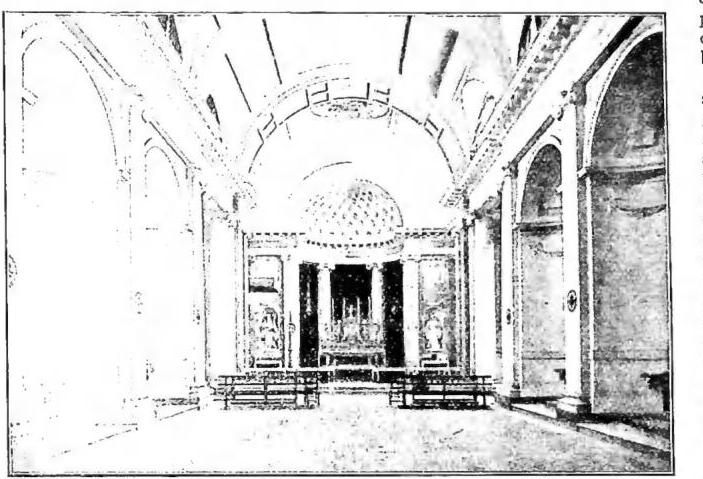
In his constructions, Q. adopted the fundamental principles of Palladian art, both in the solution of the plans and in the clear distribution of balanced masses, in exteriors as well as interiors. An excellent draughtsman and colourist, he left a profound mark on Russian architecture and civilisation, helping to instil in the spirit of Russian architects a taste for noble proportions and for the austere and refined conception of style.