
RASTRELLI, BARTOLOMEO FRANCESCO. – Architect, son of the famous sculptor Carlo R., born in Paris around 1700, died in Petersburg (Leningrad) in 1771.
He followed his father to Russia at the age of fifteen, taking part in many of his father’s works and undertakings. He completed his artistic education during lengthy stays in France and Italy. During the twenty years of the Elizabethan reign, he was, so to speak, the creator and coordinator of all the religious and civil buildings in Russia. A profound connoisseur of the Russian national style, he succeeded in fusing it with Western Baroque, creating his own special style, which came to be called “R. Baroque.”
RASTRELLI, BARTOLOMEO FRANCESCO – The complex of the central buildings of the Smolnyj Monastery – Petersburg, today Leningrad.
His masterpieces include the Winter Palace, the palace at Tzarskoe Selo, the Razumovskij, Stroganov and Vorontzov Palaces, the Smolnij Convent in Petersburg, and the Cathedral of S. Andrea in Kiev. In the Winter Palace, traces of the artist’s stay in Rome can be discerned in the building’s grandiose and solemn proportions, especially in the projecting lateral wings. R. built a great many private palaces, famous for their façades adorned with extraordinarily rich columns and pilasters.
Russian religious architecture, too, felt the influence of Rastrellian art, renewing itself in its principal tendencies. R. drew inspiration from Western churches, while preserving in the new Russian cathedrals their traditional and national character, the five domes, and their other architectural and decorative features. His masterpiece in this genre was the Smolnij Convent, built as a retreat for spiritual exercises. Also important is the aforementioned Cathedral of S. Andrea in Kiev, built in 1744 and consecrated in 1767; surmounted by a dome with four lanterns and lavishly decorated inside, it is an example of Baroque transplanted onto Russian soil.
R. marked an epoch in the artistic development of the whole of Russia; many Russian architects were trained in his school and were able worthily to continue his work, spreading Western art and culture throughout Russia.
As a young man, in 1462 he went to Venice, where he remained until 1486, at first in partnership with Bernardo « Maler » (Pietor) and Pietro Löslein (1476–78), and subsequently on his own (1480–86). From 1486, having returned to his native city at the invitation of Bishop Johann von Werdenberg, he continued printing until 1522.
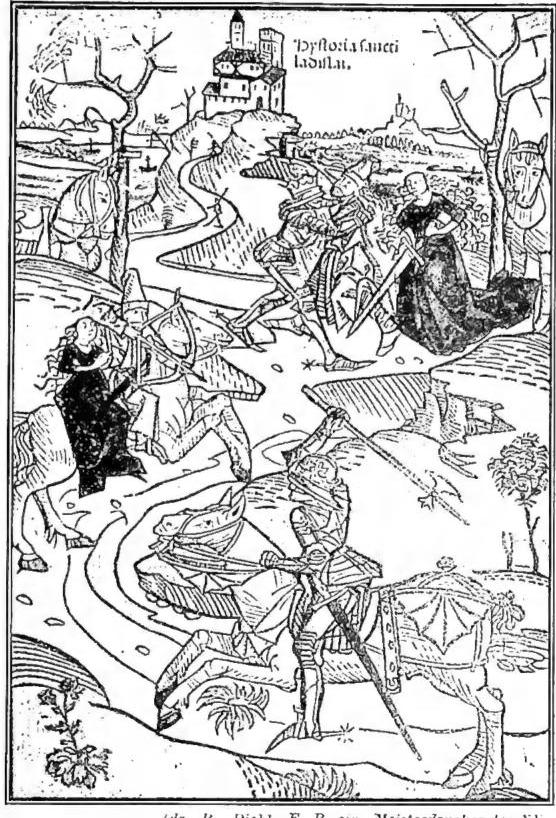
A prominent figure among fifteenth-century printers, he used elegant typefaces and gave impetus to books embellished with beautiful and elaborate borders and graceful woodcut initials, sometimes printed in several colours. His production included books on mathematics, astronomy, and history, but consisted predominantly of liturgical books (breviaries and missals), which he supplied to numerous dioceses, always printed with a genuine artistic sensibility. Among his prints, the following should be mentioned: the Latin and Italian editions of the Kalendarium by G. Müller of Königsberg, known as Regiomontanus (Venice 1476), considered the first book with a title page; the Ars moriendi of Capranica (Venice 1478); the editio princeps of Euclid’s Geometria (ibid. 1482), the first book with geometrical figures; and the Chronica Hungarorum by G. Thwrocz (Augsburg 1488), with woodcut engravings of portraits and battle scenes.