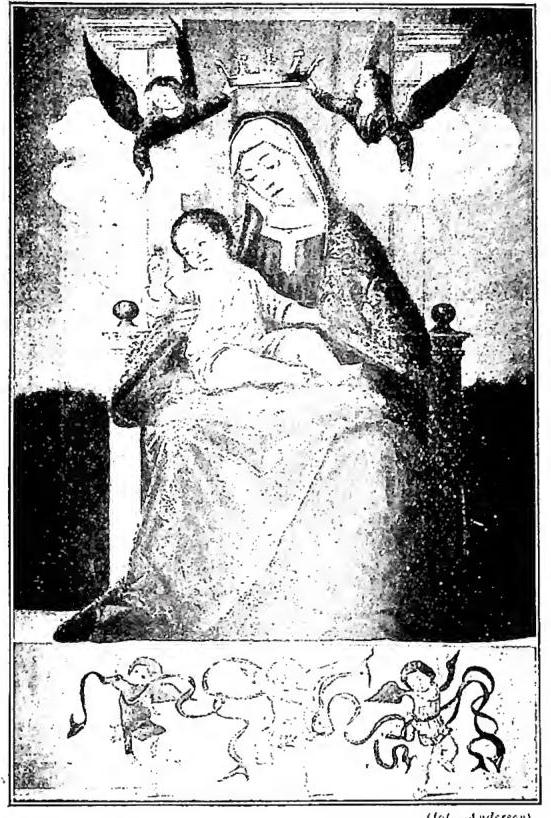
CATENA, VINCENZO. – Venetian painter, b. ca. 1470, d. in 1531; he is mentioned in 1506 as the “colleague” of Giorgione in the inscription on the reverse of the Giorgionesque Female Portrait in the Vienna Gallery.
His formation was particularly influenced by the models of G. Bellini, as well as by the draughtsmanship of Alvise Vivarini and the spatial elements of Cima (Madonna and Four Saints, Walters Collection, Baltimore; Madonna Enthroned and Doge Loredano, Correr Museum, Venice, ca. 1505). This fifteenth-century taste of his also persists in works in which, under the impulse of the later Giambellino and of Giorgione himself, C. sought greater breadth of modelling through the softer use of colour, tending toward a new fusion of tones (Madonna Adoring the Child and Saints, Berlin Museum, and especially the Martyrdom of St. Christina in S. Maria Mater Domini in Venice [1520]). The Delivery of the Keys in the Prado, and even more its replica in the Gardner Collection, the Christ at Emmaus in Bergamo, the Adoration of the Child in London, and finally the Judith in the Querini-Stampalia Collection, demonstrate C.’s extreme evolution in the new Venetian pictorial direction of the sixteenth century; a distinct moment in his activity is represented by the Holy Family in Dresden, in which there is reflected an interest