
GIUNTA (GIUNTI), FAMILY. — A family of publishers, printers, and booksellers that was active from the end of the fifteenth century through the entire sixteenth century, particularly in the three centers of Florence, Venice, and Lyon.
The Florence firm was founded by FILIPPO G. (1450–1517): the first book to appear under his name was a Greek edition of the epitome of Zenobius’s Proverbs, dated 1497; many other works in Latin, Greek, and the vernacular followed, among the latter works by Dante (1506),
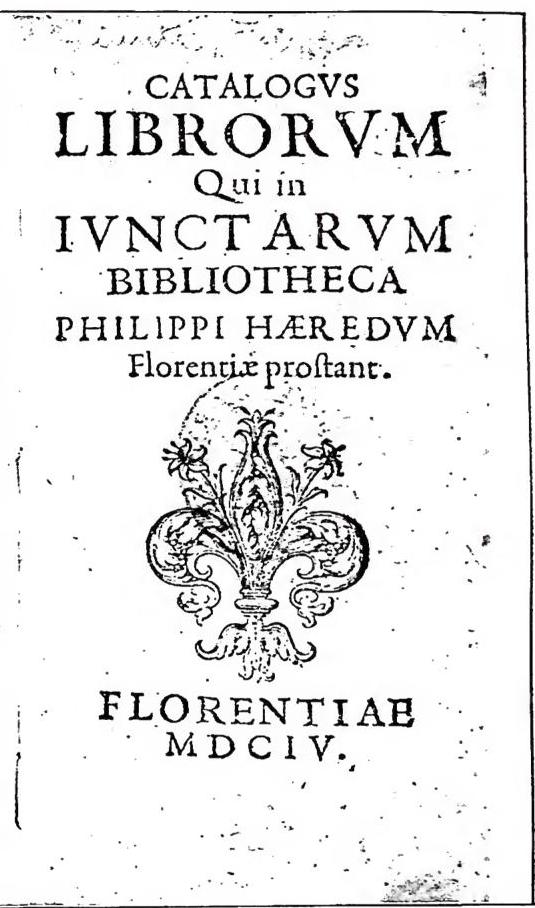
The Venetian firm was founded by LUCA-ANTONIO G. (1457–1538), Filippo’s brother, who had emigrated there as early as 1477 to engage in the book trade. From 1489 he began his publishing activity, and from 1503 also his printing activity. He published chiefly numerous liturgical works (antiphonaries, graduals, missals, breviaries, etc.), as well as classical authors and literary texts, with growing commercial success. Upon his death, his son TOMASO (1494–1566) continued the paternal enterprise with the traditional liturgical books, and an ever-flourishing activity was also carried on by his nephew LUCA-ANTONIO iunior until around the middle of the 17th century, until, in 1670, it was transferred to the printers Lorenzo and Niccolò Pezzana.
The Lyon firm was founded by GIACOMO G. (ca. 1486–1546), the nephew of Filippo and Luca-Antonio, who moved there between 1519 and 1520; the first book published by him bears the date 1520. His activity was exclusively that of publisher and bookseller, since he had no printing press of his own; he published chiefly legal works; the firm ceased operations toward the end of the 16th century.
For a long time, the Lyon Giuntina firm was held responsible for the counterfeit editions of classical works
printed by Aldo Manuzio, commissioned by Luca Antonio G.; archival research and the conclusions of the most recent scholarship have now dispelled this legend, absolving the G. from the infamous accusation.