
EUGIPPIO. — Christian writer of the late Latin period, born in the second half of the 5th century, mentioned as still living in a letter of 533. He was one of the disciples of St. Severinus, apostle of Noricum, who in 482 carried their master’s body through various lands, until they settled (492) at Castellum Lucullanum near Naples (present-day Pizzofalcone), where the Saint received an honorable burial.
From there E., having become abbot, maintained relations with illustrious figures of the period, such as Bishop Fulgentius of Ruspe and the Roman deacon Paschasius. In 511 E. sent the latter a documented memoir on the life of his master Severinus so that he might expand it and compile a biography. But Paschasius urged E. to publish the Vita Severini himself, just as it was. Animated by fervent admiration for the ascetic, E. imbues the narrative with the marvelous, recounting a great number of miracles. Modern scholarship, however, seeks in the work especially information about the culture of the period, so scarce in other sources, and about the migrations of peoples, which appear in the background. For purposes of popularization, in order to disseminate, while limiting and clarifying it, the extensive thought of Augustine, E. wrote a collection of 348 excerpta from the Saint’s works, of varying length, dedicating them to the Roman woman Proba. E. gives particular prominence to the passages on charity (letter 167 and sermon 350).
(phot. Guillat)
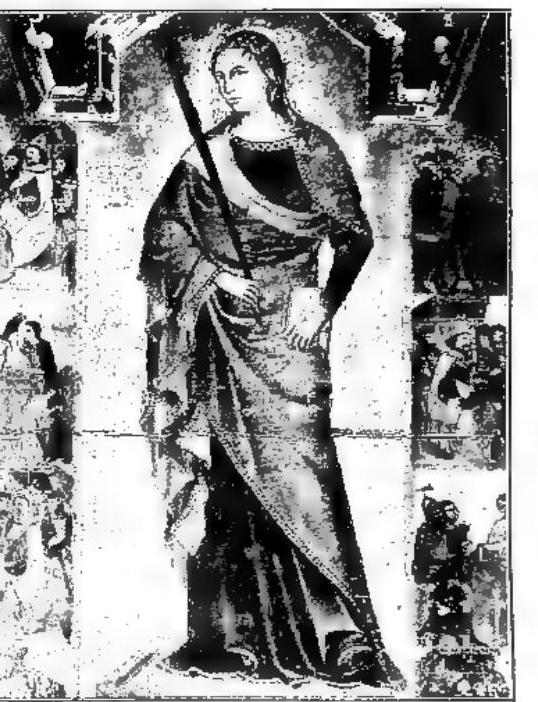
EULALIA, SANTA - Painting by a Spanish artist of the 14th century - Majorca, Cathedral.