
Church Fathers
Patrologia · 390 articles · Principal contributors · All subjectsSection editor, 1948–54: Erik Peterson

Most cited sources Matthew 101 Corinthians 7Genesis 5Acts 4Isaias 4John 3Luke 3Romans 3
Related subjects Sacred ScriptureDogmatic TheologyGeography & DiocesesHistory & BiographyEcclesiastical HierarchyHeresies & Schisms
Principal entries
All entries, A to Z
-
Abraham, Bishop of Ephesus (ABRAMO, VESCOVO DI EFESO)
Perhaps the successor of Hypatios, still living in 542, or of Andrew, who was present at the Fifth Ecumenical Council (553). At first a… -
Abraham of Bēth Rabbān (ABRAMO DI BĒTH RABBĀN)
Syriac doctor, who lived from 449 to 569. He was director for about 60 years of the school of Nisibis, in which he succeeded (according to… -
Abukara, Theodore (Thāwādōrās) (ABUKARA, TEODORO (THĀWĀDĀRĀS))
His name in Arabic is Abu Qurrah, "father of joy." He was bishop of Harrān (Mesopotamia). There are indications that he lived between the… -
Acacius, Bishop of Caesarea (ACACIO, VESCOVO DI CESAREA)
A disciple and then, from 340, the successor of Eusebius the historian in the see of Caesarea in Palestine. In the Arian controversy he was… -
Achilleo, Bishop of Spoleto (ACHILLEO, VESCOVO DI SPOLETO)
He was chosen by the imperial court of Ravenna in 419 to perform the paschal functions at Rome, which at that moment was without its… -
Acta Archelai
Account of two disputations held by Archelaus, bishop of Carchar in Mesopotamia, against Mani, in the time of the emperor Probus. Composed… -
Addai, Doctrine of (ADDAI, DOTTRINA DI)
A narrative apocryphon, from the end of the 4th century or the beginning of the 5th, on the introduction of Christianity at Edessa. Written… -
Ad Novatianum
It is a short work that has come down to us, mutilated at the end, under the name of St. Cyprian (v.). It takes a position against the… -
Aeneas of Gaza (ENEA DI GAZA)
At the end of the 11th century a new center of artistic and intellectual culture had formed at Gaza. A. (ca. 450-534) carried on in this… -
Altercatio de Anima
Fragment of a dialogue (?) against traducianism. The author proves from Holy Scripture that souls are created directly by God. The… -
Ambrose, Deacon (AMBROGIO, DIACONO)
Disciple and correspondent of Origen, confessor of the faith. Of a noble and wealthy family, perhaps Alexandrian, he was a deacon, though… -
Ambrose, Saint (AMBROGIO, SANTO)
Bishop of Milan and Doctor of the Church. SUMMARY: I. Chronology. - II. Life and works: historical and theological significance. - III. The… -
Ambrosiaster
A fictitious name, coined by Erasmus of Rotterdam, to designate an ancient anonymous Christian writer, until then identified with St.… -
Ammonius (AMMONIO)
Scrittore ecclesiastico alessandrino del tempo di Origene. Eusebio (Hist. eccl., VI, 19, 9-10) e dopo di lui s. Girolamo ne lodano gli… -
Ammonius of Alexandria (AMMONIO DI ALESSANDRIA)
Priest and steward of the Church of Alexandria, in the second half of the 5th century; in 458 he signed the letter of the bishops of Egypt… -
Amphilochius, Saint (ANFILOCHIO, SANTO)
Bishop of Iconium in Lycaonia, friend of Sts. Basil and Gregory of Nazianzus, born at Caesarea in Cappadocia around 340-45. Trained in the… -
'Anānīšo (Enañiesu, 'Enānīšo) ('ANĀNIŠO (ENANIESU, 'ENĀNIŠO))
A Nestorian monk, he studied with his brother Iesuyab in the school of Nisibis, where both had as a friend and fellow pupil the namesake… -
Anastasius the Apocrisarius (ANASTASIO L'APOCRISARIO)
Apocrisiary of the Roman Church at Constantinople, not to be confused with another monk Anastasius who was his companion in martyrdom and… -
Anatolius, Bishop of Laodicea (ANATOLIO, VESCOVO DI LAODICEA)
Flourished in the second half of the 3rd century. A native of Alexandria, he distinguished himself there for his extensive and profound… -
Andrew, Bishop of Samosata (ANDREA, VESCOVO DI SAMOSATA)
He lived in the first half of the 5th century, died before 449; he took an active part in the Nestorian controversy. At the invitation of… -
Aniano di Celida (ANIANO DI CELEDA)
The deacon A. of Celeda (place unknown) was one of the most zealous defenders of the Pelagian heresy. Since St. Jerome in one of his… -
Annianus (Aniano) (ANIANO (ANNIANO))
Egyptian monk of the 5th century, author of a Chronographia, cited and used by George Syncellus (9th century), but now lost, which… -
Anthony the Abbot, Saint (ANTONIO ABATE, SANTO)
Defined by St. Athanasius as the founder of asceticism, b. around 250 at Coma (today Qeman) on the western bank of the Nile, in middle… -
Antipater, Bishop of Bostra (ANTIPATRO, VESCOVO DI BOSTRA)
He was consulted in 457 by the emperor Leo I on the authority of the Council of Chalcedon. The reply has not come down to us. About his… -
Antonelli, Nicola Maria
Born at Senigallia on 8 July 1698, died at Rome on 24 Sept. 1767. Cardinal, historian, canonist and orientalist. He was also secretary of… -
Antonio, Poet (ANTONIO, POETA)
Presumed author of the Carmen adversus gentes, attributed by the manuscripts to Paulinus of Nola. The poem (the 32nd), in 255 hexameters… -
Apelles (APELLE)
A disciple of Marcion, from whom he separated, going for a time to Alexandria and then returning to Rome. He wrote a large volume of… -
Aphraates (AFRAATE)
He is the earliest great Syriac writer whose works we possess. Until 1835 his writings, known only in Armenian translation, were falsely… -
Apocrypha, Books (APOCRIFI, LIBRI)
Jewish and Christian writings that present themselves as biblical books, composed between the 2nd century B.C. and the 4th-6th centuries… -
Apollinare, Bishop of Hierapolis (APOLLINARE, VESCOVO DI GERAPOLI)
Placed over the see of Gerapoli in the second half of the 2nd century, an authoritative opponent of nascent Montanism. A., whose name was… -
Apollonius, Antimontanist (APOLLONIO, ANTIMONTANISTA)
News of him is preserved by Eusebius (Hist. eccl., V, 18), from whose citations we learn that he was writing about 40 years after the… -
Aponius (APONIO)
The biographical data of this writer are lacking; one can only say that he was probably of Eastern origin and that he seems to have written… -
Apophthegmata Patrum
Apophthegma means a saying or a witty and sententious reply, uttered by an oracle or by an illustrious personage. Among the Greeks there… -
Apostolic Canons (CANONI APOSTOLICI)
To the eighth book of the Apostolic Constitutions are appended 85 Apostolic Canons (Didascalia et Constitutiones apostolorum, ed. F. X.… -
Apostolic Constitutions (COSTITUZIONI APOSTOLICHE)
A pseudo-apostolic writing. One reads in it (VI, 18, 11) that it was sent to the Church by the Apostles through Clement and other… -
Apostolic Fathers (PADRI APOSTOLICI)
Da quando J.-B. Cotelier (m. nel 1686) uni in una collezione le opere di Barnaba, Clemente di Roma, Ignazio, Policarpo ed Erma come «… -
Apringius (APRINGIO)
He was bishop of Pax Iulia (now Beja) in southern Lusitania (Portugal), at the time of Theudis, king of the Visigoths (531-48). His… -
Arator (ARATORE)
Christian poet born in Milan around the beginning of the 6th century. Having lost his father at a young age, he found an adoptive father in… -
Arbela, Chronicle of (ARBELA, CRONACA DI)
A Syriac document published by A. Mingana (Sources Syriagues, I, Leipzig 1907) and then copiously exploited by all those who study the… -
Archeo
A., qui post discipulos domini episcopus fuit Leptitanae urbis (present-day Homs-Lebda east of Tripoli), is said to be the author, in a… -
Arévalo, Faustino
Spanish Jesuit and patrologist, b. at Campanario (Estremadura) in 1747, a Jesuit in 1761, he was one of the most notable of that group of… -
Aristion of Pella (ARISTONE DI PELLA)
This author is mentioned twice by name in ancient Christian literature. The first time by Eusebius (Hist. ecl., IV, 6, 3), who attributes… -
Arnobius the Younger (ARNOBIO IL GIOVANE)
Christian writer, probably a monk, who lived in Rome around the middle of the 5th century; perhaps a native of Gaul. The scanty and… -
Ascaricus (ASCARICO)
Bishop of the Asturias in the second half of the 8th century. He addressed to a certain Tuseredo an acrostic on the uncertainty of eternal… -
Asclepius (ASCLEPIO)
African bishop, of whom Gennadius writes, De viris illustribus, 73 (PL 58, 1102): "A., an African, from the territory of Baiae (an… -
Assemani
Name of four celebrated Catholic Orientalists, belonging to an illustrious Maronite family of Lebanon. The name in Arabic is as-Sim'ānī… -
Asterius, Bishop of Amasea (ASTERIO, VESCOVO DI AMASEA)
He lived between the 4th and 5th centuries, and we have no information about his life, except that, before becoming bishop of Amasea, he… -
Athanasius, Saint (ATANASIO, SANTO)
Bishop of Alexandria, Father and Doctor of the Church. 1. LIFE. - As troubled as can be, it is intertwined and almost entirely merged with… -
Athenagoras (ATENAGORA)
An Athenian and philosopher, one of the earliest Christian apologists. I. LIFE. - The almost sole source for the life of A. is his works.… -
Audace
Known only from the Augustinian epistolary (PL 33, 1075-77; ed. Goldbacher in CSEL, 57, pp. 616-618). He had asked St. Augustine for a long… -
Audenzio
Anti-Priscillianist writer of the late 4th century, of whom Gennadius says in De viris illustribus, 14: "A., a Spanish bishop, wrote… -
Augustine of Hippo, Saint, Bishop of Hippo (AGOSTINO AURELIO, VESCOVO DI IPPONA, SANTO)
One of the four great Doctors of the Western Church. SUMMARY: I. The man. - II. The works. - III. The doctrine. - IV. The pedagogy. - V.… -
Ausonius (AUSONIO)
Decimus Magnus Ausonius, b. at Bordeaux ca. 310, after a thorough literary education, taught in his homeland for thirty years, first… -
Auspicius, Bishop of Toul (AUSPICIO, VESCOVO DI TOUL)
He is mentioned twice by Apollinaris Sidonius (Ep., IV, 17; VII, 10). We have from him a poetic letter, written around 475-80, to Arbogast… -
Autpert, Ambrose (AUTPERTO, AMBROGIO)
Ecclesiastical writer, born of a distinguished family at the beginning of the 8th century in France (Provence? Aquitaine?). He received a… -
Bacchiaro (BACHIARIO)
Ecclesiastical writer of the early 5th century. He is the author of two important short works, De fide and De reparatione lapsi. In the… -
Balaj (BĀLAJ)
A classical Syriac hymnographer, probably living between the Euphrates and Aleppo, around the middle of the 5th century, author of 5 hymns… -
Baluze, Étienne (BALUZE, ETIENNE)
French scholar, b. at Tulle on 24 Nov. 1630, d. at Paris on 28 June 1718. He first studied civil law without passion and without success… -
Bardenhewer, Otto
Born on March 16, 1851 in München-Gladbach (Rhineland), died in Munich on March 23, 1935. He studied theology and Oriental languages in… -
Bardesanes (BARDESANE)
Gnostic, born, according to the Chronicle of Edessa, in 1754 and died, according to the Chronicle of Michael the Syrian, in 222 (cf. F.… -
Barhadbēsabbā (BARHADBÈSABBĀ)
Historian and Nestorian, b. at Bet Asbaje (Persia); he was a pupil of the school of Nisibis under the direction of Hēnānā, in the second… -
Baršawmā (BARŞAWMĀ)
Eutychian archimandrite, b. near Samosata, d. in 458. Having become a fanatical follower of Eutyches, Theodosius II charged him with… -
Bar Sūdajlē, Stefano
Syriac Monophysite writer, b. at Edessa in the second half of the 5th century. He later lived as a monk in his native city. In his youth he… -
Basil of Ancyra (BASILIO DI ANCIRA)
He lived in the 4th century. Originally a physician, he was elected in 336 metropolitan of Ancyra in Galatia. The Council of Sardica in 344… -
Basil, Saint (BASILIO, SANTO)
Bishop of Caesarea in Cappadocia, born there around 330 and died in 379, doctor of the Church. SUMMARY: I. Life. - II. Works. - III.… -
Basso
Proconsul, not otherwise identifiable, author of an epitaph of three distichs on a tomb > (photo Pont. Commiss. of Sacred Archaeology) >… -
Beatus of Liébana (BEATO DI LIÉBANA)
Born at Liébana in the Asturias, he was tutor and confessor of Queen Adosinda, Benedictine abbot of Valcavado (diocese of León) and died on… -
Bedjan, Paul (BEDJAN, PAOLO)
Orientalist, priest of the Mission, b. at Khosrova in Persia in 1838, and after having been a zealous missionary among the Christians of… -
Belisarius (BELISARIO)
Together with a certain Liberatus he is presented as the author of two acrostic and telestic poems (v. TELESTICA) compiled from the verses… -
Blampin, Thomas
Benedictine of St. Maur, professor of philosophy and theology, b. at Noyon in 1640, d. at St-Benoît-sur-Loire on 13 Feb. 1710. With other… -
Breviarium (Breviarius)
They mean compendium (like breviculum and breviculus) and already in the classical age they are often used as the title of books (Augustus… -
Caena Cypriani
A short work intended to enliven banquets, attributed, according to Brewer, to Cyprian, a poet of Gaul. In it, during a banquet at Cana… -
Caius of Rome and the Alogi (CAIO DI ROMA E GLI ALOGI)
In the library of Jerusalem Eusebius found the works of Berillus of Bostra, of Hippolytus (without geographical indication) and of C. All… -
Calbulus (CALBULO)
African Christian poet, perhaps a bishop, who lived at the beginning of the 6th century. The Latin Anthology (no. 378, ed. A. Riese)… -
Cappadocians, Fathers (CAPPADOCI, PADRI)
Cappadocia gave to the Church of the 4th century some of its most eminent figures, bound to one another by their common homeland, by ties… -
Carolingian Books (CAROLINI, LIBRI)
This is the name now given to a voluminous work, written by order of Charlemagne, against the cult of images, originally called Capitulare… -
Carpocrates and Carpocratians (CARPOCRATE E CARPOCRAZIANI)
Egyptian Gnostic. He bears the name of the Egyptian god Harpocrates, in later times also written Karpokrates (cf. R. Harder, Karpokrates… -
Cassian, John (CASSIANO, GIOVANNI)
G. C., natione Scyta (Gennadius), according to a now fairly common opinion, was born in Dobruja to wealthy parents around 360. Having… -
Cave, William
Born at Pickwell in Leicestershire in 1637, died at Windsor in 1713. Anglican minister. Educated at Cambridge in St. John's College, vicar… -
Ceillier, Remi
Benedictine of the Lorraine Congregation of St-Vanne and St-Hidulphe, b. at Bar-le-Duc on 14 May 1688, d. in the monastery of Flavigny, on… -
Celsus (CELSO)
A Christian writer who faithfully translated from Greek the dialogue of Aristo of Pella and dedicated it to a bishop Vigilius with a long… -
Cereal (CEREALE)
African bishop of Castellum Ripense, he took part in the religious discussion of 484 at Carthage between Arian and Catholic bishops.… -
Chabot, Jean-Baptiste
French priest, celebrated orientalist, b. at Vouvray (Indre-et-Loire) on 16 Feb. 1865, d. at Paris on 7 Jan. 1948. He completed his studies… -
Chrismon (DE MONOGRAMMA CHRISTI)
A short treatise attributed to St. Jerome on the form and meaning of the monogram of Christ. The text is an addition to Jerome's revision… -
Christian Latin (LATINO CRISTIANO)
It is the special language (group language) of Christians, formed within the framework of late Latin in the early Christian communities.… -
Christos Páschon
In Latin Christus Patiens, it is a bizarre cento of tragic motifs on the Passion of Jesus, once attributed to St. Gregory of Nazianzus and… -
Chronicon Paschale
Anonymous Byzantine chronicle of the 7th century, with a predominantly chronological interest. It was commonly called paschal because of… -
Chronography of A.D. 354 (CRONOGRAFO DELL'A. 354)
Winged Victory in the act of writing on a shield a wish of prosperity to the recipient of the codex. -
Chrysippus of Jerusalem (CRISIPPO DI GERUSALEMME)
Priest of Jerusalem of the 5th century, distinguished writer and orator, b. before 409, d. in 479. A native of Cappadocia, C. went to… -
Claudianus, Claudius (CLAUDIANO, CLAUDIO)
The last notable Latin poet, born and educated in Alexandria; to the study of Greek, his native language, in which he also wrote verses, he… -
Claudianus Mamertus (CLAUDIANO MAMERTO)
He was a priest at Vienne in the Dauphiné, where he died in 473 or 474. Around 470 he wrote De statu animae in 3 books, of which the first… -
Clement I, Pope, Saint (CLEMENTE I, PAPA, SANTO)
Pope from 92 to 101, according to Eusebius; author of an epistle to the Corinthians. SUMMARY: I. Life. - II. The epistle. - III. Apocryphal… -
Collatio Legum Mosaicarum et Romanarum
Anonymous pamphlet that compares, in 16 titles, articles of the Old Testament, especially on criminal matters, with the similar provisions… -
Colombo, Sisto
Salesian priest, scholar of ancient Christian literature, b. in Milan in 1878, d. in Turin in 1938. He was a libero docente of Latin… -
Commodian (COMMODIANO)
Concerning this Christian poet, neither the place where he was born nor the age in which he lived is known with certainty. From the epithet… -
Computus de Pascha
It is a short work attributed by a manuscript to St. Cyprian of Carthage, but certainly apocryphal, because it was written, as the unknown… -
Conon, Bishop of Tarsus (CONONE, VESCOVO DI TARSO)
Heretic of the 6th century. Starting from Monophysitism, he followed the doctrines of John Philoponus of Alexandria, which led to tritheism… -
Consultationes Zacchae et Apollonii (CONSULTATIONES ZACCHAEI ET APOLLONII)
Title of an anonymous book which, in the form of a dispute between a Christian and the pagan philosopher Apollonius, contains a kind of… -
Corippus, Flavius Cresconius (CORIPPO, FLAVIO CRESCONIO)
Formerly a grammar teacher in a town in Africa, he later went to Carthage. In 549 or 550 he published an epic poem in 8 books, entitled… -
Coronated (CORONATO)
Notary, who in the 8th century wrote a legendary life of St. Zeno of Verona, which was shortly afterward abridged by an unknown author into… -
Cosmas Indicopleustes (COSMA INDICOPLEUSTE)
Byzantine writer of the first half of the 6th century. Born in Egypt, he was first a merchant, and around 520 he traveled in eastern… -
Cotelier, Jean-Baptiste
Philologist, b. at Nîmes in 1627, d. at Paris on 12 Aug. 1686. From childhood he showed singular aptitudes for study and for poetry and was… -
Cresconio
African Donatist teacher, who undertook to defend the Donatist bishop Petilian against St. Augustine, with a long letter addressed to the… -
Cyprian (CIPRIANO)
A presbyter to whom St. Jerome sent epistle 140. They had previously already been in epistolary correspondence and afterwards had made each… -
Cyprian Gallo (CIPRIANO GALLO)
Under this name Peiper published in 1891 a Heptateuch, a paraphrase in hexameters of the first seven books of the Old Testament: Genesis… -
Cyprian of Carthage (CIPRIANO DI CARTAGINE)
De catholicae Ecclesiae unitate, ch. 4, in the two recensions, both due to Cyprian himself. From left to right: 1) the Séguier manuscript… -
Cyrillona (CIRILLONA)
Syriac poet, who lived toward the end of the 4th century. Only the discovery of his hymns (ed. G. Bickell, in Zeitschrift der Deutschen… -
Cyril of Alexandria, Saint (CIRILLO D'ALESSANDRIA, SANTO)
Father and doctor of the Church of the 5th century; b. around 370, d. June 27, 444; celebrated by the Byzantine Church on June 9 and by the… -
Cyril of Jerusalem, Saint (CIRILLO DI GERUSALEMME, SANTO)
Father and doctor of the Church, celebrated by the Church on March 18. SUMMARY: I. Life. - II. Works. - III. Doctrine. I. LIFE. - Born in… -
Cyril of Scythopolis (CIRILLO DI SCITOPOLI)
One of the best Greek hagiographers, known above all for the care he takes in documenting and specifying chronology by all the means at his… -
Damasus I, Pope, Saint (DAMASO I, PAPA, SANTO)
Reigning from 366 to 384, born probably in Rome, where his father, Anthony, made his entire ecclesiastical career (exceptor, lector, deacon… -
De Aleatoribus
In this homily, which is part of the large body of works falsely attributed to St. Cyprian, a bishop, after a forceful opening on the… -
De Bono Pudicitiae
A letter that has come down to us among the works of St. Cyprian, in which a bishop, in strongly rhetorical language, points out to his… -
De Centesima, Sexagesima, Tricesima
Among extracts from works of St. Cyprian and from his passio, an homily on the three rewards of human life is inserted in two manuscripts.… -
De Cruce
A short poem of 69 hexameters, found among the works of Tertullian (PL, 2, 1113 ff.) or of Cyprian (ed. by Hartel in CSEL, III, pp.… -
De Duodecim Abusivis Saeculi
Work wrongly attributed to St. Cyprian. According to Hellmann, who produced a new edition of it, this writing was composed in the second… -
De Duplici Martyrio Ad Fortunatum
This work was attributed by Erasmus, its first editor, to St. Cyprian. In reality it is a forgery, written in 1530 by Erasmus himself to… -
De Ecclesia
From the 4th century, one hundred and ten hexameters of unknown origin in Virgilian verses (cento), which describe a religious service with… -
De Evangelio
A poem of 114 hexameters, which treats of the birth and adoration of Christ, wrongly attributed, in a 9th-century codex, to Hilary of… -
De Excerandis Gentium Diis
Nel 1630 G. M. Suárez pubblicò da un codice della biblioteca Vaticana del sec. X un frammento di una apologia cristiana: De e. g. d.… -
De Fratribus Septem Machabaeis Carmen (DE FRATRIBUS SEPTEM MACCABAEIS CARMEN)
This poem in 394 hexameters is handed down under the names of Marius Victorinus and Hilary of Arles. Peiper wishes to attribute it to… -
De Iesu Christo Deo Et Homine
One hundred and thirty-seven hexameters, attributed to a Victorinus, like the poem De fratribus VII Macchabaeis, but certainly by another… -
De Induratione Cordis Pharaonis
A treatise that circulated in the 9th century under the name of St. Jerome, but which is certainly not the work of the Saint. The author is… -
De Iona
A poem handed down under the names of Tertullian and Cyprian, and which was attributed by Brewer to the poet Cyprianus Gallus. But wrongly… -
De Iudicio Domini
A poem also entitled Carmen ad Flavium Felicem, which in the past was attributed to Tertullian or St. Cyprian. But the Flavius Felix… -
De Laude Martyrii
A rhetorical panegyric (according to Dupin, a school exercise) in honor of martyrdom. The work already appears in the list of Cyprian's… -
De Miraculis Sancti Stephani
A collection of miracles of St. Stephen published by a cleric of the church of Uzala in Africa and dedicated to the bishop of that city… -
De Montibus Sina et Sion
A work falsely attributed in some manuscripts to St. Cyprian. The work seeks to explain the apparent contrast between Ex. 2:3: "The law… -
Demophilus (DEMOFILO)
Vescovo di Berea (Macedonia), ariano, m. ca. il 386. Deposto dal Sinodo di Rimini (350), ottenne da Valente la successione di Eudossio… -
De Passione Domini
Poem in 80 hexameters, of which no manuscript survives. Probably the work of a humanist of the late 15th century, wrongly attributed to… -
De Promissionibus et Praedicationibus Dei
A work falsely attributed to Prosper of Aquitaine, although Cassiodorus already knew this author's name (Institutiones divinarum… -
De Rebaptismate
Written around 256-57 against Cyprian in defense of the validity of Baptism conferred by heretics. The author, an African bishop, in… -
De Recta in Deum Fide
Latin translation by Rufinus of the work of Pseudo-Origen or Adamantius. The Greek text, written around 300 in Syria, has as its author a… -
De Singularitate Clericorum
It is an admonition that begins with the words "Filii carissimi": "ne clerici cum feminis commorentur" (ch. 1). The book is falsely… -
De Sodoma
A short poem of 167 hexameters that recounts, on the basis of Gen. 19, the destruction of Sodom. The author is the same one who wrote the… -
De Spectaculis
A short treatise, attributed to St. Cyprian (in the manuscripts it follows the letters of Cyprian), which in the form of an epistle… -
De Verbi Incarnatione
A poem in Virgilian verses (cento) on the Incarnation, falsely attributed by E. Martène to Sedulius. BIBL.: Edition by Ioha Huemer of… -
Didaché
The only manuscript of this opuscule was discovered by Theophilus Bryennios, metropolitan of Nicomedia, in 1875 in the Library of the… -
Didascalia
This apocryphal writing purports to be "the Catholic doctrine" of the 12 Apostles and claims to have been written in Jerusalem after the… -
Didymus the Blind (DIDIMO IL CIECO)
Ancient ecclesiastical writer, b. around 313 in Alexandria, where he spent his whole life, d. there between 395 and 399. At the age of four… -
Diodorus (DIODORO)
Bishop of Tarsus, ascetic and second founder of the Antiochene exegetical school, b. in the first quarter of the 4th century, d. before… -
Diognetus, Epistle to (DIOGNETO, EPISTOLA A)
Only one manuscript is known (the Strasbourg manuscript, destroyed in 1870, once in the possession of the humanist Reuchlin), which… -
Dionysius of Alexandria, Saint (DIONIGI D'ALESSANDRIA, SANTO)
Father of the Church, b. at the end of the 2nd century, d. around 264. The son of pagans, he came to the faith through reading and… -
Doctors of the Church (DOTTORI DELLA CHIESA)
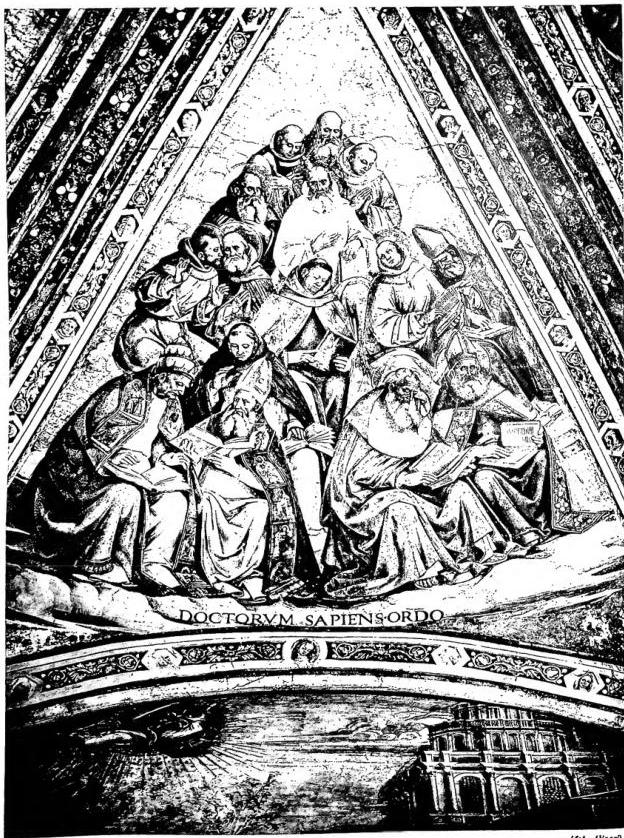
I. THEOLOGY. - They are illustrious men of the Catholic Church who, for their holiness, their orthodoxy in the faith, and above all for… -
Doctrina Patrum de Incarnatione Verbi
The largest and most important dogmatic florilegium (especially christological) of the (courtesy of the Institute of Paleography of the… -
Dölger, Franz Joseph
Historian of the early Christian centuries, b. 18 Oct. 1879 at Sulzbach on the Main, d. 17 Oct. 1940 at Schweinfurt. After studies in… -
Dorotheos of Gaza (DOROTEO DI GAZA)
Ascetic writer of the 6th century. A native of Antioch, in his youth he received an excellent secular education; he subsequently embraced… -
Draconzio, Blossio Emilio
Born in Africa, perhaps at Carthage; he composed most of his works between 484 and 496. Of his life we know the details that he himself… -
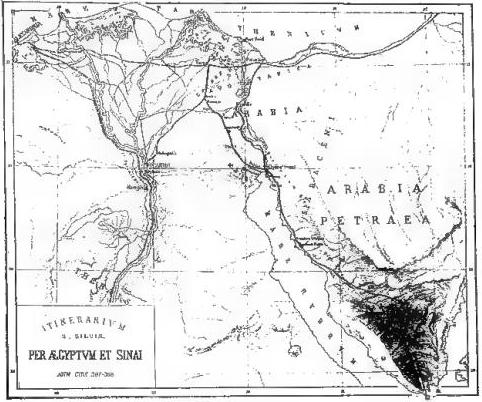
Egeria
Latin nun (E. is the best-attested form of the name; Etheria is the rival form), known until now only from a letter of Valerius, abbot of… -
Elisha (Elisheba) (ELISEO (ELISCE))
Armenian historian of the 5th century, author of homilies and commentaries, as well as of a History of the Wars of the Armenians (from 451… -
Elpidio Rustico
Poet of the 6th century, belonging to the family of the Rustici, in Italy. He wrote a Carmen de Christi beneficiis and 24 Tristichs under… -
Elvidius (ELVIDIO)
Heretic of the 4th century. Nothing is known of his life, except that he was a mediocre and ignorant man and a disciple of the Arian bishop… -
Ennodius (ENNODIO)
Born into a noble family, it is not known with certainty whether at Milan, Pavia or Acles, between 473 and 474. Left an orphan at a tender… -
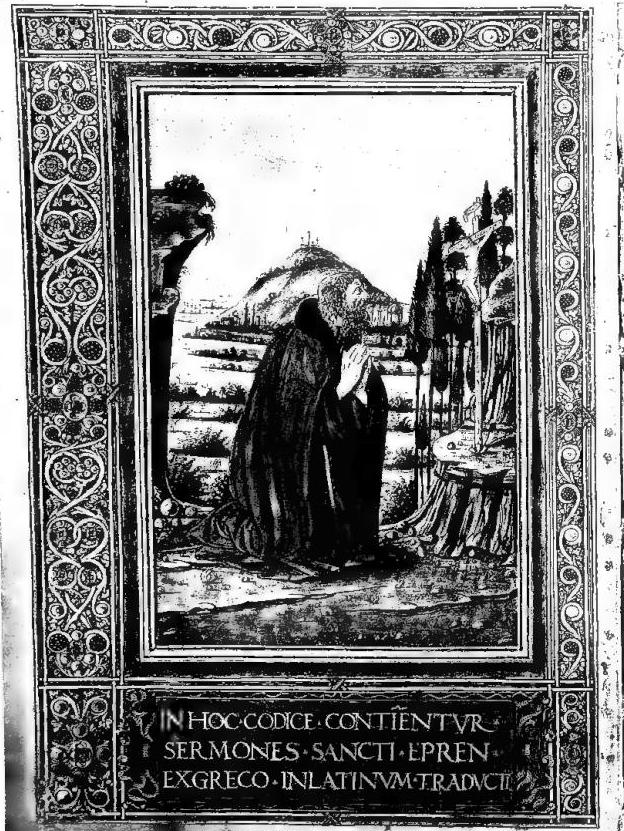
Ephrem, Saint (EFREM, SANTO)
Father of the Church, the most celebrated Syriac writer and one of the most distinguished doctors both for the abundance of his writings… -
Epiphany of Salamis (EPIFANIO DI SALAMINA)
Born after 310 in a small village near Eleutheropolis, in Palestine, perhaps of Jewish parents (v. Chronicle of Seer: PO 5, 301). He lived… -
Eucherius of Lyon (EUCHERIO DI LIONE)
Born into a distinguished family, he held important public offices, but around 410 he renounced the secular life and, followed by his wife… -
Eudoxius (EUDOSSIO)
One of the principal leaders of Arianism in the 4th century, bishop of Constantinople from 360 to 370. Born at Arabissos, in Lesser… -
Eugippius (EUGIPPIO)
Christian writer of late Latinity, born in the second half of the 5th century, mentioned as still living in a letter of 533. He was one of… -
Eulogius of Alexandria, Patriarch (EULOGIO D'ALESSANDRIA, PATRIARCA)
In office from 580 to 607. Correspondent of Gregory the Great. Opponent of the Novatians and Monophysites. Of his writings only fragments… -
Eusebius of Alexandria (EUSEBIO D'ALESSANDRIA)
Probably a fictitious figure of the Alexandrian priest John (PG 86, 1, 297-310) who published his own 22 Ascetic Treatises under this name… -
Eusebius of Emesa (EUSEBIO DI EMESA)
Born at Edessa, he was elected bishop of Emesa because of his knowledge of Greek and Syriac. His Semitic style still finds expression in… -
Eustathius, Bishop of Antioch (EUSTAZIO, VESCOVO D'ANTIOCHIA)
An opponent of Arianism at the Council of Nicaea (325) and also later. The emperor Constantine sent him into exile (330), where he died in… -
Eustathius, Bishop of Sebaste (EUSTAZIO, VESCOVO DI SEBASTE)
B. at the beginning of the 4th century, d. after 377. In the dogmatic field he was restless, straying into semi-Arianism and later denying… -
Eutropius the Presbyter (EUTROPIO IL PRESBITERO)
Theologian, who lived in the 4th-5th centuries, of whom Gennadius speaks (De vir. ill., 49). He was probably Spanish and carried on his… -
Eutyches (EUTICHE)
Born in 378, probably at Constantinople, he embraced the religious life as a young man in a monastery in the surrounding area, where he had… -
Evagrius (EVAGRIO)
Around 430 a certain E. published in Gaul, under the title Alteratio legis inter Simonum Iudaeum et Theophilum Christianum, a… -
Evagrius Scholasticus (EVAGRIO SCOLASTICO)
Ecclesiastical writer, b. at Epiphania in Syria in 536-37, d. at Antioch toward the end of the century. He practiced law (whence the… -
Evodius (EVODIO)
A friend of St. Augustine, he followed him to Rome and was present at the death of St. Monica (Augustine, Conf., IX, 12, 31; cf. IX, 8… -
Eznik
Called Kolpatzi, or of Kolb, an Armenian writer of the 5th century, who took part in the translation of the Bible and wrote an Adversus… -
Fabricius, Johann Albert
Great scholar, b. in 1668 at Leipzig, d. in 1736 at Hamburg, where he served as librarian and director of the academic Gymnasium. He… -
Facondo of Hermiana (FACONDO DI ERMIANA)
African bishop of the 6th century. What is known of him is closely connected with the part he played in the question of the Three Chapters… -
Fastidio
A Pelagian, living at the beginning of the 5th century, "Britannorum episcopus", who "scripsit ad Fatalem quendam de vita Christiana librum… -
Fathers of the Church (PADRI DELLA CHIESA)
Ancient ecclesiastical writers who were distinguished for orthodox doctrine and holiness of life and are recognized by the Church as… -
Faustus of Byzantium (FAUSTO DI BISANZIO)
Celebrated Armenian historian who lived in the period between the 4th and 5th centuries, born of a noble family and a priest. His residence… -
Faustus of Riez (FAUSTO DI RIEZ)
Ecclesiastical writer, b. in Brittany at the beginning of the 5th century, d. after 485. He entered the monastery of Lérins at a young age… -
Febadio
Anti-Arian polemicist, bishop of Agennum (Agen, department of Lot-et-Garonne) in Gaul, wrote after the publication of the second formula of… -
Ferrando
African bishop, d. ca. 546. He was a disciple of St. Fulgentius of Ruspe, and when the latter was exiled, along with 60 other African… -
Fessler, Joseph
Bishop, historian and canonist, b. at Lochau (Vorarlberg) on 2 Dec. 1813; d. at St. Pölten (near Vienna) on 25 Apr. 1872. A priest in 1837… -
Filaret Gumilevskij (FILARETE GUMILEVSKIJ)
Archbishop of Chernigov (1805-66), born Konobejevskij, called "humilevskij" from the Latin humilis, on account of his small stature and… -
Filastrius of Brescia (FILASTRIO DI BRESCIA)
Ecclesiastical writer of the 4th century, d. between 391 and 397. From the discourse delivered in his honor by his successor St.… -
Firmicus Maternus (FIRMICO MATERNO)
Latin writer of the 5th century A.D., under whose name go a treatise on astrology, of pagan sentiments, and a Christian apologetic work. Of… -
Firmilian of Caesarea (FIRMILIANO DI CESAREA)
One of the most eminent figures of the episcopate of his time, he was bishop of Caesarea in Cappadocia from 230. He maintained cordial… -
Gallandi (Galland), Andrea
Oratorian, b. 7 Dec. 1709 in Venice, d. there 12 Jan. 1779. Editor of the Bibliotheca Graeco-Latina veterum Patrum (14 vols. in folio… -
Gelasius of Caesarea (GELASIO DI CESAREA)
Son of a sister of Cyril of Jerusalem, born ca. 335-36, died ca. 404-405. From ca. 365-66 he was bishop of Caesarea. Under the emperor… -
Gelasius of Cyzicus (GELASIO DI CIZICO)
Son of a presbyter, around 475 he wrote an Ecclesiastical History in 3 books, a compilation from Eusebius, Theodoret and Socrates. The… -
Gennadius of Marseille (GENNADIO DA MARSIGLIA)
A priest of Marseille, who lived in the second half of the 5th century, died between 492 and 505. Nothing further is known about his life.… -
George of the Arabs (GIORGIO DEGLI ARABI)
Bishop of the nomadic tribes on the margins of Syria and Mesopotamia, consecrated in 686, d. in 724. He was a Monophysite and a friend of… -
Germanus (GERMANO)
Friend of Cassian, who speaks of him in his works. He was his companion from adolescence, and with him at a very young age he entered the… -
Ghellinck d’Elseghem, Joseph de (GHELLINCK D'ELSEGHEM, JOSEPH DE)
Historian of theology and patrologist, b. at Ghent on 30 Oct. 1872, d. at Louvain on 4 Jan. 1950. Having entered the Society of Jesus in… -
Giorgi of Pisidia V (GIORGIO DI PISIDIA V)
GIORGIO di PISIDIA v. PISIDÈS, GIORGIO. -
Grabe, Johann Ernst
Patrologist, Protestant, b. at Königsberg in 1666, d. at Oxford in 1711. From 1685 he taught at the University of Königsberg. The reading… -
Graffin, René
Orientalist, b. at Pontvallain (Sarthe, France) on 22 March 1858, d. at Ste-Radegonde-en-Touraine on 3 Jan. 1941, after having given a… -
Gregory Nazianzen (GREGORIO NAZIANZENO)
Together with Basil of Caesarea and Gregory of Nyssa, G. of Nazianzus forms the triad of the so-called "luminaries of Cappadocia." He did… -
Gregory of Nyssa, Saint (GREGORIO NISSENO, SANTO)
One of the great doctors who, in the second half of the 4th century, gave a sudden splendor to the church of Cappadocia; he is inferior to… -
Hegesippus (EGESIPPO)
He came under Pope Anicetus (in the time of Marcus Aurelius) from Palestine via Corinth, to Rome (Eusebius, Hist. eccl., IV, 22, 3). Author… -
Henānā of Adiabene (HENÂNĂ DI ADIABENE)
Noted Syrian theologian, d. in 610. Although he had been a pupil of the school of Nisibis, where Nestorian tendencies were favored, H.… -
Heraclianus (ERACLIANO)
A citizen of Sirmium in the 4th century, a faithful Catholic and opponent of the Arianism represented by his bishop Germinius. There… -
Heraclides of Damascus, Book of (ERACLIDE DI DAMASCO, LIBRO DI)
Under this curious title is hidden an important typology written by Nestorius in 451 before the Council of Chalcedon, but after its… -
Hermas (ERMA)
One of the Apostolic Fathers, flourishing around the middle of the 2nd century. He wrote The Shepherd, in Greek. The Muratorian Fragment… -
Hermias (ERMIA)
No ancient source speaks of this writer, who is known only from the title of his brief work: Hermiae philosophi irrisio gentilium…