BALUZE, ETIENNE

BALUZE, Étienne. - French scholar, b. at Tulle on 24 Nov. 1630, d. in Paris on 28 June 1718. He first studied civil law without passion or success to please his father; but then found his vocation as a canonist and ecclesiastical historian when, in 1656, he became secretary and collaborator to the Archbishop of Paris, Pierre de Marca (d. 1662). In 1667 Colbert entrusted him with the direction of his library, and in 1689 Louis XIV appointed him professor of canon law at the Collège de France. In 1710, having published a *Histoire généalogique de la Maison d'Auvergne* (Paris 1708) which wounded the sovereign’s amour-propre, he was obliged to leave Paris and was only permitted to return in 1713. From an early age he received the tonsure, which enabled him to hold several ecclesiastical benefices. Baluze was an indefatigable worker, an incomparable scholar, passionate for truth to the point of compromising his personal interests in its defence, a good-natured man of humorous disposition, a loyal and delicate friend. His association with Pierre de Marca had imbued him with Gallican prejudices, which often showed through in his writings and more than once drew Roman censures upon him. He wished to bring the Roman curia back to observance of the ancient canons without regard for historical development or the exercise of the primacy.

Among his works are editions of St Cyprian, Marius Mercator, Salvian of Marseilles, Servatus Lupus, the bishops of

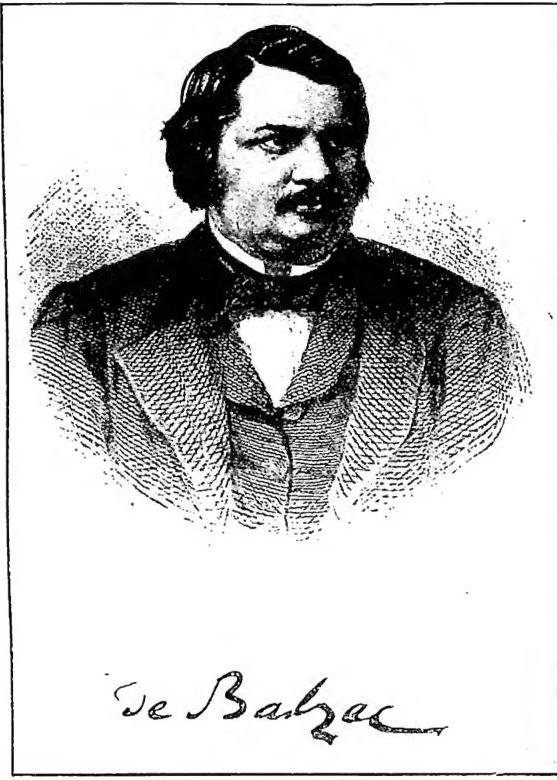
historical man, restricting his field of observation to the contemporary world that surrounded him, yet he knew how to observe and reproduce it in its multifarious variety of places, types, and social conditions, grasping its essence without renouncing the minute and vigilant care for realistic detail, which he felt to be an indispensable element in giving character to each individual and in creating in him that social nature which, in his eyes, is a nature within nature. Thus were born the *Scènes de la vie privée*, *vie de province*, *vie parisienne*, *vie militaire*, which in 1842 the author gathered under the title *Comédie humaine*. In this gigantic work, the entire Balzacian world finds a place; a world in which, alongside love, politics, business, and speculations of every kind enter largely, always driven by those dominant passions which find living and powerful embodiment in the principal characters. The *Comédie humaine* faithfully portrays French society under the July Monarchy, but Balzac, who is its painter, does not love that bourgeois world. A legitimist in politics, he defends and exalts the strong and centralising monarchy, whose ideal he sees incarnated in Catherine de’ Medici, the queen who knew how to uphold central power and defend it against every attack, without shrinking from extreme means when the integrity of the State demanded II.
Balzac’s legitimism corresponds to his attitude in matters of religion; he was not an orthodox believer, yet he felt the full value of the religious unity of peoples and the strength of Catholicism as the greatest factor of social order. “I write,” he says in the Preface to the *Comédie*, “in the light of two eternal truths: religion and monarchy.”

The assertion regarding religion, however, counts for little; all his works were in fact placed on the Index with the formula: *Omnes fabulae amatoriae* (decrees of 16 Sept. 1841; 28 Jan. 1842; 5 Apr. 1842; 20 June 1864). And the reasons are very grave: “He was said to be an anatomist of the human heart, often with exasperating coldness in ‘dissecting’ vice, the hardness of hearts; considering man only from his worst side, in a moral deformity that crushes; no virtue exists; vice aims with calculation at its satisfaction. Exaggeration of realism in describing the passions that brutalise man; no educative intention in art... From facts he often draws conclusions that generalise vice.” (G. Casati, *L’Indice dei libri proibiti*, III, Milan 1939, pp. 29-30).

BIBL.: Editions: A first edition of all Balzac’s works appeared in Paris in 1855, in 20 vols.; the definitive edition, ibid. 1869-76, is in 24 vols., and that of 1885-88 in 52 vols. The critical edition, in progress, edited by M. Bouteron and H. Longnon, ibid. 1912 ff., is in 40 vols. — Literature: E. Biré, *H. de B.*, Paris 1897; A. Le Breton, *B.: l’homme et l’œuvre*, ibid. 1905; F. Brunetière, *H. de B.*, ibid. 1906; G. Gigli, *B. in Italia*, Milan 1920; R. Benjamin, *La vie prodigieuse de H. de B.*, Paris 1925; A. Bellessort, *B. et son œuvre*, ibid. 1925; M. Pisani, *L’Italia nella Commedia Umana*, Naples 1927; P. Barrière, *B. et la tradition littéraire classique*, Paris 1928; P. Bourget, *Quelques témoignages (L’art du roman chez B.)*, ibid. 1928; P. Abraham, *Recherches sur la création intellectuelle. Créatures chez B.*, ibid. 1931; B. Croce, *B.*, in *Poesia e non poesia*, Bari 1935, pp. 75-94; P. Arcari, *B.*, Brescia 1935; G. Casati, *L’Indice dei libri proibiti*, II, Milan 1937, pp. 215-28.