
CAROLINI, LIBRI. — This is the name now given to a voluminous work written at the order of Charlemagne against the veneration of images, originally entitled Capitulare de imaginibus. The king of the Franks, kept in the dark about the celebration of the Second Council of Nicaea (787), learned of its acts through an unfaithful and seriously censored translation, which was replaced a century later by Anastasius the Librarian. The court theologians, probably under the direction of Alcuin, immediately drew up an extensive refutation, which develops the following concepts: 1) adoration is an homage reserved exclusively for God; 2) images should not be accorded the worship and veneration that are offered to the Saints and their relics; 3) nor should they be accorded relative worship, because, while educated people can rise from the images to the persons of the saints living in Heaven, for the uneducated this transition is difficult; there is consequently a danger of idolatry: «Nihil aliud in his, praeter id quod vident, venerantur et adorant» (III, 16); 4) before images, which are devoid of the senses, it is not fitting to light lamps and burn incense; 5) it is not, however, illicit to paint or sculpt figures of Saints, as decoration for Churches or as a commemoration of historical events. In this case too, it must be held that such representations contribute nothing to spiritual salvation, «cum ad peragenda nostrae salutis mysteria, nullum penitus officium [imagines] habere noscuntur» (II, 21); 6) existing images should not be touched.
Although the compilers of the L. c. protest that they wish to restore the pure Latin tradition and the teaching of s. Gregorio Magno («images should neither be worshipped nor destroyed»), nevertheless, because of their vehement opposition to the Nicene canons, they went so far as to use expressions verging on heterodoxy. Perhaps the προσκύνησις τιμητικὴ accorded by the Greeks to images (Denz-U, n. 302) and rendered by the incompetent translator as adoratio provoked the exaggerated reaction; yet it seems that the ultimate reason for the categorical denial of every form of worship of images, even relative worship, must be sought in the attitude unfavorable to it that had long since been manifested by the Frankish stock.
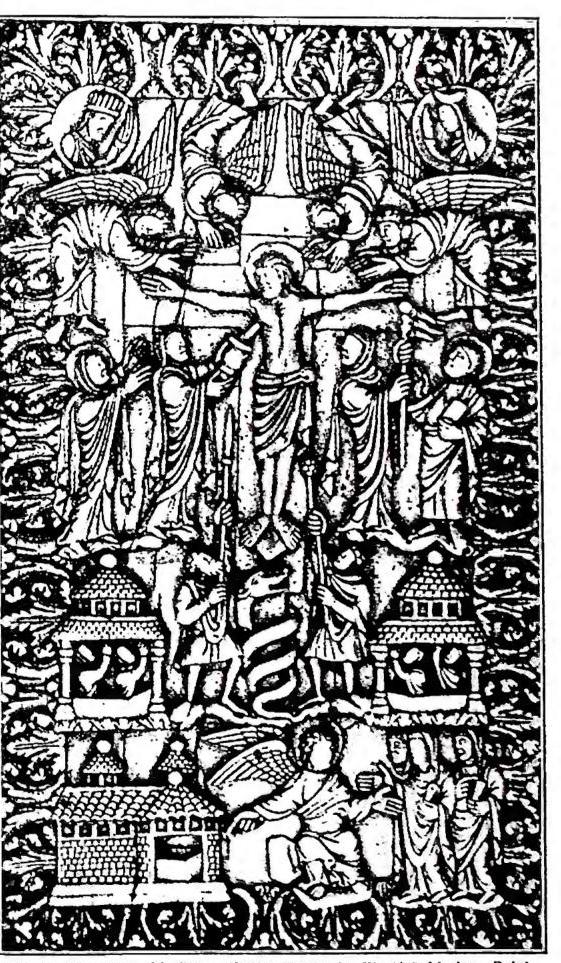
CAROLINGIA, ARTE - Binding of a Gospel Book. Ivory relief from the school of Metz (9th–10th centuries). Gannat, treasury of the church of S. Croce.
Nevertheless, the new political orientation of the sovereign weighed upon the royal theologians: in 787 Charlemagne had broken with the empress Irene. Every page of the lengthy memorandum reveals the hostility of the Frankish court toward Byzantium. Charles, who through his military enterprises and patronage had restored the fortunes of the West, felt keenly his dignity as a Christian prince and, like the Greek basileus, claimed for himself special prerogatives in ecclesiastical matters. In the king’s view, therefore, an ecumenical council ought not to be convened without hearing the West. The L. c. are the vivid expression of this state of affairs. At the Council of Frankfurt (794), presided over by Charlemagne, not only was Spanish Adoptionism condemned, but also the teaching of Nicaea, though in a form more attenuated than in the L. c. It had now become necessary to inform the Pope. Angilbert, abbot of St-Riquier, brought the L. c. to Rome, together with a summary of them and a letter in which Charlemagne begged the Pontiff not to accept the Council of Nicaea. Adrian I immediately recognized the captious character of the criticisms directed by the palatine theologians against the Church of the East and, in a lengthy writing, refuted point by point the reprehensiones caroline, demonstrating their groundlessness and animosity; he then concluded: «ideo ipsam suscepimus synodum» (PL 98, 1291).
It is unlikely that the Pope’s letter altered the sentiments of Charles and his court; in any event, for the time being the controversy over images receded into the background, to be taken up again after the emperor’s death, in 824.