
ICONOCLASTIA. — Heresy of those who opposed the veneration of images of Jesus Christ and the saints, especially in the 8th and 9th centuries.
SUMMARY:
I. Historical summary
II. Doctrine of the iconoclasts
III. Outcome of the iconoclastic persecutions.I. HISTORICAL SUMMARY
The word iconoclast literally means breaker of icons or sacred images, painted or sculpted, depicting Jesus Christ, the Blessed Virgin, and the saints. History has applied this name to those fanatical enemies of the use and cult of images who appeared in the Byzantine Empire during the eighth and ninth centuries. The leaders of the iconoclasts were the Byzantine emperors themselves, who used violence in attempting to abolish not only the cult but also the mere use of images. They are also called iconomachs or enemies of images, although there is a considerable difference between the two terms. We know, in fact, that there were iconomachs who tolerated or even approved the use of sacred images and opposed only their religious cult: it may therefore be said that all iconoclasts are iconomachs, but it is not correct to say the reverse, namely that all iconomachs are iconoclasts.Byzantine iconoclasm flourished in the eighth century, but even earlier history must record many iconomachs and even some iconoclasts in the proper sense. Indeed, even after the Byzantine iconoclastic movement had ended,
there were terrible iconoclasts in the West (v. IMMAGINI, culto delle).
The history of iconoclasm unfolds in two clearly distinct periods; between them there occurred a period of tranquillity during which the Seventh Ecumenical Council, the Second Council of Nicaea (787), took place and defined the dogmatic question concerning the cult owed to sacred images.
It was the emperor Leo III the Isaurian who first declared war on images in 725, if not by an explicit decree, at least through a set of declarations and measures that made his attitude on the matter very clear. Historians have asked themselves the following question: why did the Emperor unleash so violent a storm? Some attribute it to the influence of Judaism and Islam; others, however, point out that Leo had spent his youth and mature years on the eastern borders of the Empire, amid populations and troops already infected with Manichaean Paulicianism, instinctively hostile to every material representation. This is the most probable explanation. To it must be added the fact of actual abuses introduced into the cult of images, and the reforming mania that the « basileus » displayed in several fields.
Ch. Diehl and L. Bréhier have, however, demonstrated that by means of iconoclasm the emperor Leo sought to curb the influence of the monks.
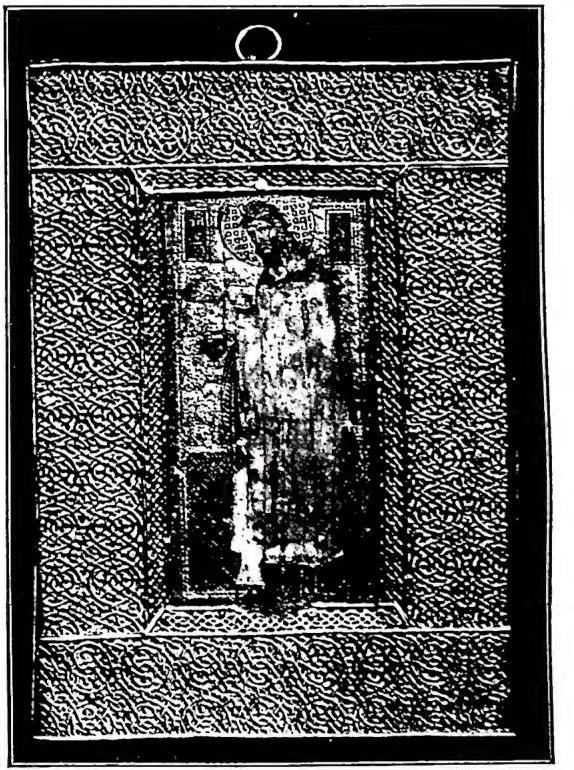
(Alinari photograph)
ICONS — Icon with the image of the Baptist (13th century) — Venice, Museo di S. Marco.
At his death, which occurred in 740, his son, Costantino V, known as Copronimo, ascended the throne. Until 752 he showed himself relatively moderate in his iconoclastic zeal. The revolt of the general Artavasdo, who, supported by the faithful who had remained in orthodoxy, had succeeded in occupying Constantinople for a year and a half (June 741–November 742), had made Costantino cautious. In 752 he considered the opportune moment to have arrived for convening the entire Byzantine episcopate in council, in order to obtain official approval of the iconoclastic doctrine. The Council, carefully prepared through small assemblies held here and there, met on 10 February 754 in the imperial palace of Jeria, in the suburbs of Constantinople, and concluded its work on 28 August in the church of S. Maria della Blacherne. There the dogmatic definition, or ὅρος, was read; this was a true conciliabulum that dared to assume the title of ecumenical, despite the absence of the other Eastern patriarchs and the Pope. Signed by no fewer than 338 bishops, this definition condemned the use and veneration of images, while preserving the veneration of intercession directed to the Virgin and the saints.
Despite this definition, the people, and especially the monks, did not submit. Costantino V then instituted a violent persecution against them. Exile, imprisonment, torture: everything was employed against the iconophiles. There were very many martyrs. At the same time,
the images were smashed to pieces, the frescoes covered with lime, the mosaics destroyed, the illustrations in manuscripts burned or torn apart, and the churches of the monasteries desecrated. A decree issued toward the end of 764 imposed upon all the subjects of the Empire an oath renouncing images. Forgetting even the decisions of the Council of Jeria, the «basileus» also attacked the veneration of intercession offered to the Virgin and the saints, having their relics thrown into the sea. Carrying his secularizing fanaticism to extremes, he even hunted down the word «saint» (ἔγιος) and had it removed everywhere, including from geographical and topographical names. He did the same with the word «monk». He called the monks: «those wretched men». To suppress this «cursed breed», he established the death penalty for all superiors who accepted novices.
Under Costantino’s successor, Leone IV, who reigned for only five years (775–80), the persecution was partly mitigated. Subsequently, Leone’s widow, Irene, deeply devoted to the veneration of the saints, took the reins of government in place of her only son, Costantino VI, who was just six years old. She worked skillfully to prepare the restoration of the veneration of images and to bring to an end the schism existing against Rome and the Melkite patriarchates. On 29 August 785 she sent a delegation to propose to Pope Adriano I the convocation of an ecumenical council. The Pope fully approved the proposal. He sent legates, and on 17 August of the following year it became possible to open the Council at Constantinople, in the church of the SS. Apostoli. Suddenly, however, a revolt by the iconoclastic soldiers broke out. Irene was forced to postpone the Council. She was nevertheless able to disarm the rebellious troops and then immediately recall the legates and bishops who had already set out. The venue of the assembly, however, was no longer Constantinople but Nicea. There the VII Ecumenical Council was held, anathematizing i., explaining and defining the veneration rendered to sacred images, and defending its legitimacy against the objections of its opponents. The definition of Nicea was proclaimed at Constantinople, in an eighth and final session, before Irene and her son, as well as before the people and the military garrison.
Although defeated at Nicea, the iconoclast party was still strong and awaited a favorable opportunity to exact its revenge. Everything remained calm until 813, when the Armenian Leone Bardas, through a military revolt, was proclaimed «basileus» under the name Leone V. In order to please the soldiers, to whom he owed the imperial crown, Leone did not delay for an instant in rekindling the struggle against images. The patriarch s. Niceforo, an extremely zealous defender of orthodoxy, was forced to resign (13 March 815) and yield his place to a notorious iconomach, Teodoto Melisseno Cassiteras, whose sole concern was to condemn the Council of 787 and revive the decisions of Jeria through a Synod of three sessions. A persecution against the iconophiles immediately broke out, far more violent than that carried out under Costantino V. The bishops were expelled and replaced by others; the monasteries were closed and the monks dispersed; the faithful were thrown into the sea, enclosed in sacks, subjected to severe scourging until they died, imprisoned, or exiled. Such was what occurred under the reign of Leone the Armenian, who was murdered in 820. He was succeeded by Michele II il Balbuziente (820–29), who proved less brutal. He had the exiles return and the prisoners freed, but went no further than this. Images remained forbidden. Under the Emperor Teofilo (829–42) there was a new persecution. Numerous confessors were imprisoned and cruelly tortured: famous is the case of the two brothers Teodoro and Teofane, on whose foreheads an executioner engraved no fewer than twelve iambic verses (836). Only upon the death of this «basileus» (842) was it possible to see what had been seen at the death of Leone IV: a regent Empress, favorable to images, who prudently restored their veneration—Teodora, widow of Teofilo, who removed the iconoclast patriarch Giovanni VII and replaced him with s. Metodio, a man of firmness and prudence. On 11 March 843, the first Sunday of Lent, it was finally possible to celebrate with great pomp the definitive triumph of orthodoxy, with a feast that has continued to the present day under the name of «Feast of Orthodoxy». It does not spare the anathemas against all heretics, and triple eternal remembrance is offered to the defenders of the true faith.
II. DOCTRINE OF THE ICONOCLASTS
Concerning the doctrine of the iconoclasts, we have scant information, since their writings were destroyed. The most important source that has come down to us is the definition or the acts of the Council of Jeria (754), reported and refuted in the acts of the Seventh Ecumenical Council (Mansi, XII, 208–352). The enemies of images appeal now to Scripture, now to Tradition, now to theological reasoning. According to them, the veneration of images is genuine idolatry, contrary to the first precept of the Decalogue: “You shall not make a carved image for yourself, nor any likeness of anything that is in heaven above or on earth below, etc.” (Ex. 20:4).They then attempt to discover in the writings of the Fathers everything that may support their thesis. The quotations are often mutilated, not interpreted in their context, sometimes deliberately interpolated, or even entirely fictitious. Above all, against the image of Christ they advance the following argument, which, according to them, leaves the iconophiles no escape: “Since Jesus Christ is at once God and man, in painting his humanity, either you separate it from his divinity—and then you are true Nestorians and divide Christ—or else you are Monophysites, because you seek to circumscribe the divinity, which cannot be circumscribed, and make it disappear into the humanity.” They also thought that the sole image, the sole authorized representation of Christ, which is truly worthy of worship, is that found in the Eucharist through the consecration of the bread and wine. In saying this, they refer to the old patristic expression still read today in the Mass of s. Basilio, which calls the oblations: image of the body and blood of Jesus Christ. Finally, in support of their thesis, they set forth the abuses into which certain iconophiles fall. A list of such abuses may be read in the letter of Michele il Balbuziente to Ludovico il Pio, written in 824 (Hefele-Leclercq, IV, 42). But even if these abuses really occurred, they were not particularly serious. The most serious consisted in taking icons as godparents at Baptism.
Costantino Copronimo, as has been seen, had attacked not only the veneration of images of the Virgin and the saints, but also the veneration of their relics, and had denied them the power of intercession. It does not appear that the iconoclast theologians shared Costantino’s view on this point. The Council of Jeria had clearly safeguarded the veneration of intercession.
III. OUTCOME OF THE ICONOCLAST PERSECUTIONS
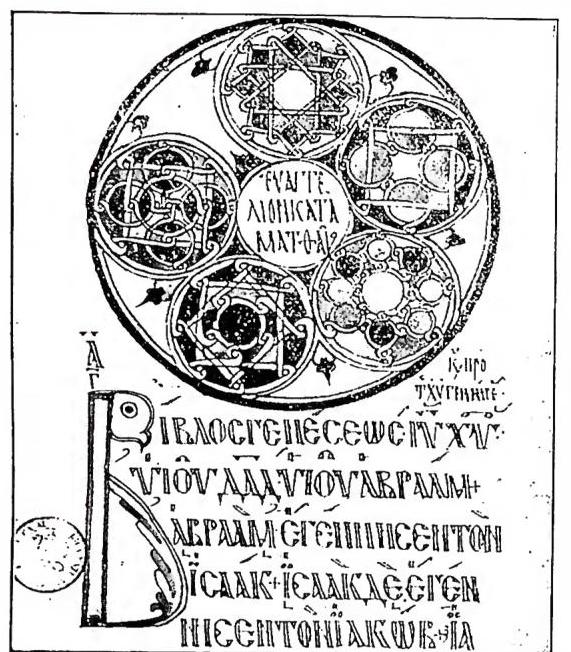
The iconoclastic movement ultimately produced an effect entirely opposite to that dreamed of by its promoters. Rather than causing the cult of images to disappear, it served to root it more deeply in the hearts of the Byzantines and to drive it to exaggeration.With regard to religious art, it must be said that the iconoclastic movement destroyed priceless masterpieces, replacing them with a profane art based entirely on animal, floral, and geometric ornamentation. This attempt, however, was itself short-lived. The fear of being regarded as idolaters—an accusation that the iconoclasts readily leveled against the iconophiles—nevertheless made artists very timid in representing Jesus Christ, the Ver-
gin, and the saints. They not only abandoned sculpture, but even in iconography their creative genius was almost extinguished by the concern to produce not an image blossoming from the imagination, but merely a portrait of the prototype. This explains certain stereotyped models imposed by tradition.
With regard to general history, the persecutions initiated by the iconoclasts had the painful effect of deepening ever further the divide between East and West in the religious sphere and of preparing the definitive schism. Through their duration and violence, they accustomed the Byzantines to living apart from Rome. The popes, for their part, began to regard these heretical and persecuting emperors with aversion; moreover, they were incapable of defending them against the pressure of the barbarians, and therefore turned their eyes toward the political power of the West, represented by Pipino il Breve and Carlomagno. What they keenly felt, and what would constitute the subject of their protests for centuries, was the seizure and dismemberment, to the advantage of Constantinople, of the Roman patriarchate in the East, decreed by Leone Isaurico in 732. – Vedi tav. XCV.