IMMAGINI, CULTO DELLE

IMAGES, CULT OF.

It is the honor paid to sacred images, that is, to painted or sculpted representations of Jesus Christ, the Blessed Virgin Mary, and the saints. The same honor is accorded to representations of incorporeal beings: God the Father, the Trinity, the Holy Spirit, and the Angels. Often included in the cult of images is the honor given to the Cross, relics, the Gospel book, and consecrated objects, since this does not differ essentially from the first. This is a relative cult, one that does not refer to the image or sacred object in itself, but rather to the person represented or to God (v. CULT).

### I. HISTORY.

It is necessary to distinguish between the use of images and the cult paid to them. History records men who promoted the use of images and others who opposed the cult of images. In the Church, use preceded cult, which developed only slowly. The use of images dates back to the origins. The Old Testament seemed to forbid both the use and the cult of images, as may be inferred from *Ex. 24, 4*: “You shall not make for yourself a carved image, or any likeness of anything that is in heaven above, or that is in the earth beneath, or that is in the water under the earth.” In reality, this prohibition was never absolute, at least not in a certain period; one need only think of the cherubim of the Ark of the Covenant and the bronze serpent (*Ex. 25, 18; 37, 7-9; Num. 21, 8-9; 3 Reg. 7, 25*). It was in the period after the Exile, especially in the time of the Maccabees, that Judaism began to proscribe all images out of fear of idolatry.

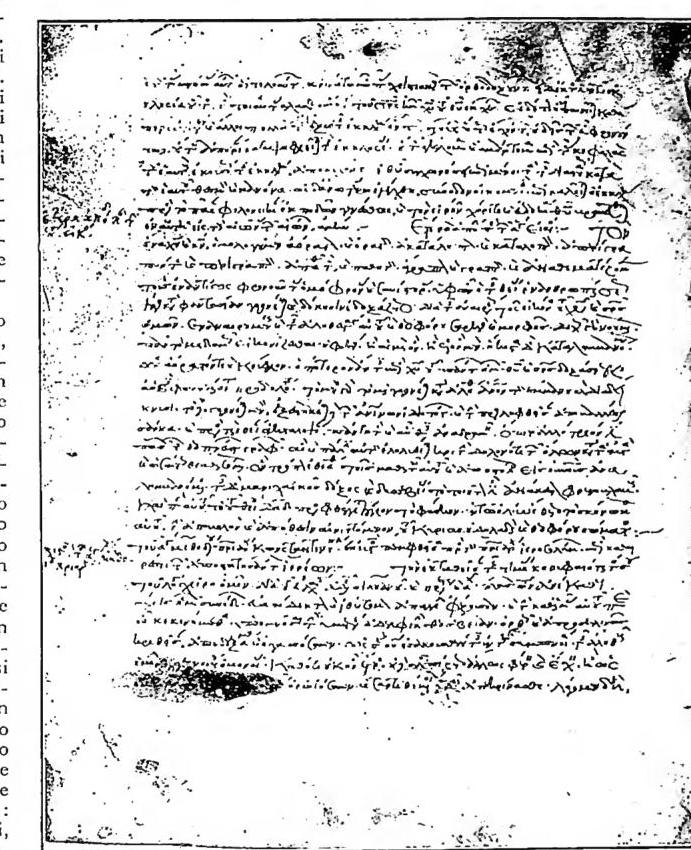
The numerous paintings in the catacombs, the sculptures on Christian sarcophagi, and some statues of the Good Shepherd clearly show that the Church has used images from its very beginnings. Tertullian speaks of an image of the Good Shepherd that existed in his time (*De pudicitia*, 7, 10), and Eusebius of Caesarea says he saw with his own eyes the painted images of the holy apostles Peter and Paul and of Jesus (*Hist. eccl.*, 7, 18). Only a few isolated voices, appealing to the authority of the Old Testament, disapproved of such use; mention is made of Clement of Alexandria, Tertullian, Minucius Felix, Arnobius, and Lactantius. The Council of Elvira (305 or 306) states in canon 36: “It has been decided that there should be no paintings in churches, lest what is worshipped and adored be depicted on the walls.” In a letter to Constantia, sister of Constantine, Eusebius rejected images out of fear of idolatry (cf. A. Pitra, *Spicilegium Solemense*, I, Paris 1852, pp. 383-86; Eusebius, *Hist. eccl.*, VII, 18). For a long time it was thought that St. Epiphanius held the same opinion in a letter addressed to John of Jerusalem, of which only a Latin translation attributed to St. Jerome survives. There is, however, reason to believe that this letter was tampered with by the iconoclasts (cf. Mansi, XIII, 292). In the 4th and 5th centuries the use of images is found everywhere. As for the cult proper, it is manifested mainly around the Cross. For specific images of Jesus Christ, the Virgin, and the saints, the evidence is much rarer. It is not until the 6th and 7th centuries that we find fully explicit testimonies. To this period belong the archepiscopal images (v.): to these images a special veneration is undoubtedly paid. Toward the end of the 6th century, Leontius, bishop of Neapolis in Cyprus, in his fiftieth apologetic discourse against the Jews, defended Christians from the charge of idolatry and already outlined the first lines of the theology of the cult of the Cross and images (PG 93, 1597-1609). In the West, the poet Venantius Fortunatus alludes to a lamp burning before the image of St. Martin. St. Gregory the Great reproaches the bishop of Marseilles, Serenus, for having dared to break images to remove from the people the danger of idolatry (*Epist.*, 11, 13). In another place, the same saint speaks of the veneration of the Cross and sacred images (*Epist.*, 9, 6). It was only the Jews and the Manichaean sects, for example the Paulicians of Asia Minor, who waged war against the use and cult of images. To these must be added some early Monophysite theologians: Philoxenus of Mabbug, Severus of Antioch, Peter the Fuller, who, however, were not followed by the Monophysite Churches, which maintained the cult of images in the manner of the Byzantines (cf. M. Jugie, *Theologia Orientalium dissidentium*, V, Paris 1935, pp. 577-83). When the first iconoclastic persecution broke out in 726, in the Church there was not only the use but also the cult of images, which had in fact already given rise to some abuses.

The iconoclastic persecutions (v. ICONOCLASM) had repercussions in the West. As soon as the heresy appeared, it was condemned in the Councils of Rome in 731 and 769. Mention was also made of it in the Synod held at Gentilly (769). A real controversy regarding the cult of images arose only under Charlemagne after the Second Council of Nicaea (v. CAROLINGIAN BOOKS). Pope Hadrian I had to defend the Council and demonstrate its orthodoxy, but the Frankish theologians were perhaps not fully convinced. It is certain that a few years later the Frankish bishops welcomed with favor the letter written by the Byzantine emperor Michael the Stammerer to Louis the Pious (824). Emperor Michael was a moderate iconoclast. He rejected the cult of images but accepted their use. The Frankish bishops, with the approval of Pope Eugene II (824-27), wished to hold an assembly in Paris in 825 to examine the problem of the cult. The documents they sent to Rome reveal them as stubborn opponents of the cult. They censured both the Council of Nicaea and Pope Hadrian, and accepted the theses of the Carolingian Books. At this point the iconoclastic fury of Claudius, bishop of Turin, a narrow-minded Spaniard, flared up; he had crosses and images destroyed and even attacked the cult of the saints and their relics. The work he wrote to justify his conduct was refuted by the monk Dungal of St. Denis and by Jonas, bishop of Orléans, whose doctrine approaches the definition of Nicaea, which was fully accepted in France only after the Eighth Ecumenical Council (869-70), which confirmed it in its third canon.

During the Middle Ages, as in modern times, the cult of images and even their mere use have had adversaries sometimes no less vehement than the Byzantine iconoclasts. In the East the Bogomils, akin to the Paulicians; in the West Peter and Henry of Bruys, the Waldensians, and the Hussites despised images, especially the Cross. The Protestants also waged war on images and destroyed them; the Calvinists distinguished themselves by the ruin of numerous and precious treasures of Christian art. Against them, the Council of Trent proclaimed anew the legitimacy of the cult of images.

In the East, after the iconoclastic struggle, down to the present day, especially in Russia, the cult of icons has taken on an extraordinary development, which may be considered excessive. While statues are forbidden, painted icons abound and are objects of cult not only in churches but also in private homes and everywhere. The West has shown itself much more moderate. Many images are not objects of cult in the strict sense but are used as ornament and as a means of instruction: for example, frescoes, museums, and stained glass. Certain ancient icons are objects of particular veneration, and above all the statues of Our Lord, the Madonna, and the saints.

Article illustration

II. Doctrine

That the use of images is legitimate and useful is an experimentally verifiable truth that requires no proof. Images are continually employed both in family life and in social life, as evidenced by the monuments and portraits of kings, great men, and relatives. There is therefore no reason why their use should be forbidden in the religious sphere, nor why the image of the Son of God made man, of His Mother, and of the Saints should not be painted or sculpted.

Man is composed of matter and spirit; he needs sensible and material things to rise to the knowledge and love of the spiritual and invisible world. The image fulfills a threefold function: as ornament, adorning places of worship; as instruction, bringing the unlettered or ignorant to knowledge of the episodes of sacred history, of the truths taught by the catechism, and recalling these same truths to the minds of all; and as an incentive to piety, for the sight of an image arouses feelings of respect, veneration, love, and confidence toward the person it represents and with whom it puts us in relation.

The nature of the worship properly rendered to images as such has been defined in three ecumenical councils: the Second Council of Nicaea (787), the Fourth Council of Constantinople (869–870), and the Council of Trent. The definition of Nicaea states: “We decree that the sacred images of Christ, of His holy Mother, of the Angels and of the Saints... should be restored and that honor and veneration be rendered to them” (τῇ μηχανήν τεσσάρων), not, of course, the worship of true and proper latria, which is due to God alone, but that honor which is given to the image of the precious and life-giving Cross, to the Gospels, and to other sacred objects. Indeed, the honor rendered to the image redounds to the prototype, and he who gives veneration to the image gives veneration to the person it represents (Mansi, XIII, 377–80). The Council of Trent confirmed the same doctrine in these terms: “Images of Christ, of the Virgin Mother, and of the other saints are to be kept especially in churches and veneration and honor are to be given to them; not because it is believed that any divinity or power resides in them by which they are to be worshiped, nor that anything is to be sought from them, nor that confidence is to be placed in images, as was formerly done by the Gentiles, who placed their hope in idols (Ps. 134:15), but because the honor shown to them refers to the prototypes which they represent, so that through the images which we kiss and before which we uncover our heads and prostrate ourselves, we may adore Christ and venerate the saints whose likeness they bear” (Denz.-U., 986).

The worship given to images is therefore a relative worship, which does not terminate in the matter of which the image is made but refers to the original, in the sense that the external signs of veneration given to the image are inwardly directed to the original; and it is precisely for the sake of the latter that the image is honored. There is no case in which such external signs of veneration given to the image can be defined as acts of adoration, even relative adoration. It is true that St. Thomas and many other theologians after him spoke precisely of relative adoration with regard to the Cross and the image of the Savior. But this terminology is dangerous, and the Church has never sanctioned it in her official documents. According to the Fathers, defenders of the cult of images, adoration, properly so-called latria, is always absolute and refers only to God. According to the definition of the Council of Nicaea, there is no difference in nature between the worship rendered to the Cross and the images of the Savior and that rendered to the images of the Saints. That the Scholastics used the expression “relative adoration” is due to the fact that they were unaware of the definition of the Council of Nicaea and lived before the Council of Trent. Moreover, the difference between them and the ancient Fathers is more formal than substantial. When one stands before the image of Jesus, one can abstract from it and behave as if the original of that image were present in person. The image then becomes a mere occasion for rendering to the Savior the worship of adoration, which is always an absolute worship.

The cult of images is in itself lawful and useful, but not necessary. The Church could even, for particular reasons, suppress it temporarily. If she has defended it so vigorously against the iconoclasts, it is only because they accused it of error and idolatry.

BIBL.: For history: G. B. De Rossi, Roma sotterranea, Roma 1864; O. Marucchi, Manuale di archeologia cristiana, ivi 1908, especially pp. 346–66; X. Scaglia, Notiones archaeologiae disciplinis coordinatae, III. Symbola et picturae cometae, ivi 1910; I. Tixcort, Histoire des dogmes dans l’antiquité chrétienne, III, 2nd ed., Paris 1912, pp. 435–83 (excellent historical synthesis up to the 9th century inclusive). For doctrine: Sum. Theol., 3a ed.,

However, in order to understand exactly the meaning of modern immanence (and to measure the extent of the overturning it has effected in classical metaphysics), it is necessary to keep in mind the Aristotelian-Scholastic concept of cause or *actio immanens*, namely: an immanent cause is one in which its action remains, as opposed to the other (transient), which goes out (exiens). In modern immanence, on the other hand, the opposition is no longer between an action that remains within and one that goes out, but rather between an action internal to the being in which it is produced and one that comes from outside. In other words: everything that is produced in a being without the intervention of an external agent and without any influence from an external cause is immanent to II. Thus, the opposition immanence-transcendence takes on a new meaning: the former comes to indicate the self-sufficiency of the being to which all is immanent, which is a principle of itself, without there being another external cause to whose action it owes anything; the latter signifies a cause or principle coming from outside that limits the unconditioned nature of the being upon which it acts and makes it dependent upon itself. In other words, from the standpoint of immanence, the being in which an effect is produced is itself the immanent cause of that effect, of every effect, and of itself as a being; and thus it excludes transcendence, that is, another being “beyond” which would be its principle (and its end). When the opposition is posed in these terms, immanence leads to immanentism. It is evident that, at this point, the opposition immanence-transcendence, as immanentism itself (not immanence understood in its true sense), is the negation of transcendence in its authentic meaning, that is, of the real Being “beyond” (trans) the human and natural world, whose being is not the same (univocal) as the being of the world. For immanentism (and immanentism, when it is metaphysical, cannot but be pantheistic), the world and God are not two realities truly distinct and opposed: God immanent to the world means that the world has within itself its principle, the reason for its existence and for all its effects; the world and its principle perfectly coincide, that is, the world itself adjusts to itself, is a principle of itself, and is thus unconditioned and self-sufficient. Even a religious philosophy (modernism) that makes a similar use of the principle of immanence (“God immanent in man”) does not escape pantheism, and in doing so destroys the very concept of immanence, for when it is used to deny transcendence, it ceases to be immanence and is transformed into immanentism—which, as has been said, is no longer immanence, which only makes sense in relation to transcendence. Nor is it immanence in the sense of a relationship of reciprocal co-essentiality, that is, of a reality that does not exist (and cannot exist) independently of another (for example, in those theories that affirm that God does not exist independently of the world but is not identical with it), inasmuch as here there still remains a certain immanence-transcendence relationship, which rigorous and absolute immanentism cannot accept, even if it is then forced to admit a fictitious and illusory distinction between the Principle (Subject, Ego, Spirit) and its manifestations. But such a distinction, valid for finite and empirical subjects, for the so-called phenomenal level of reality, does not subsist metaphysically, that is, with respect to the Absolute, which is its manifestations, which in turn are the Absolute and are annihilated in II.
On the basis of these fundamental concepts, modern thought has gradually deepened, clarified, and systematized immanentism to the point of taking it as its essential characteristic (especially transcendental German idealism and its many derivatives). But in order to orient oneself in the tangled thicket of modern thought and its immaterialistic positions, it is necessary at least to distinguish between epistemological immanence and metaphysical immanentism. They must be treated separately, even for chronological reasons, while keeping in mind that the two are closely connected.

Although Descartes is still within the line of realism and transcendence, the *Cogito* is the starting point for the development of modern thought: philosophy begins to cease being the science of being (metaphysics) and to identify itself with the science of knowing, that is, with epistemology, which gradually absorbs metaphysics until it posits itself as the only possible metaphysics. But perhaps more than with Descartes, epistemological immanence begins with modern empiricism and precisely with its critical phase, represented chiefly by Locke and Hume. It is indeed with Locke that philosophy becomes a “critique” of knowledge, an analysis of the human intellect, to test its possibilities and mark its limits. Philosophy thus comes to identify itself with the “critical inquiry” into knowledge, its origins, and its value; it becomes pure epistemology. It is again with Locke that sensitive experience is critically assumed as the limit of reason. Right at the beginning of the *Essay*, one reads: “It is evident that the mind knows things not immediately, but only by the intervention of the ideas it has of them.” Now, for Locke, ideas are nothing but images of the sensible, a content of subjective consciousness; reason establishes among them connections and relations. Consequently, truth is nothing but the union and separation of signs that sensitive experience impresses upon the soul. Beyond the “collection of simple ideas,” substance is an empty name; but simple ideas are a pure content of subjective consciousness; therefore the reality known is nothing but this content (*Essay*, Bk. II, chaps. 30–32).

Hume carries the presuppositions of critical empiricism to greater coherence: given that the original fact of knowledge (to which all knowledge must be traced back) is the sensible impression, ideas are nothing but copies—either “memories” of impressions no longer present, or “anticipations,” through imagination, of impressions not yet received. Consequently, all reality, spiritual and material (and there is no transcendent reality or God, a product of the imagination), is identified with impressions and ideas, that is, with the subjective contents of consciousness. There are no substances: the so-called “substance” is a collection of impressions or ideas; there are no necessary and objective causal links: the so-called causality is merely a “constant conjunction” of facts (*Inquiry*, sec. IV; sec. VII). In short, for Hume, the subject cannot go beyond itself: the problem of the correspondence between ideas and things does not exist, since there are no things, but only subjective impressions; every thing (reality) is a bundle of impressions or ideas, that is, a content of consciousness. Reality equals phenomenon: the being of a thing (and the being of man) is its appearing to a consciousness. Hume’s epistemological immanence is absolute. It is not properly skepticism, inasmuch as, having identified the real (all) with the phenomenon (phenomenism), knowledge adjusts to the real. “Empirical idealism,” inasmuch as it derives the idea from sensation, Hume’s epistemological immanence may also be called empirical consciousness-ism: the universe is a continuous appearing and disappearing of sensibles to consciousnesses, which in turn are phases of subjective impressions, so that all reality is a dust of phenomena, to which the mechanism of association and habit gives the appearance of substantiality.

KANT (v.) sets out to demonstrate against Hume that scientific knowledge has objective validity, but at the same time he accepts from the English philosopher—and this must be borne in mind to understand and explain Kant—the concept of reality as consciousness. On this point, the difference between Hume’s “phenomenism” and Kant’s “criticism” is only this (and it is, without doubt, fundamental): Hume identifies the real with empirical consciousness (i.e., empirical epistemology), whereas Kant identifies it with transcendental consciousness, so that the latter’s may be called transcendental epistemology, which, in the development of absolute idealism, becomes transcendental metaphysics.

For Kant, the deepening of the concept of experience leads to a conclusion different from Hume’s, namely, the discovery that there are objective and universally valid conditions, forms, or functions not derivable from sensible experience or a priori, which render experience possible inasmuch as the subject constructs it, that is, gives order (laws) to the content provided by sensory receptivity. For Kant, these forms are transcendental, that is, non-empirical (because not derived a posteriori) and not transcendent, because their legitimate use cannot exceed the limits of experience. Kantian transcendentalism thus entails a twofold immanence of the forms: their immanence in thought and their immanent, non-transcendent use, inasmuch as sensible experience constitutes the limit of their operation and hence of human knowledge. The opposition between immanent and transcendent is thus framed as follows: “We call immanent those principles whose application remains entirely within the bounds of possible experience; transcendent, on the other hand, those that must exceed these bounds, that is, the ideas of reason” (Critique of Pure Reason, Transcendental Dialectic, Introduction, § 1). Consequently, reason, in order to resolve its problems (those of metaphysics), “requires concepts different from those intellectual points whose use is merely immanent, that is, refers to experience insofar as it can be given” (Prolegomena to Any Future Metaphysics, § 40).

All representations of the subject are accompanied by the “I think” or the consequence that they all belong to the same consciousness. “I call it,” says Kant, “pure apperception... because it is that self-consciousness which, in producing the representation ‘I think’—which must be able to accompany all others and is identical in every consciousness—cannot itself be accompanied by any other. The unity of this apperception I also call transcendental unity of self-consciousness, to indicate the possibility of a priori knowledge that follows from it.” The manifold representations given in a certain intuition are all together my representations insofar as they all belong to a single self-consciousness (Critique of Pure Reason, Transcendental Analytic, I, Book 2, § 16). The “I think,” as legislator of nature and constructor of the world of experience as transcendental self-consciousness, has its limit in experience and does not transcend II. Thus, phenomenal reality (which Kant distinguishes from noumenal reality), that is, the world as it is known, is a unified set of representations ordered by transcendental self-consciousness. This transcendental epistemology differs from Hume’s empirical epistemology in that the Kantian representation is not mere sensible impression but an empirical content ordered by the a priori forms or by the transcendental activity of the subject.

It also differs from the metaphysical epistemology of transcendental idealism, where the “I” is no longer merely the constructor of the world of experience but the creator of reality itself, that is, not only of form but also of content, without any noumenal or in-itself reality transcending II. Thus, self-consciousness becomes the absolute principle of the real immanent to it, and in turn, the real is fully adequate to II. The “I think,” which in Kant is only transcendental epistemology, in post-Kantian idealism is transformed into transcendental metaphysics. Fichte’s pure or absolute Ego or “I-ness” is the single principle of which the multiplicity of individuals and things (the world) is but one of the moments through which it realizes itself: everything is a phenomenon of the Ego, a representation of consciousness (Foundations of the Science of Knowledge, Part 1, § 1). Nor does Schelling’s deduction of nature and spirit from an undifferentiated Unity, from an original Absolute, arrive substantially at different results. Hegel draws the ultimate consequences: the rational process of the world (becoming) is the same process as the Absolute or Reason, so that there is perfect adequation between Thought and Being, between the rational and the real: Being and Thought are identical. The form of the Absolute is the Concept (Science of Logic, I, III, Section 1, Chapter 1): metaphysics and logic become one, indeed, true metaphysics is logic itself. Thus, in philosophy, the Absolute attains its full self-consciousness, its absolute freedom, and complete self-revelation (ibid., Section III, Chapter 3). In short, the real in its totality is immanent to thought, that is, resolved into conscious experience or the transcendental subject. Hence the aversion of transcendental idealism to every form of realism, dualism, or transcendent reality or values. Hegel is the most complete metaphysical form of the absolute Ego, where reality and truth are identified with rational knowing, and Reason (of the human order) is itself the principle of its own absoluteness. Being is thus negated in Thought (metaphysics of Thought), or rather, GENTILI (v.) says, in the act of thinking or in thinking thought.

It is impossible even to allude to the manifold forms of post-Hegelian idealism and contemporary philosophy. We limit ourselves to noting that every form of epistemological idealism is destructive of the realism of truth and, with it, of truth itself; just as every form of metaphysical idealism is destructive of the concept of being and, with it, of the real itself. Moreover, every form of absolute idealism inevitably resolves (even if it calls itself “philosophy of spirit,” “idealism,” etc.) into forms of positivism and materialism. It is no accident that positivism is the child of Kant, mediated by transcendental idealism, and Marxism is the child of Hegel and materialist evolutionism. Indeed, once the entire world is posited as immanent to Thought and Thought as immanent to the world, absolute idealism and absolute positivism—the reduction is that of the idealist L. Weber—are the same thing. Marx (v.) did not have to make much effort to conclude that thought (spirit) is an epiphenomenon and to invert Hegel’s standpoint: not history elevated to the transparency of the Idea, but the Idea “materialized,” immersed in history. Once a transcendent Reality is denied, natural facts (positivism and materialism) and human facts (historicism, e.g., Croce’s) are divinized: absolute idealism inevitably culminates in the idolatry or deification of man (of science, of history, of the party, etc.).

It should be noted that, especially in more recent philosophy, there are forms of idealism that present themselves under the guise of an apparent and equivocal “transcendence.” For example, some existentialist philosophies (Heidegger, Jaspers; V. Existentialism) and their “transcendence” has nothing to do with true transcendence (not only cosmological but also theological). It is understood as the “limit” or “horizon” of the subject, which can be shifted but never entirely eliminated; a transcendence, as it is called, “horizontal” (and not “vertical”), that is, immanent to the world and thus posited by the subject himself. One remains within the line of idealistic immanence, of which (non-Christian) existentialism is one of the latest manifestations, even if it polemically opposes German idealism.

The Ego, in all its forms, is a doctrine that implicitly or explicitly denies the fundamental truths of Christianity (the transcendence of God, the immortality of the personal soul, the supernatural, etc.); but what matters, from a philosophical point of view, is that it presents itself, to a discerning and objective critique, as entirely erroneous and, even more, absurd, i.e., contrary to reason. As a thorough examination is not possible here, we limit ourselves to a few immediately evident points. When empiricist epistemological Idealism (Hume) reduces substance to a bundle of impressions of subjective consciousness and even consciousness itself (spiritual substance) to a collection of impressions, it says something devoid of all meaning: if the very subject is also a collection of subjective impressions, one must ask whose collection of impressions it is and, if it is such, how it can be the subject of impressions; where everything is impression—the subject is the object—there is no longer any impression, because the subject of which something is an impression is lacking. The “I” of which everything is impression cannot itself be an impression. The same objection holds, transferred from empirical to transcendental consciousness, against Kantian idealism: the phenomenon, in short, can be a phenomenon of a consciousness that is not itself substantially a phenomenon. As one can see, the concept of substance (and of being) in a realistic sense re-emerges, along with the truth of the fundamental principles of classical-Christian epistemology and metaphysics.

From a strictly metaphysical point of view, Idealism is the consequence of a paralogism: thought is a subjective exigency of the absolute; therefore, thought is absolute. But this “therefore” is inconclusive; for: a) precisely because thought is an exigency of the absolute, it is neither absolute nor the Absolute; b) if it is true that the exigency is subjective, this does not at all imply that there is no objective reality; on the contrary, that exigency exists precisely because of the objectivity of reality. Beyond this aspect, which may be called metaphysical, there is another, epistemological one, perfectly corresponding to the first: thought is “perceptive” of truth; perception belongs to the subject; therefore, thought is “constitutive” of truth, it creates II. It is precisely the opposite: precisely because thought is perceptive of truth, truth is its object; otherwise, thought would perceive itself. If thought is experience (intellectual), it must be experience of a content not identifiable with the activity of the thinking subject itself; otherwise, thought ceases to be experience and is thought of nothing. It is the truth of being that makes thought be, and not thought the truth of being. It is that Idealism attributes to the subject what belongs to the object, i.e., to truth, and makes human thought into absolute and divine thought. Now, the absolutization of reason and its self-sufficiency is precisely an irrational affirmation. Absolute rationalism (Idealism), as in Hegel, is, in the end, absolute irrationalism, i.e., contrary to reason.

BIBL.: It is necessary to consult the bibliographies of the entries corresponding to the authors and doctrines cited in the text. Cf. also: P. Martinetti, *Introduzione alla filosofia*, Turin 1904; 2nd ed., Milan 1929 (see the entire historical section); G. Saitta, *La personalità di Dio e la filosofia dell'immaginazione*, Bologna 1931; 3rd ed.; A. Banfi, *Immaginazione e trascendenza come antinomia filosofica*, Alessandria 1924; G. Bontadini, *La critica negativa dell'immaginazione*, in *Rivista di filosofia neoscolastica*, 18 (1926), pp. 419-38; id., *Critica dell'antinomia di trascendenza e di immaginazione*, in *Giornale critico di filosofia italiana*, 8 (1929), pp. 226-36; E. De Negri, *La crisi del positivismo nella filosofia dell'immaginazione*, Florence 1930; V. Fazio Allmayer, *L'immaginazione*, in *Giornale critico di filosofia italiana*, 9 (1930), pp. 404-20; A. Guzzo, *Idealismo e cristianesimo*, 2 vols., Naples 1936; various authors, *L'existence*, Paris 1945; M. F. Sciacca, *La filosofia, oggi*, Milan 1945; id., *Filosofia e metafisica*, Brescia 1950; see also the bibliography of the entry IMMANENZA. Michele Federico Sciacca