
NICEFORO I, patriarch of COSTANTINOPOLI, saint. — Born ca. 758 in Costantinopoli to a noble family, N. was appointed secretary of the imperial chancery and, while still a layman, founded a monastery on the shores of the Asiatic Bosporus, where he withdrew for some time, devoting himself to study. He became director of the great hospital of Costantinopoli under the emperor Costantino VI (780–97). In Apr. 806, after the death of the patriarch s. Tarasio, he was elected patriarch, although still a layman; but the zealous monks, among them s. Platone and his nephew s. Teodoro, were dissatisfied with
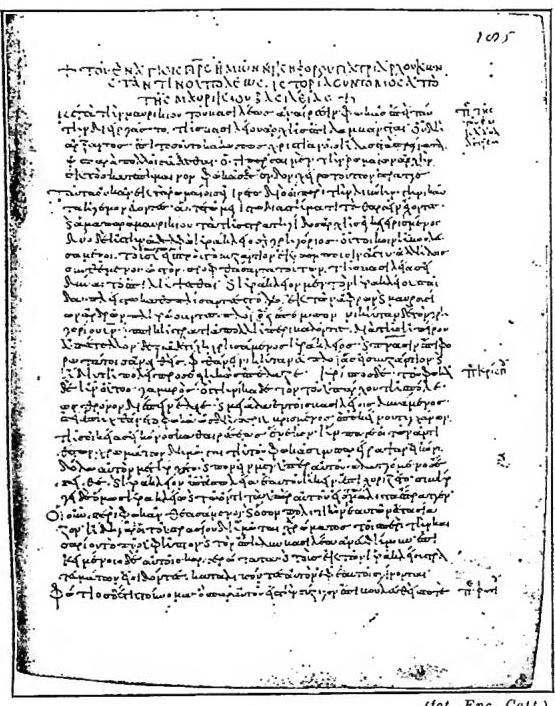
this election because of the violation of ecclesiastical discipline. For this reason they were imprisoned for 24 days and later condemned in a synod (809), because they did not recognize the ecclesiastical rehabilitation of the Greek priest Giuseppe, who, under Tarasio, had blessed the adulterous marriage of the emperor Costantino VI.
Peace between N. and the monks was restored when, after the death of the emperor Niceforo I (802–11), the patriarch, under Michele I (811–13), renewed Tarasio’s sentence against the priest Giuseppe and vigorously defended the veneration of the sacred images against the new iconoclast emperor Leone V (813–20), showing himself ready to endure exile for the sake of the faith. Indeed, he died in exile on 2 June 829, having refused to yield to a compromise proposed to him by the new emperor Michele II (820–29). N. left historical, apologetic, and canonical writings; his letter to Pope Leone III is also preserved (PG 100, 169–200). The Byzantine and Roman Churches venerated him as a saint.