
ODORICO DA PORDENONE, BEATO

ODORICO da Pordenone, Blessed. — Born at Villanova di Pordenone, between 1269 and 1272, to the Mattiussi, an Italian family. Still very young, he embraced the Franciscan life in the convent of St Francis at Udine. After being ordained a priest, he asked and obtained permission to go on mission to the Far East.

It is not easy to determine when he began his memorable pilgrimage, which lasted thirty-three years and crossed the populated centres of Asia. He embarked at Venice and reached Trebisonda, an important port. From there he began his journey overland. He penetrated into Armenia and Persia; at Ormuz he boarded an Arab ship and in twenty-eight days reached Tana at the mouth of the Indus, where four Franciscans, including James of Padua, had recently been martyred. He collected the relics of the martyrs and continued his journey, rounding the southern tip of India, touching Ceylon, sailing the Indian Ocean and reaching the Nicobar Islands, Sumatra, Java and Borneo, becoming the first European to set foot on those lands. He then disembarked at Kuang-ceu in southern China and arrived at Zaiton, where he found the first two Franciscan convents and deposited there the remains of the martyrs of Tana. He then reached Camsay, the Quinsay of Marco Polo, passed through Nanking and continued his journey along the Imperial Canal and beyond the Yangtze River. In 1326 he founded the church of Sin-Ching (Shantung). After crossing the Yellow River, he finally reached Peking, the goal of his journey, capital of the Mongol Empire and residence of John of Montecorvino, metropolitan of the East, where he stayed for three years. With his zeal and a life of remarkable virtue, he succeeded in converting more than twenty thousand unbelievers and overcoming dangers and hardships of every kind, even risking his life several times. At the behest of Friar John of Montecorvino, he prepared to return to Europe to report everything to the Pope. He left Cathay by crossing the continent, reaching as far as Tibet. He traversed eastern Turkestan, following the well-known caravan route of the Tarim Basin, crossed the high valleys of the Pamirs, descended into Afghanistan, passed into northern Persia and, through the Armenian valleys, reached Trebisonda. In 1330 he arrived in Venice after having covered about fifty thousand kilometres. He set out for Avignon to report on his travels to Pope John XXII, but fell gravely ill at Pisa; he then retired to Padua, to the convent of the Santo, where in May 1330 he dictated to Friar William of Solagna the account of his travels. Finally, he went from Padua to Udine, where he died a holy death on 14 January 1331. Benedict XIV officially recognised the uninterrupted cult paid to him as Blessed. His body is now venerated in the church of the Carmine in Udine, enshrined in a rich mausoleum.

The account left by Odorico of his travels constitutes, together with those of other well-known travellers, the principal source of the most ancient and reliable information on the countries of the Far East during the Middle Ages. In it, Odorico briefly reports what might interest both religious and secular readers, though more the latter than the former, since marvellous details prevail over pious ones. He dwells on the products, trade and riches of Asia, never mentioning himself and scarcely concerned with bringing fame to his own name. If the Latin he uses is rather poor, it is compensated by the simplicity and complete absence of any bombastic or hyperbolic style, which is a sign and guarantee of sincerity.
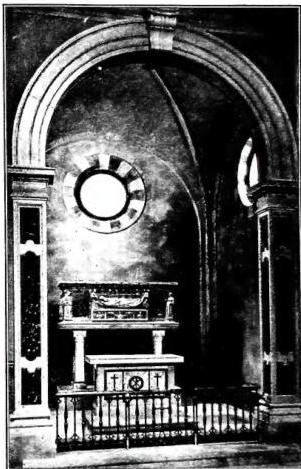
Article illustration

Odorico da Pordenone, Blessed — Chapel erected on the occasion of the sixth centenary of the Blessed in the church of the Carmine. The sarcophagus is a fine example of Venetian Gothic from the first half of the fourteenth century. — Udine.

Odorico is rightly recognised as a pioneer of missionary life and one of the most famous Italian travellers.

BIBL.: G. Golubovich, *Il b. O., in Archivio francescano storico*, 10 (1917), pp. 17-46; A. Van Den Wyngaert, *Sinica Franciscana*, Quaracchi-Florence 1923, p. 381; seq., with the critical edition of the *Itinerarium*; C. Petrocchi, in *Le Venezie francescane*, Verona 1932; War der Selige, *Odorich von Pord. in Japan*, in *Archivio francescano storico*, 35 (1942), p. 153. Many modern studies in the volume *Il VI Centenario del b. O. da P.*, published in the years 1930-31. *Viaggio del b. O. da P.*, edited by G. Pulle, Milan 1931.

Innocenzo Giuliani

O. EIRAS, Diocese of. — Town and diocese in the state of Pará in Brazil.

It has an area of 70,000 sq. km., with a population of 350,000, of whom 348,000 are Catholics. It has 8 parishes with 6 diocesan priests, a seminary, and two women’s religious communities.

The diocese was erected by Pope Pius XII with the apostolic constitution *Ad Domini gregis* of 16 December 1944, by separating it from the diocese of Piani (see TERRESINA); the parish church of St Mary of Victory was elevated to the dignity of a cathedral. Bishop Monsignor F. Espedito Lopes took possession only on 6 January 1949.

BIBL.: AAS, 37 (1945), pp. 133-35; B. Lehmann, *O Brasil Católico 1947*, Juiz de Fora 1947, pp. 250-51. Virginio Battezzati

O. ENGUS (AENGUS, Latinised *Aengusius, Aeneas*), Saint. — An Irish monk surnamed “the Culdee” (see CULDEI), born at Cluain-Ednéch (Clonenagh, in Leix), died there on 11 March 824. Educated in the local monastic school, after a period of eremitical life he went to Tamalchta (Tallaght) and became a disciple of St Maelruan, with whom he collaborated on the Martyrology of Tallaght (of Irish saints), completed about 790. After the death of his master (792) he returned to his original retreat at Disert-Oengusa. Ancient writers describe him as abbot and bishop of Clonenagh, where he was buried.

O. is famous for his Martyrology, called the *Félire* (*Contrologium*) of Oengus, in Celtic verse of six syllables, grouped in quatrains. Besides the martyrology proper, the poem has a prologue of 340 verses and an epilogue of 566, in which he explains the method followed, praises the saints in general, and proclaims the triumph of God’s people in Ireland. The *Félire* was completed about the year 800. The saints commemorated in it, though partly foreign, especially if martyrs, are for the most part of the country (the last, on 7 July, being St Maelruan), so that the work is truly a testimony to the unified national character of the old Irish Church (Kenney). O. is also attributed with the *Saltair na Rann* (*Psalter of the Quatrains*), the longest religious poem in Irish (over two thousand quatrains, in 162 compositions), with themes drawn from the Old and New Testaments; but it seems that the verse 800, with the author’s name (*O. cèle Dé*), is an interpolation; in any case the poem contains at least additions dating from the tenth century.

BIBL.: the best critical edition of the *Félire* is that of Wh. Stokes, London 1905. What is known of O. is mainly derived from the Poem on O. (of 13 quatrains, printed, with English translation by Wh. Stokes, ibid., pp. XXIV-XXVI) and the two prose prefaces added to his martyrology (ibid., pp. 2-15, with translation pp. VIII; cf. J. Colgan, *Acta SS. Hiberniae*, I, Louvain 1645, pp. 579-581; and in *Acta SS. Martii*, II, Antwerp 1668, pp. 85-88; J. F. Kenney, *The Sources for the early History of Ireland*, I, New York 1920, pp. 471, 479-82, 736 sq.; H. Leclercq, *Martyrologie*, n. XVI, in *DACL*, X, cols. 2612-15; G. Prampolini, *Storia universale della letteratura*, II, Turin 1934, p. 575. Igino Cecchetti)