
LEOPOLD I, EMPEROR. — Second son of Emperor Ferdinand III and Maria Anna of Spain, born in Vienna on 9 June 1640, died there on 5 May 1705. He was destined for an ecclesiastical career but, having become heir to his father’s dominions upon the death of his brother Ferdinando (1654), succeeded his father in 1657 and was elected emperor on 18 July 1658. He was a convinced heir to the political program of the House of Habsburg (defense of Catholicism and struggle against the Bourbons), and his reign was a long succession of wars: in the service of Catholicism in eastern Europe (against Turkey from 1662 to 1664 over the question of the succession in Transylvania, and again against Turkey from 1683 to 1699; this second war witnessed the siege of Vienna in 1683 and the formation of the Holy League between Austria, Poland, Russia, Venice, and the Holy See), and in an anti-French capacity in western Europe against the expansionism of Louis XIV (the Dutch War of 1672–78, the War of the League of Augsburg of 1688–97). Within his realms, L.’s work was made difficult by the frequent revolts of Hungary against Habsburg Catholic policy, but the Peace of Karlowitz (1699), by removing Turkey from that sector, sanctioned the emperor’s definitive domination over Hungary. He died while the War of the Spanish Succession was under way, in which L., the son and husband of Spanish princesses, took part in support of his son Carlo’s candidacy (the future Emperor Carlo VI): on this occasion, contingent political motives led L., a faithful Catholic, into no small measure of diplomatic friction with the Holy See. He was, moreover, always on excellent terms with Innocent XI; he made prolonged use of Marco d’Avians as an adviser; he founded many monasteries, sought to alleviate the situation of English Catholics, and to reconcile the various Christian confessions.
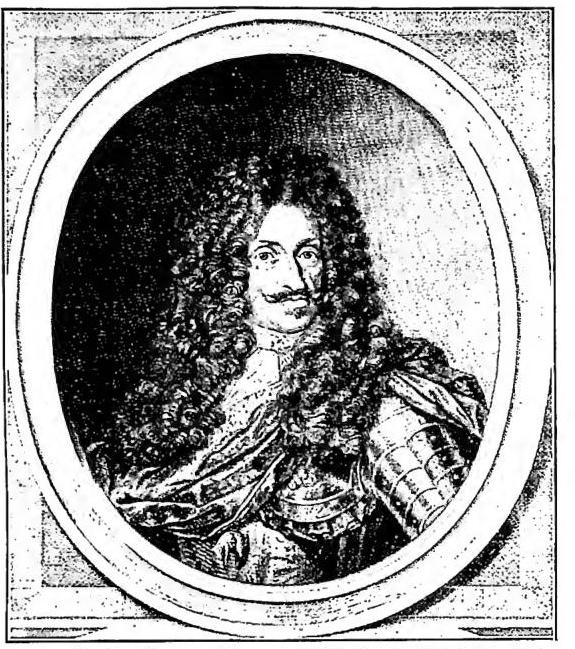
(from Fr. Wagner, Historia Leopoldo Magni Carrarre Ananti, Vienna 1719, pl. hors texte)
LEOPOLD I, emperor — Portrait. Engraving by Cristoforo A. Wagner.