
ROVETO ARDENTE. – The expression recalls the miraculous event of Ex. 3:2–22, which contains the account of the “vocation of Moses” (v.). The future leader, then an obscure Israelite fugitive from Egypt, serving humbly as a shepherd under a Midianite chieftain, Iethro (v.), was at Sinai guarding the flock when he saw a “bush” or thorny shrub (Hebr. sēneh, cf. Arabic sanan, Akkadian sinā, “thorn”), which, although it was in flames (“burning”), was not consumed. Intrigued by the singularity of the event, he approached: through this means God manifested himself to him visibly.
After inviting Moses to show reverence, God entrusted him with the mission of freeing his people from Egyptian servitude, revealing to him his name, Jahweh (v.). Fire is one of the elements
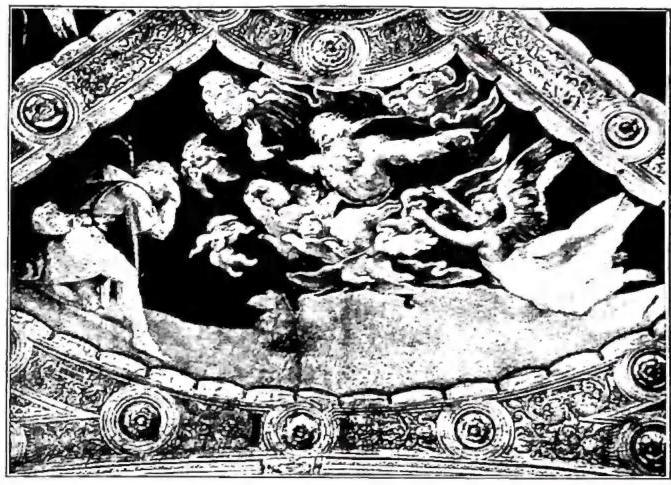
BURNING BUSH - Moses before the b. b. while God speaks to him, fresco attributed to Guglielmo di Marcillat (beginning of the 16th cent.) - Vatican Palace, ceiling of the Room of Heliodorus.
common in theophanies in various forms (already with Abraham: Gen. 15, 17); being conceived as immaterial, it appeared particularly suited to the symbolic purpose.
In the Sinaitic region today a species of thorny shrub of the rose family, called crataegus sinaitica, is widespread.