
VINCENZO di BEAUVAIS. — Dominican theologian and philosopher, b. ca. 1190, d. at Beauvais in 1264. He probably entered religious life in Paris (ca. 1220) and later resided in the convent of Beauvais, from which he took his name (Bellovacense). He was on friendly terms (a contemporary calls him familiaris) with s. Luigi, king of France, and taught at the Cistercian abbey of Royaumont, founded by the same King.
His principal work is the Speculum maius (Strasbourg 1473–76; of the other editions, the best is that prepared by the Benedictines of Douai [4 vols., 1624], with an analytical index): a vast encyclopedia of all the knowledge of his time, in which approximately 2,000 works by 450 authors are cited; it is divided into three parts: Speculum naturale (in 32 books), which deals with God and his attributes, the Trinity and creation, angels, the material world, living beings, with particular attention to man; Speculum doctrinale (in 17 books), which presents the whole of scholastic science: philosophy, the liberal arts, and secular sciences; Speculum historiale (in 31 books), which recounts the history of the world from creation to 1254, with an “excursus” on the end of the world in 2376, the reign of the Antichrist, and the Last Judgment. A fourth part, the Speculum morale, was added later by an anonymous compiler, after 1310.
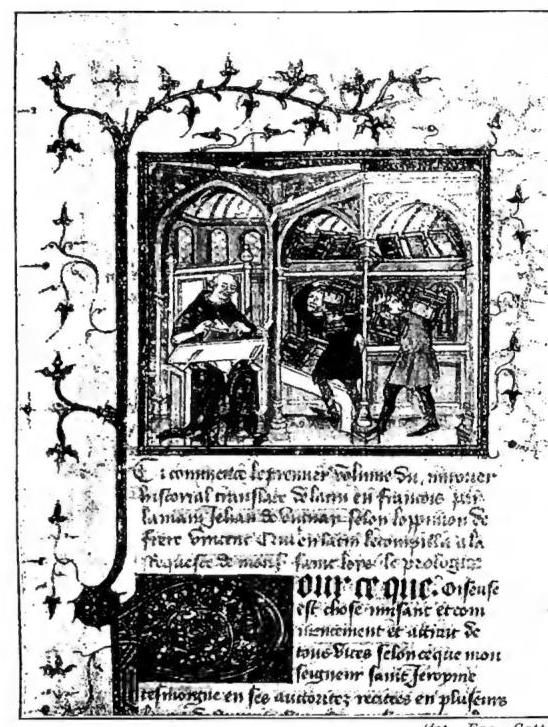
(phot. Enc. Catt.)
VINCENZO DI BEAUVAIS - V. di B. in his study, intent on writing the Historiae maius; at his side, attendants bringing him volumes. Miniature from a French school of the first half of the 15th century, adorning the Incipit of the first book of the Miroir historial, translated by Jean de Vignay. Vatican Library, cod. Reg. lat. 538, f. 1r.
tia: a theological-ascetical treatise on the Sacrament and the spirit of penance (Paris, Bibl. naz., Cat. 3214); Expositio orationis dominicae et salutationis B. Mariae (ibid., 1489).
The work of V., particularly the Speculum, is valuable as a collection of texts that would otherwise have been lost, and as a historical source for events contemporary with him (e.g., the foundation of the various religious Orders). V., rather than an encyclopedist of the type of s. Alberto Magno or Bacone, was a compiler without a personality of his own, concerned with gathering material to place at the disposal of others; admirable is his diligence in selecting and indicating the exact references of the authors cited and in summarizing their thought, which he organizes methodically, demonstrating that he had assimilated it; he often explains and clarifies obscure passages.