
LULLO, RAIMONDO (LULL RAMÓN). - Man of letters, poet, philosopher, theologian, mystic (Doctor illuminatus), b. in Palma de Mallorca in 1232 or, more likely,
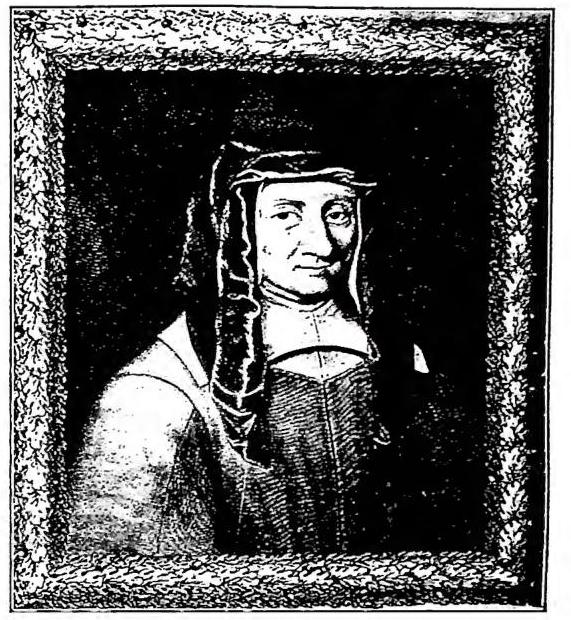
Page to James I at the age of 14, he initially led a courtly life. In 1256, seneschal of the King of Mallorca, he married Doña Bianca Picany, by whom he had two daughters. Following a vision, he abandoned worldly life and became a hermit (c. 1265) and a Franciscan tertiary, wandering from sanctuary to sanctuary and devoting himself to the study of Latin and Arabic and to the reading of various philosophical and theological works. Having retired, after 9 years, to Mount Randa to devote himself to contemplation, he experienced the "great illumination" from which the Ars magna derived, written in the monastery of S. Maria de la Reyal. From this moment begins the intense literary and scientific activity that attracted the attention of the King of Mallorca. With his help L. founded a college at Miramar where 13 Friars Minor were prepared in the study of Eastern languages for the conversion of infidels (1276). Great uncertainty reigns regarding the journeys attributed to him in the period 1276-86. It seems certain, however, that he was in Rome in 1278, and then in the Holy Land, visiting various countries of the Muslim world. In 1286 he was in Paris, in 1287 in Miramar, and then in Rome to induce Honorius IV to found schools of Eastern languages. Having achieved nothing due to the Pope's death, he returned to Paris, where he insisted on his request without any result. In 1291 he was again in Italy; the following year he went to Tunis to dispute with the Saracens. Imprisoned, he managed to escape, landing in Naples (Jan. 1293), where he taught publicly and where he presented his petition Pro conversione infidelium to Celestine V. In 1295 in Rome and in 1297 in Anagni he renewed his petition to Pope Boniface, together with that for a Crusade and for the union of the Greek Church. Discouraged, he departed for Genoa and Paris, where he clashed with his greatest adversary, Averroism, against which he wrote the Declaratio Raymundi and other treatises (Dec. 1297-July 1299). Among the Averroists met in Paris is that Pietro Veneto who in the Consolatio Venetorum rails against fortune and who, in all likelihood, is Pietro d'Abano. In Oct. 1299 he was again in Spain, and in the summer of 1300 certainly in Mallorca. Hoping for the Crusade promised by Boniface VIII, in 1301 he left for Cyprus. In the East he dis-
puted with the Saracens, the Nestorians, and the Greeks. In 1302 he landed in Armenia, where he ran the risk of being poisoned. In 1303 he was in Genoa; in 1305 in Barcelona, then in Montpellier and Lyon, where he attended the coronation of Clement V; in 1306, having returned to Mallorca, he sailed for Bugia, where he took to preaching in the streets against the Mohammedan faith, and was imprisoned. Expelled and embarked on a Genoese ship, he suffered shipwreck off the Pisan coast, losing his books. In Pisa he remained until 1308 and resumed with new alacrity his literary activity and his propaganda in favor of the Crusade. In Oct. 1308 he was again in Montpellier, whence the following year he departed, begging, for Avignon. Having returned to Paris, between Nov. 1309 and Sept. 1310 he resumed his polemic against Averroism, without desisting from the idea of the Crusade. In Feb. 1310 forty masters and bachelors of Paris attested that the Ars brevis of L. contains nothing against the faith. In 1311-12 he went to the Council of Vienne in Dauphiné, to ask that the teaching of Averroism be prohibited, that the Crusade be proclaimed, that all chivalric Orders be merged for this purpose, and that schools of Eastern languages be opened. After which he returned to Montpellier. He then went to the court of Frederick II of Aragon in Messina. Having returned to Mallorca, on Aug. 14, 1314 he sailed for Barbary, where, attacked by the fanatical population of Bugia, he concluded his wandering life, spent for the cause of Christ's faith, with martyrdom. In Mallorca and Catalonia he was venerated with the title of blessed as early as the 14th century.
His numerous and varied works were penned during halts and often between one stage and another of his journeys, and with the same fervor and ardor as the journeys themselves. His literary activity is ordered toward missionary action, which intertwines inextricably with speculative thought and mystical elevations. There are, indeed, also purely speculative systematic works, such as the Libre de contelpaio originally written in Arabic in Mallorca and then translated into Catalan, the Ars magna, the Liber principiorum philosophiae, and the Liber principiorum theologiae, but after 1277 occasional and polemical writings prevail, whether the author refutes Averroism, sets forth his reform plans, or expresses the bitterness of a disappointed soul, as in the Canto de Ramón, of 1299. In Rome, in the spring of 1296, "in desolatione et fletibus stans Raymundus", he had nevertheless completed the Arbor scientiae, a summary of his encyclopedic knowledge. In all, the currently known writings number around 230, not counting those lost or of dubious authenticity. Numerous apocrypha circulated under his name at the end of the Middle Ages and in the Renaissance.
The philosophical and theological thought of L. is essentially that of the Franciscan Augustinianism of the second half of the 13th century. Entirely his own, however, are the demonstrative procedure, the mystical ardor, and the romantic coloring of writings such as Blanquerna and Felix de les meravelles del mon, which are two masterpieces of Catalan literature. His Ars magna is a hairsplitting way of arguing in symbolic theology based on dignitates divinae and on equipollence. His critique of Averroism is weak, because it does not strike the adversary on the ground of Aristotelian critique.
The merit of L. is having made it understood that, in order to win Islam to the Christian faith, it was essential to learn its language and science.