
«AVE MARIA». - Prayer to the Virgin, also called, since the Middle Ages, the Angelic Salutation. Today it is composed of two distinct parts: in the first, the words of the archangel Gabriel, Ave gratia plena; Dominus tecum; benedicta tu in mulieribus (Lc. 1, 28), are sealed with those of St. Elizabeth, Et benedictus fructus ventris tui (Lc. 1, 42); the second contains the Church's trusting invocation to the Mother of God. The names of Jesus and Mary were added to the biblical text as a clarification (cf. Lc. 1, 27, 31) and an expression of filial piety.
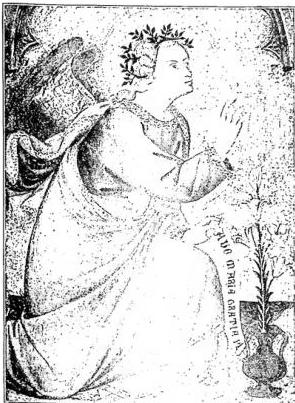
b) The words Dominus tecum (implied est, not sit, nor erit), better clarified later by the others: Ne timeas, Maria, invenisti enim gratiam apud Deum (v. 30), constitute the essential word of the divine message. Indeed, the expression—very frequent in Holy Scripture to signify a glorious and formidable task that God, in extraordinary conditions, entrusts to a person chosen by Himself, with the assurance of His help and the implicit prophecy of a happy outcome (cf. Is. 8, 10 and Rom. 8, 31), as to the Patriarchs and the leaders of Israel (cf. Gen. 15, 1; 26, 24; Ex. 3, 12; Deut. 31, 23; Judc. 6, 12, 16; I Sam. 10, 7)—denotes the singular mission of the Virgin in the order of divine redemption: She is the one chosen by God to fulfill the great promise: Inimicitias ponam inter te et Mulierem; et semen tuum et semen Illius (Gen. 3, 15). Mary's cause will be that of her Son. The aged St. Simeon also alludes, in his prophecy, to this epic struggle in which Christ and the Virgin on one side, and Satan and his followers on the other, are the protagonists (Lc. 2, 34-35). For this reason, in the Catholic liturgy the Blessed Virgin is honored as the warrior woman (cf. Cant. 6, 9), vanquisher of all heresies, powerful helper of Christians.
c) The other words Blessed are you among women (the expressions inter mulieres [cf. V. 42 Vulg.] and in mulieribus, a Hebraism with the value of a superlative, are equivalent; cf., however, J. Beelen, Gramm. Graecit. N. T., Louvain 1857, p. 254), according to the best Greek codices, such as the Vatican and the Sinaitic, which omit them, would not belong to the angelic message. However, they are given not only by other codices and ancient versions, by the textus receptus and the Vulgate (cf. J. Knabenbauer, in h. l. and A. Merk, N. T. gr. et lat., 4th ed., Rome 1942, p. 189); but also by the Protevangelium of James (XI, 1), by Tertullian (De Virgin. vel., 6: PL 2, 897), by Eusebius (Demonstr. evang., VII, 1: PG 22, 517): testimonies which M.-J. Lagrange (on Lc. 1, 28) judges to be "d'excellentes autorités", while adding that they "sont suspectes d'avoir harmonisé avec V. 42". It must be observed, however, with other critics and exegetes, that nothing prevents such praise from having been addressed to the Virgin twice: by the archangel Gabriel (v. 28) and by St. Elizabeth (v. 42), who, "filled with the Holy Spirit" (v. 41), completed it by giving its profound reason in the blessed fruit of her womb, in which precisely, according to the messianic promises to the Patriarchs, "all nations" would be "blessed" (Gen. 22, 18; 26, 4; 28, 14, and Io. 1, 16 and Gal. 3, 8-16). Theologically those words are essential: without them the angelic message would remain incomplete, neglecting the true reason for the "Dominus tecum"; they are required by Annunciation (v.) has with the Protoevangelium (Gen. 3). Indeed, with them Mary is proclaimed the "new Eve", the true "mother of the living" whom the Evangelist will call "children of God" (Io. 1, 12; I Io. 3, 1), the only one among women who did not merit and did not hand down condemnation, but the blessing, because through her God dissolved the ancient curse and blessed the wretched children of Eve (cf. St. Sophronius, Orat., II, 22: PG 87, 3242; ps.-Hier. [Paschasius Radbertus], Ep. 9, 5: PL 30, 127; St. Bernard, Hom. II super Missus est, n. 3: PL 183, 62 sq.).
d) Thus, concise yet rich in theological content ("arcana mysteria reserans": St. Bernard, De diversis, Serm. 52, 2: PL 183, 675), the salutatio (Lc. 1, 29) of the archangel Gabriel—already the messenger of the messianic era in the Old Testament (Dan. 9, 21-27)—announces, as the dawn of redemption, that Mary is the Immaculate ("full of grace": cf. Pius IX, bull "Ineffabilis", Dec. 8, 1854), because she was chosen by God as co-redemptrix of the human race ("the Lord is with you"), as the new Eve ("blessed are you among women"), Mother of God and our Mother, universal mediatrix of grace. And it is only in this messianic light that the unique dignity of the Virgin must be considered, in order to be properly understood, to which the Church justly pays a special cult called "hyperdulia".
e) The angel's conversation further recalls Isaiah's prophecies concerning Emmanuel (7, 14), the "prince of peace" (9, 6-7). If the prophetic name of Emmanuel points directly to the mystery of the divine Incarnation which was yet to take place, that of Jesus, announced by the angel (Lc. 1, 31; 2, 21), better expresses the task of the Messiah who had already come among men as "savior" (Mt. 1, 21-25; Lc. 2, 11); but, with Cornelius a Lapide, Knabenbauer, and Holzmeister, it must be immediately noted (cf. Mt. 1, 22-23) that the name of Emmanuel, "God with us", that is, "God who is present to help and save", is formally the same as Jesus ("God is salvation"): the holiest, the sweetest, the most joyful of names (cf. Jubilus de nom. Jesu: PL 184; 1317-20).
f) As in the A., so in the divine history of Redemption and in the life of the Church, the name of Mary is indissolubly joined with that of Jesus. Therefore the A., which summarizes all the privileges and glories of the Virgin, is, after the Pater, the most heartfelt, the most beautiful prayer of Christians—always new and sweet—which has inspired supreme geniuses. Dante hears it sung in paradise, intoned by Gabriel, to whom the blessed respond in choirs with a visible increase in their brightness (Par., XXXII, 94 ff.; cf. III, 121 sq. and XXIII, 88-111).
II. The history of the A. spans a millennium of gradual development, from the 6th century, when it arose as a liturgical expression, to the 16th, when it became established in its present text.
a) For the East, we find testimony in two Egyptian ostraka, from the 6th or 7th century, on which the first part of the A. is read in Greek (text in Leclercq). Furthermore, the ancient liturgies, taken as a whole, attest to a certain unanimity of the Eastern Churches in honoring the Virgin in this way (Syrian Liturgy of St. James, the Egyptian of St. Mark, and the Ethiopian of the XII Apostles, in F. E. Brightmann, Liturgies Eastern and Western, I [Oxford 1896], 56, 128, 218). To the twofold biblical greeting they added the words: "Because you have generated the Savior of our souls".
Per l'Occidente, grande valore ha l'offertorio della IV domenica d'Avvento della liturgia romana, che risale al tempo di s. Gregorio Magno, e ci dà il testo nella sua forma originaria, quale fu in uso per tutto il medioevo: Ave, Maria, gratia plena: Dominus tecum: benedicta tu in mulieribus et benedictus fructus ventris tui. La liturgia ambrosiana reca la variante, secondo la Volgata in Lc. 1, 42, inter mulieres (Transit. della VI dom. d'Avv.).
b) Benché inserita nella liturgia, l'A. non divenne subito formola abituale di preghiera del popolo. Solo alla fine del sec. XII troviamo le prime prescrizioni relative alla recita dell'A. Il vescovo di Parigi, Odone de Solia, nel Sinodo del 1198 raccomandava: «Exhortentur populum semper presbyteri ad dicendum Orationem dominicam, et Credo in Deum, et 'Salutationem Beatae Virginis'» (Mansi, XXII, 861). Nel secolo seguente, molti concili d'ogni nazione ripeteranno simili prescrizioni (ad es., il Sinodo di Coventry in Inghilterra, del 1237: ibid., XXIII, 432); onde, a partire da quest'epoca, l'uso dell'A. si generalizza e, in grazia soprattutto del rosario mariano (v.), l'A. diviene una delle preghiere più care alla pietà cristiana.
Ad Urbano IV (1261-64) si attribuisce l'introduzione del nome di Gesù nel testo dell'A.; ma non è certo. L'invocazione Sancta Maria, Mater Dei, ora pro nobis peccatoribus, nunc et in hora mortis nostrae. Amen, formatasi gradualmente nelle singole frasi tra il sec. XIII e il XV, entrava anche nell'uso dei fedeli. La formola integrale odierna dell'A. fu fissata da s. Pio V, che nel 1568, riformando il Breviario romano, ne prescrisse la recita, insieme con quella del Pater, all'inizio d'ogni ora canonica. I Domenicani, tuttavia, hanno conservato l'antica formola (fino a Jesus) nell'Officium Parvum B. M. V., che si recita ogni giorno nei loro noviziati e studentati.
c) Nella liturgia, l'A. si presenta come antifona (Vespri della festa dell'Annunziazione) e come offertorio nelle Messe in onore della Madonna. — I polifonisti hanno preso questa preghiera come mottetto sviluppando il tema gregoriano: così Josquin des Prés, Palestrina e il Vittoria. Nei secoli più vicini a noi, i musicisti hanno trattato il testo con più libertà.
Alcune di queste composizioni sono rimaste celebri, come l'A. di Schubert, Gounod, Cherubini, Mozart, Mendelssohn e di molti altri, tutte in stile extra-liturgico e quindi da escludersi nelle funzioni sacre, ma degne elevazioni dello spirito e nobile omaggio dell'arte alla Vergine Madre.
Inoltre: F. Zorell, Was bedeutet der Name Jesus?, in Zeitschrift für katholische Theologie, 30 (1906), pp. 764-66; id., Maria, soror Mosis, et Maria, Mater Dei, in Verbum Domini, 6 (1926), pp. 257-63; id., s. v., in Lexicon Graecum N. T., 2ª ed., Parigi 1931, col. 797 s., con bibl.; C. Beckermann, «Et nomen virginis Maria» (Lc. 1, 27), in Verbum Domini, 1 (1921), pp. 130-136; E. Hugon, Marie pleine de grâce, 5ª ed., Parigi 1926 (commento teologico al detto: Plena sibi, superplena nobis).
II. J. Mabillon, Acta SS. O. S. B., sacc. V. PREFAZIO, nn. 119-28; G. C. Trombelli, De cultu publico ab Ecclesia B. Marine exhibito, Dm.
4ª, in J. J. Bourassé, Summa Aurea de laud. B. V. M., IV, Parigi 1862, pp. 209-42; Th. Esser, Storia della Salutazione Angelica, in Il Rosario, Memorie Domenicane, 3 (1886), pp. 334-338, 375-79, 462-67, 494-99, 615-23, 749-53, tradotto dal Historisches Jahrbuch der Görresgesellschaft, 5 (1884), pp. 88-116; U. Berlière, Angelique (salutation), in DTRC, I (1905), coll. 1273-1277; H. Leclercq, Prière à la Vierge Marie sur un ostrahou de Lousser, in Bulletin d'ancienne littérature et d'archéologie chrétienne, 2 (1912), pp. 3-32; l'importante articolo fu riassunto dal Vacandard, L'histoire de l'Ave Maria, in Revue du Clergé Français, 71 (1912, III), pp. 315-19; fu poi riprodotto in Hefele-Leclercq, V, Parigi 1913, coll. 1734-59, app. 4ª (Sur la Salutation Angélique prescrite par le canon 7 du Concile de Béziers en 1246), quindi, con leggere varianti, in Monumenta Ecclesiae Liturgica, I, II, Parigi 1913, pp. CCXVI-CCXXVIII (§ 52: Salutation Angélique et prière à la Vierge Marie), e s. V. Marie (Je vous salue), in DACL, X (1932), coll. 2043-62; E. Campana, Maria nel Culto Cattolico, I, Torino 1933, pp. 519-64; M. Roschini, L'A. M.: note storiche, in Marianum, 5 (1943), pp. 177-85. Interessanti riferimenti in A. Wilmart, Auteurs spirituels et textes dévots du Moyen Age Latin, Parigi 1932 (v. indice).
Per la bellezza dell'A. e il suo posto nella musica religiosa, J. Bricout e A. Gastoué, in Dict. pratique des connaissances religieuses, I, Parigi 1925, coll. 568-71.
Per la letteratura ascetica ricordiamo solo s. Alfonso, Le Glorie di Maria, parte 2ª (Oscopis); e l'Expositio Salutationis Angelicae, da attribuirsi a s. Tommaso d'Aquino, come dimostra Giov. Rossi dandone l'ediz. critica in Divus Thomas, 34 (Piacenza 1931), pp. 445-79.