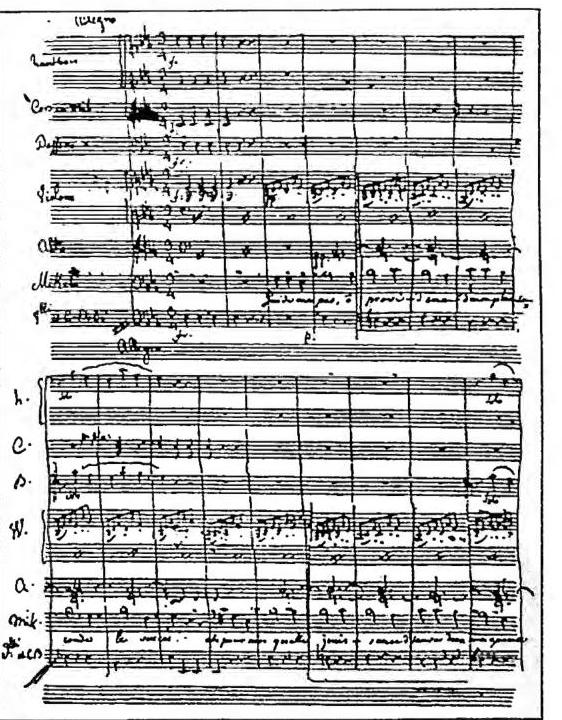
CHERUBINI, LUIGI. - Musician, b. at Firenze on 14 Sept. 1760, d. at Parigi on 15 March 1842. He was a pupil of his father, then of the Florentine masters Felici, Bizzarri, and Castrucci. But he was formed in the school of Sarri at Bologna. In 1784 he went to England, which he left for Parigi, where he had met Viotti. Despite his merits and triumphs, Napoleone neglected him; he therefore went to Vienna in 1805, where he had Fanischa performed, which received the flattering judgment of Haydn and Beethoven.
C.’s musical output is very extensive: about 20 operas, 10 masses, symphonies, cantatas, quartets, theoretical works, and the Corso di contrappunto e fuga. He himself compiled the catalogue of his compositions. In 1822 he was appointed director of the conservatory of Parigi, a post he held until his death.