
GOUNOD, CHARLES. – Musician, born in Paris on 17 June 1818, died at St-Cloud on 17 October 1893. Of precocious talent, he studied music, literature, and philosophy. Winner of the Grand prix de Rome, he was in Rome in 1840 and 1841, where he was captivated by Palestrinian polyphonic performances, to such an extent that he himself composed a Mass, subsequently performed with success, which earned him the appointment as choirmaster at S. Luigi de' Francesi.
He was subsequently in Vienna and Leipzig. Returning to Paris, he began a brilliant operatic career. He wrote numerous operas that met with varying success, among them Faust, a genuine masterpiece. He composed a great deal of sacred music: the oratorios Tobias, Jésus sur le lac de Tibériades (1882), La Rédemption (1883), Mors et vita, four solemn Masses, motets, a Stabat, a Requiem, and the celebrated Ave Maria adapted to Bach’s prelude.
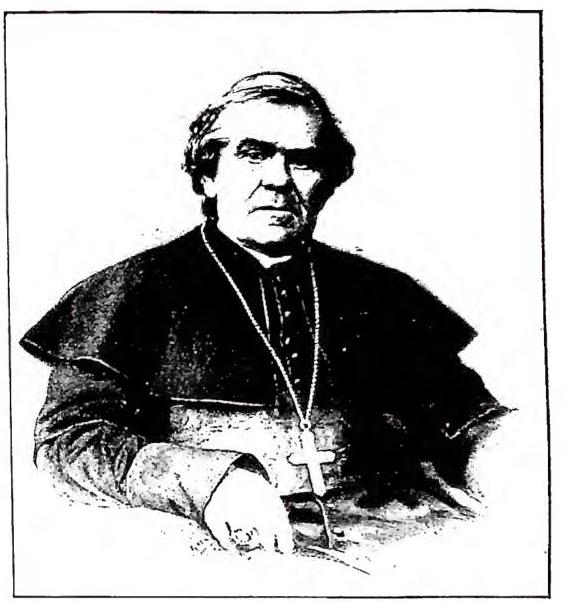
(from Panthéon des illustrations françaises au XIXe siècle, published under the direction of Victor Frand-Clergé, Paris, n.d.) GOUSSET, THOMAS-MARIE-JOSEPH – Portrait. Lithograph.