
PALESTRINA, GIOVANNI PIERLUIGI da. — Musician, born in Palestrina to Sante Pierluigi and Palma, of uncertain family name; the majority of scholars, on well-founded arguments, have by now agreed to assign his birth to 1525. It is probable that he received his first musical instruction in his native town; having gone to Rome at a very early age, he continued his studies; he was admitted to the choir of S. Maria Maggiore, whose archpriest was Cardinal Andrea Della Valle, bishop of Palestrina, and whose chapel master was Rubino Mallapert; in 1540 the latter was succeeded by Firmin le Bel, in whom P.’s teacher is to be recognized.
After his voice changed, he returned to Palestrina, where he assumed the office of organist and singing teacher in the cathedral of S. Agapito, and on 12 July 1547 married Lucrezia Gori, by whom he had three sons, Rodolfo and Angelo, who died before their father without issue, and Igino, some of whose descendants can still be traced in the second half of the 17th century. News of this period is again lacking; it may nevertheless be supposed that the musician became acquainted with Cardinal Giovanni Maria Del Monte, who, having been elected pope in 1550, summoned him shortly afterward to direct the Cappella Giulia. P. took office on 1 Sept. 1551; in the autumn of 1554 he published his first book of masses, dedicating them to his protector, who the following year appointed him a papal singer. When Giulio III died in March 1555, his successor Marcello II Cervini continued to favor him, but died after three weeks; in memory of this Pontiff P. wrote, at an unspecified time, the Missa Papae Marcelli. The new Pope, Paolo IV Carafa, who immediately began his severe reforming work, revoked the lifetime appointments of lay and married papal singers; thus P. was dismissed together with Leonardo Barré
and Domenico Ferabosco. The musician had the good fortune to take up immediately the then vacant office of chapel master of S. Giovanni in Laterano, on 1 Oct. of that same year 1555, and held it, amid various difficulties, until the summer of 1560. The following year, again as chapel master, he moved to S. Maria Maggiore. In 1559 Pio IV Medici ascended the papal throne, during whose pontificate the Council of Trent concluded (1563), whose importance for decisions concerning the liturgy and ecclesiastical music is well known. What universally spread P.’s renown is closely connected with the reforms proposed by that Council; this participation was surrounded by a legendary aura: thus it was long said that the Mass of Pope Marcellus had saved polyphonic music from the Council’s prohibition. That Mass, which in fact represents a new style of which P. was deeply conscious, was written in accordance with requirements to which the Council’s decisions were to lend new force and effectiveness. Be that as it may, it is certain that Cardinals Vitellozzo Vitelli and Carlo Borromeo took steps as early as Jan. 1565 to implement the deliberations of the Council of Trent, beginning precisely by reorganizing the Pontifical Chapel. It is in fact recorded that in the house of Cardinal Vi-
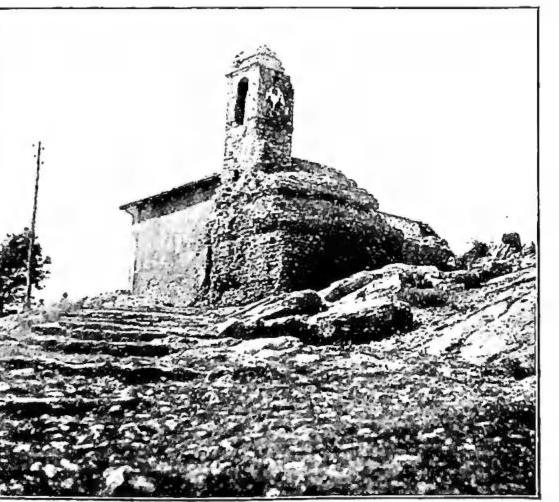
(phot. Knit)
P.’s music already appeared to his contemporaries as an artistic summit of almost absolute perfection: several elements contributed to this assessment, not only artistic in nature but more broadly historical and cultural as well. Yet, a few decades after P.’s death, musical taste underwent such a radical change that direct knowledge of his works rapidly declined.
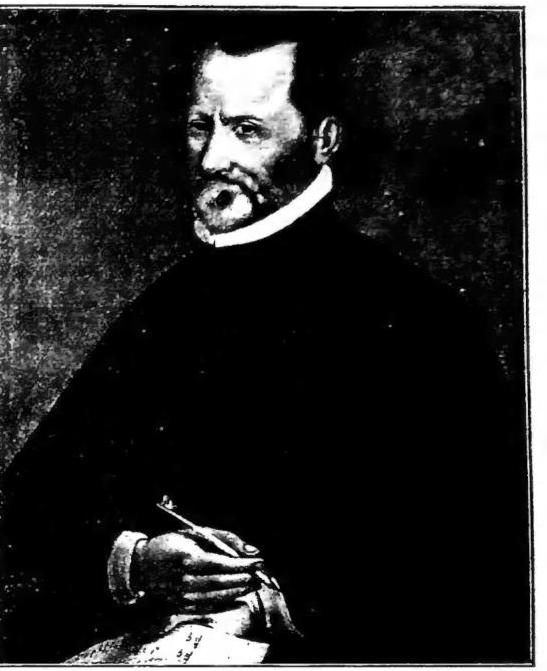
PALESTRINA, GIOVANNI PIERLUIGI da. — Portrait. Anonymous contemporary painting — Dressing room of the singers of the Sistine Chapel.
In the centuries-long historical development of polyphony, no one before P. had succeeded in achieving so pure, homogeneous, and essential a vocal style. The most evident qualities of this astonishing vocality are found first of all in the movement of the melody woven upon conjunct degrees and intervals of the most natural intonation. The unfolding of the composition is subtly regulated by a rhythmic flow that seems like an alternating breathing of accents in the individual voices, and by an expressive sense of harmony in which triadic chords predominate with the fullness of their sonority. By a natural and infallible gift, certainly not through deliberate calculation, P. avoids everything that might disturb the harmonious arrangement of details within the clear architectural power of the whole: thus the composition is freed from any conflict that might arise from a tension caused by the failure of the melodic, rhythmic, and harmonic factors to fuse. The result is a limpid atmosphere, without modulations of color: a triumph in full light of a musicality that is at once plastic and flexible, capable of reproducing, as in a language of incomparable clarity, the religious rapture of the imagination.
The Palestrinian texts reveal an immense variety of accents and inflections only to those who wish to make them their own through diligent, attentive penetration. In terms of formal analysis, one remains surprised, but even more filled with admiration, at the way in which P. receives from the contrapuntal tradition, represented chiefly by the Flemish musicians, the technical and structural elements in most common use. In his masses there recur the procedures of composition on the cantus firmus, now rigid, now free; on the canon of the strictest rigor; on liturgical or popular melodies; on themes drawn with the greatest freedom from motets and madrigals by himself or by other authors; on motifs invented by him; or on themes whose source it has not been possible to identify. Yet every element is transfigured by the artist in a manner that appears all the more prodigious, the more natural and intense the resulting musical expression. The same may be said of the versatility with which P., in the motets and numerous similar forms, delineates pictures of less extensive
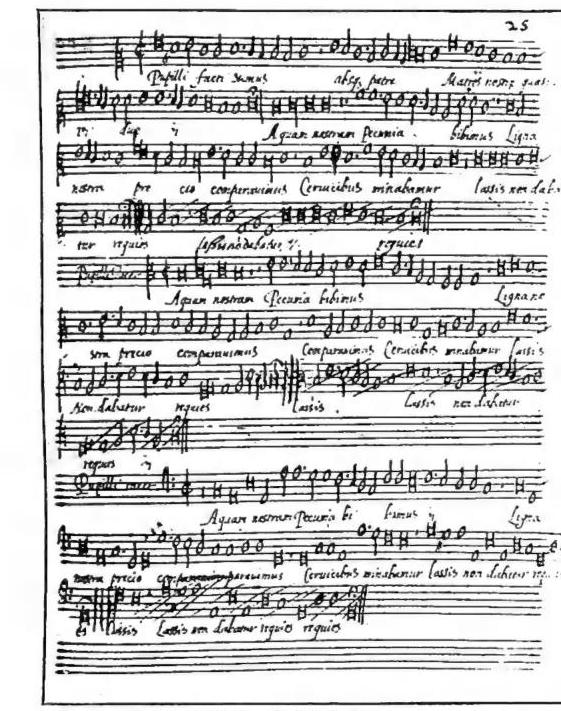
PALESTRINA, GIOVANNI PIERLUIGI da - Autograph manuscript (1555-89) - Rome, basilica of S. Giovanni in Laterano, Musical Archive, cod. 59, f. 25.
scope, but which gather, in the most harmonious and sober connection, the inflections of a penetrating lyricism capable of evoking images and states of mind subtly consonant with the spirit of the text that inspired them.
The fecundity of the Palestrinian genius is attested by the simple list of his works: 39 masses for four voices, 29 for five, 21 for six, and 4 for eight, for a total of 93 masses, to which must be added those recently found in manuscript by Jeppesen in the Library of the Milan Conservatory; more than 300 motets for four, five, six, seven, eight, and twelve voices; hymns, lamentations, litanies, offertories, antiphons, psalms, canticles, responsories, sequences; four books of madrigals, two sacred and two secular; eight ricercars are also attributed to P.
P.’s complete works were published in 33 vols. by de Witt, Espagne, Commer, and Haberl, Leipzig 1862–1903. A new edition, begun by R. Casimiri, is currently being published in Rome, and to date (1952) 17 vols. have appeared.