
VANNUTELLI, SERAFINO. — Cardinal, born in Genazzano (diocese of Palestrina) on 26 November 1834, died in Rome on 19 August 1915.
Ordained a priest in 1860, he was professor of canon and civil law at the Apollinare and of dogmatic theology at the Vatican Seminary. In 1864 he departed for Mexico as auditor to the nuncio Meglia and witnessed all the events that led to the fall of that Empire, returning to Rome after the execution by firing squad of Maximilian (1867).
(phot. National Photographic Cabinet)
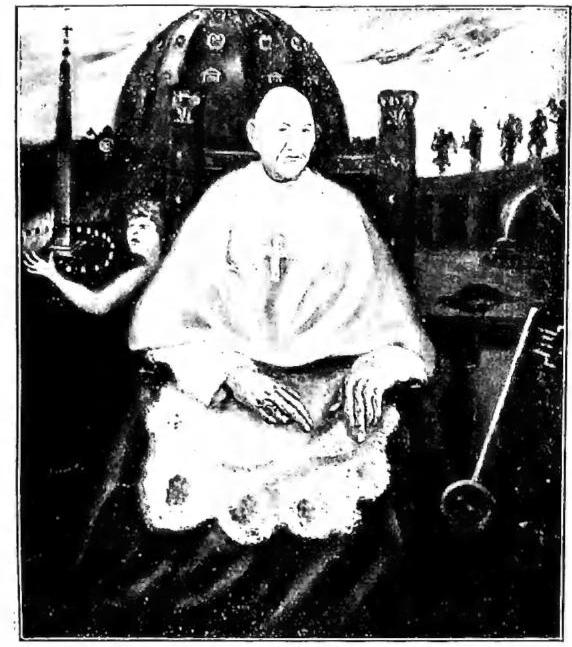
VANNUTELLI, VINCENZO - Portrait, oil painting by Scipione Bonichi (1930) - Rome, Galleria d'Arte Moderna.
beeck for the abolition of religious instruction in schools (1879). On that occasion, the nuncio demonstrated firmness and courage, and in the struggle he undertook he was a sure guide to the entire episcopate. The bitter disputes provoked by the passage of this law led to the breaking off of diplomatic relations and the recall of the Nuncio to Rome. Transferred to Vienna in 1880, he continued the patient work begun by his predecessor Ludovico Jacobini and actively collaborated in the work of bringing Germany closer to the Holy See.
On 24 March 1887, he was created a cardinal by Leo XIII and subsequently held the offices of secretary of the Memorials (1891) and prefect of the Congregations of the Index (1893) and of Bishops and Regulars (1896). In 1893 he was elected archbishop of Bologna, but did not take possession of the see, having opted for the suburbicarian see of Frascati. Major Penitentiary (1899) and secretary of the Congregation of the Holy Office (from 1903 to 1908), bishop of Porto and S. Rufina and under-dean of the Sacred College (1903), bishop of Ostia (1913) and dean.