
BASSILLA. -
I. LA MARTINE
In the calendar of the Roman Church of the first half of the 4th century (Depositio Martyrum) she is called a martyr, buried in the cemetery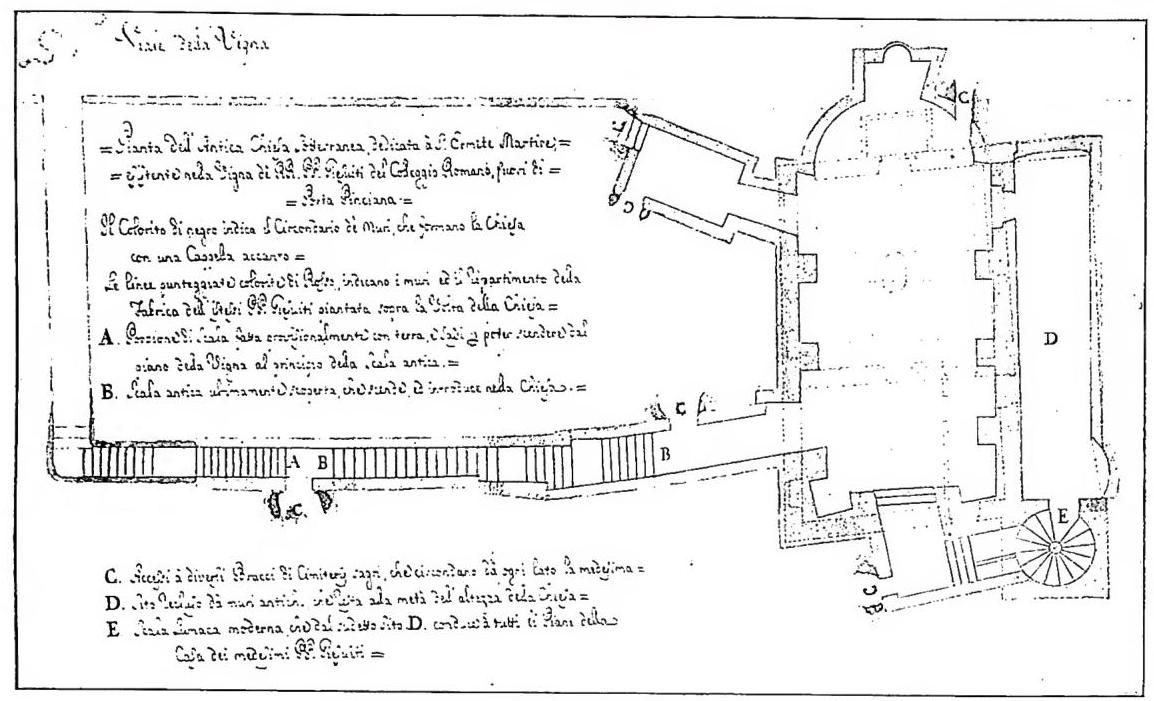
According to the Acts of S. Eugenia, B. is said to have been the niece of the Emperor Gallienus and martyred in the persecution of the same emperor (253-68). Although these acts are of a romancing nature, nevertheless De Rossi and other scholars after him found it more fitting to the general historical setting to accept that B. was a most noble Roman lady, owner of the estate in which the catacomb named after her was later excavated, and martirized in the time of Gallienus. In this case, the date 304 of the Depositio Martyrum and June 11 of the Hieronymianum would mark only the memory of a translation. The year 304, however, must be considered as the year in which B.'s martyrdom took place.
II. IL CIMITERO SULLA VIA SALARIA VETERE
Constava di un'area sopra terra e di due piani di gallerie sotterranee che si estendono sotto le attuali vieBartoloni, Siacci, Giordano e Denza; ma le costruzioni hanno seriamente danneggiato gran parte di questo cimitero, detto anche di S. Ermete.
Dal cimitero all'aperto provengono alcune iscrizioni cristiane, come il cippo che reca scolpito il Buon Pastore, con la pecora sulle spalle e due pecore ai lati e sotto l'iscrizione ΤΟΛΑΙΑ ΑΚΑΛΗΠΙΑΚΗ.
Il nome del cimitero è ricordato nella Depositio Martyrum per indicare i sepolcri di s. ERMOGENE (v.) e dei ss. Proto e Giacinto (v.), mentre per B. è indicata la via Salaria Vetere. In altri documenti posteriori, come il Martirologio geronimiano, gli «Olii di Monza», gli «Itinerari», ricorrono i nomi di altri martiri depositi in B., cioè Massimiliano, Ercolano, Crispo, Vittore e Leopardo. Quanto alla denominazione, alcuni ritengono che la martire B. accompagnata dalla data del 304 nella Depositio Martyrum sia la fondatrice del cimitero, per altri invece avrebbe avuto la sua denominazione da una omonima anteriore, donatrice dell'area.
In una galleria del primo piano il p. G. MARCIA (v.) rinvenne il 21 marzo 1845 il sepolcro intatto e l'epitafio del martire Giacinto.
Nel secondo piano sorge la basilica eretta sul sepolcro di s. Ermete, identificata da A. Bosio, fin dal 1608, mediante un frammento architettonico da lui veduto con la scritta Herme (Roma sotterranea, Roma 1634, p. 560).
La grande aula rettangolare absidata ad una sola navata, misura m. 17 di lunghezza, 7 di larghezza e m. 16 di altezza. Venne restaurata più volte, a cominciare dal papa Pelagio II (578-90), ma specialmente nei secc. XVI-XVIII-XIX. L'accesso antico era nella parete sinistra mediante una larga scala; l'attuale scala a chiocciola è del sec. XVIII.
Nel 1940 a ca. 13 m. dal piano dell'aula lo scrivente riconobbe in una piccola abside sotto una mano di scialbatura le seguenti pitture: nella calotta il Salvatore con il volume aperto in cui si legge Ego sum pastor bonus et cognosco oves meas, tra due angeli; al di sotto Maria regina su trono gemmato sorreggente il Bambino Gesù; alla destra l'arcangelo Raffaele, s. Ermete e s. Giovanni evangelista; a sinistra l'arcangelo Gabriele e s. Benedetto. Le pitture non sono anteriori alla fine del sec. VIII.
Davanti all'absidiola si erge un altare isolato a blocco di tufo lionato (alto m. 0,90) con pozzetto per reliquie.
Pitture più antiche furono segnalate già dal Bosio in cubicoli e arcosòli del cimitero. Particolarmente importanti quelle con la scena del Giudizio, del Signore e i dodici apostoli in cattedra; in un arcosolio rimangono anche tracce d'una decorazione musiva con Daniele tra i leoni, resurrezione di Lazzaro, ritratto d'un defunto.
Lungo gli ambulaci sono state di recente sistemate numerose iscrizioni cristiane greche e latine; tra queste sedici frammenti dell'esastico del prete Teodoro relativo ai lavori eseguiti presso il sepolcro dei martiri Proto e Giacinto e due frammenti del carme damasiano in onore del martire Ermete. Iscrizioni provenienti da questo cimitero si conservano anche nel museo Capitolino e nel museo Cristiano Lateranense; tra queste, due contenenti una invocazione alla martire B.