
STABAT MATER. – A sequence known in many versions, from missals and liturgical books (approximately thirty, between the mid-fourteenth and the end of the fifteenth century) and from manuscripts; to these must be added, on account of their antiquity and authority, two texts, one included in the Annales Genuenses of Giorgio Stella (fourteenth century) and one found in the Rosarium Sermonum of Bernardino de' Busti (fifteenth century).
The first problem, then, is that of the critical reconstruction of the text, a solution to which it will be very difficult to arrive if one assumes that the original text can be recovered: even the few versions compared by Tenneroni and Ermini (fewer than a dozen) range from approximately forty to a hundred verses. One should also bear in mind, as Ermini rightly writes, that in the Middle Ages writings of liturgical literature were very rarely connected with their authors, and that, indeed, often “a celebrated sequence is nothing more than a skilful variation or abridgement of one or more earlier sequences, carried out by a writer of original poetic talent,” and itself subject, without interruption, to subsequent variations and abridgements. This is precisely the case with the S. M.; in practice, however, the
(photo Knit)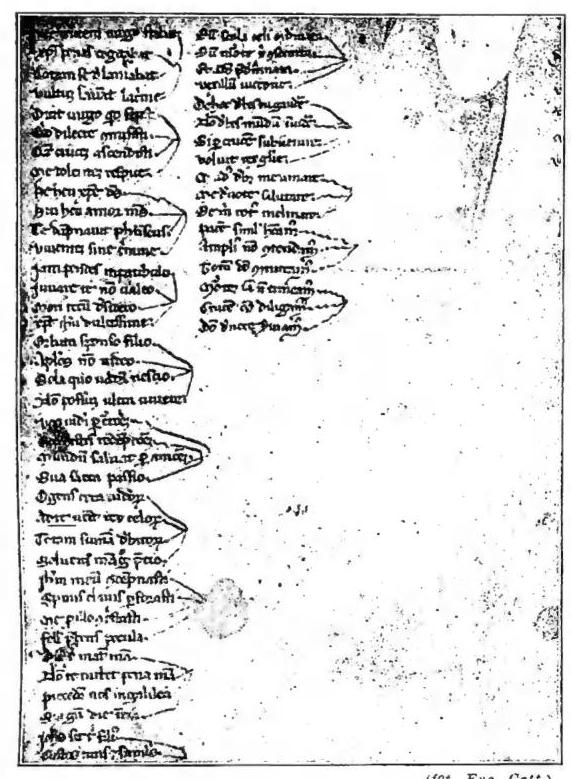
(photo Enc. Catt.) STABAT MATER - Ante crucem virgo stabat, a sequence mentioned among the sources of the present text of the S. M. Cod. Vat. lat. 2423, f. 1° (13th–14th century) - Vatican Library.
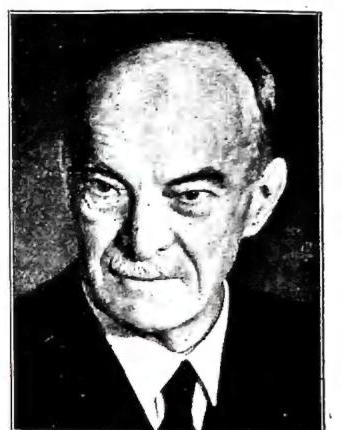
As for its author, among the many to whom the S. M. has been attributed (Giovanni XXII, St. Bernard, St. Bonaventure, Innocent III, Gregory IX), Iacopone (v.) da Todi has received a notable number of votes from scholars, especially through the merit of Ermini, since it is attributed to him, among others, by two 14th-century codices and by the Brescia edition of 1495. However, stylistic comparisons with Iacopone’s other poems yield rather uncertain and debatable results, and perhaps for this reason the most recent and qualified scholars of Jacoponic lyric poetry (such as M. Casella, N. Sapegno, and L. Russo) do not express an opinion on the attribution of the S. M., or mention it only in passing. In any case, it is beyond doubt that the general tone and emotional attitude of the sequence correspond to those of various poems and expressions of the poet from Todi, and that, from a psychological point of view, it would suit the final years of his life (1303–1306).
Above all, it is beyond doubt that the S. M. fits harmoniously within a long and rich tradition (from the collections of Blume, Dreves, Mone, Daniel, and Chevalier, no fewer than 134 hymns have been identified whose subject is the Compassio Mariae), synthesizing and sublimating it with the seal of the art of a poet who knew how to unite sincere and profound emotion, at times not far removed from the rapture of mystical contemplation, with a simple, fluent language,
yet dense with well-placed scriptural reminiscences. The simplicity of the diction corresponds to that of the meter: the six-line stanza, called versus caudatus triperitus, composed of two parallel members, each consisting of two regular octosyllables and a proparoxytonic senary, rhyming aab, ccb.
This is a development and simplification of the Latin catalectic trochaic tetrameter, much used in the Middle Ages in sacred and profane compositions. Having first been broken into two verses (because of the strong medial caesura that characterized it), on the model of the Pange lingua (scheme ab ab ab, where b always represents the proparoxytonic verse), it could subsequently provide the basis for other combinations, one of the most successful of which is that of the S. M. This by then observes the new laws of descending rhythm, with stress on the odd-numbered positions, as was the case with the classical trochaic tetrameter.
In the S. M., the unity of the rhythmic period corresponds to the unity of the logical period: that is, the thought is presented in each stanza as harmoniously developed and self-contained, while maintaining a gradual and highly effective transition from the opening, in which representation predominates (stanzas 1–4), to the central section, in which the poet ardently begs to be made a participant in the passio Unigeniti and the compassio Mariae, with expressions overflowing with affection and mystical fervor (stanzas 5–18), and to the concluding section, in which he implores the salvation of his own soul (stanzas 19–20). In short, a composition of high lyrical and religious value, which the Church officially made her own, accepting not only a liturgical tradition that had already long been established and widespread (despite considerable variants, the S. M. is found inserted in the Franciscan missals of the early 14th century, in the York Missal of 1390, and in that of Breslau of 1414), but also the desire of the faithful, who had by then made that song one of the sincerest and most moving expressions of their love and devotion toward the Mater dolorosa.
Ruggero M. Ruggieri