
LIBERIUS, POPE. — Nothing certain is known about his life before the papacy: according to the Liber Pontificalis, he was Roman by origin; according to the epitaph, which it is not certain was that of L., he had been a lector and then, for several years, a deacon.
I. THE PONTIFICATE
The beginning of his pontificate, which lasted from 17 May 352 to 23 September 366, coincided with the campaign unleashed by the Emperor Constantius II to compel all the bishops to repudiate the ὁμόνων and condemn Athanasius. L. did not remain inactive. He invited Athanasius to Rome, but the latter instead sent a memorial signed by 80 Egyptian bishops. L. had it examined in a synod and declared his solidarity with Athanasius. At the same time, he sent an embassy to Constantius at Arles to implore the convocation of a general council at Aquileia. The Emperor had it held at his residence in Arles (353) and succeeded in having Athanasius condemned even by the Roman legates. Only Paulinus of Trier refused, and he was exiled. Grieved by the defection of his legates, L. requested a new council, which the Emperor established at Milan (355). But once again violence and threats prevailed over those assembled, with the exception of the Roman legates, Eusebius of Vercelli, Lucifer of Cagliari, and Dionysius of Milan, who were exiled and whose sees were occupied by compliant bishops. L. consoled them with a letter in which he commended himself to their prayers for the trial that awaited him. Indeed, shortly thereafter the eunuch Eusebius arrived in Rome with orders to induce L. to condemn Athanasius; and, having failed, he had him abducted at night and brought to the court at Milan.There too L. conducted himself with admirable fortitude and dignity, so that Constantius exiled him to Beroea in Thrace (355) and put the archdeacon Felix in his place. Toward the end of 357 L. was brought to the court at Sirmium, where he cooperated with Basil of Ancyra in turning imperial favor from the Anomoeans toward the moderate faction. During 358 L. was able to return to Rome, where the faithful received him with joy and affection and refused to accept a divided pontificate, with L. and Felix; the latter therefore, after an unsuccessful attempt to regain his position, withdrew permanently. L. neither took part in nor sent legates to the Council of Rimini (359), which later enabled him to condemn its decisions, to associate himself with the conciliar initiatives—
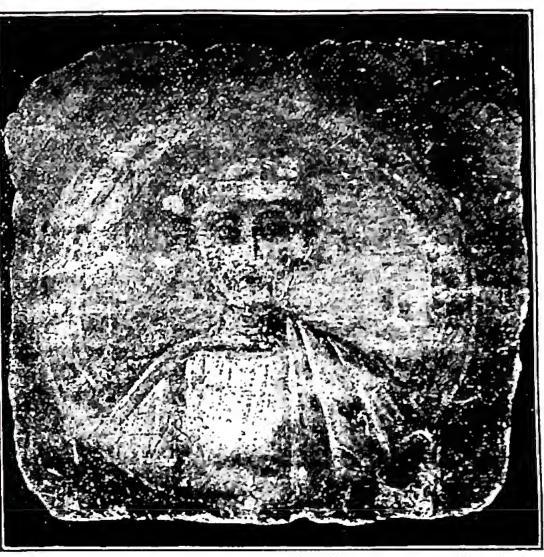
II. LA CADUTA
È questione controversa. Tra i Padri della Chiesa, s. Atanasio vi accenna due volte: nell'Apologia contra arianos, scritta nel 350 ed ampliata verso il 360, menziona L. tra i vescovi a sé favorevoli; però aggiunge che non ha sopportato sino alla fine le privazioni dell'esilio (cap. 8); nell'Historia arianorum ad monachos, scritta verso la fine del 57, dice che L. dopo due anni di esilio, vinto dalle minacce di morte, vacillò e sottoscrisse (cap. 41). Ambedue i passi sembrano indicare, nel loro contesto, che ciò consistesse nell'abbandono di Atanasio. S. Ilario, nella invettiva lanciata nel 360 contro Costanzo, scrive di non sapere se l'Imperatore commise maggiore empietà nell'esiliare L. o nel rimandarlo (Contra Constantium, cap. 2). S. Girolamo, sia nel Chronicon (Ad an. Abr., 2365 = a. 352) che nel De viris illustribus (cap. 97), parla di sottoscrizione di una formola eretica. Il 1° documento della Collectio Avellana nel riportare la risposta di Costanzo alle richieste dei romani: «Avrete L. migliore di come è partito», commenta: «Ciò indicava il consenso con cui aveva ceduto alla perfidia». Rufino finalmente riferisce, senza far sua l'una o l'altra, le due versioni correnti; del ritorno comprato da L. con l'acquiescenza alla volontà imperiale, o dovuto all'accondiscendenza di Costanzo alle richieste del popolo romano (Hist. eccl., I, 27).È evidente che al momento del ritorno di L. a Roma
Rimangono però quattro lettere che L. avrebbe scritto dall'esilio e sono conservate nel Fragmenta di s. Ilario di Poitiers (v.); in esse L. si mostra preoccupato di scindere la sua responsabilità da quella di s. Atanasio e di ottenere a qualunque costo il ritorno a Roma. La disputa sulla loro autenticità è tutt'altro che chiusa, e recentemente fu notato che « la mancanza del cursus velox e delle altre caratteristiche proprie del periodare di L. rendono molto improbabile l'opinione di coloro i quali sostengono che le quattro lettere aritmiche furono dettate dal Papa » (Fr. Di Capua, Il ritmo prosaico nelle lettere dei papi ecc., Roma 1937, p. 240).
In ogni modo, se colpa ci fu in L. questa non coinvolge la infallibilità pontificia. Perché questa fosse coinvolta, sarebbe stato necessario che L., oltre a condannare Atanasio ed entrare in comunione con gli orientali, avesse sottoscritto una formola apertamente eretica ed avesse inteso di imporla a tutta la Chiesa. Ma ciò non risulta affatto. La questione è quindi di ordine storico e non teologico. In ogni modo merita di essere ricordata l'osservazione di P. Batifoll: « « L. ed Ilario [di Poitiers] avevano tesa la mano a Basilio di Ancira; nessuno ne fece rimprovero ad
Ilario; dovremo trattar meno bene L.? Per il momento Costanzo gli fu grato che avesse cooperato ad una pace le cui condizioni si credevano sicure e stabili » (La paix constantinienne et le catholicisme, Parigi 1914, p. 465 sgg.).