
STOPPANI, ANTONIO. – Priest and scientist, b. at Lecco on 15 August 1824, d. at Milan on 1 January 1891.
A seminarian at the age of eleven, first at Lecco and then at Milan, he took part in the Five Days of 1848—occupying himself especially with the manufacture of the small aerostatic balloons by which the insurgents communicated with the neighboring cities—and then followed the Sardinian army, attached to the ambulance corps. Ordained a priest a few months later, he was entrusted with teaching Italian and Latin literature at the Milanese Seminary of S. Pietro Martire, but in 1853 the Austrian authorities had him relieved of his post because of his patriotic sentiments. He then became a tutor in the Porro household, and there began to devote himself to geological studies, in which he was to achieve international renown: the publication of Studi geologici e paleontologici sulla Lombardia (Milan 1857) and subsequently of the four volumes of Paleontologie lombarde in fact earned him the chair of geology at the University of Pavia (1861) and at the Istituto tecnico superiore of Milan (1862), where he thereafter taught continuously, except for a five-year period (1878–1883) spent at the Ist. di Studi superiori of Florence. At Milan he also directed the Civic Museum from 1882 until his death. In 1866 he was a military chaplain during the Third War of Independence, serving in the field hospitals. In 1874 he visited Terrasanta and the Near East; and during the lengthy convalescence to which he was confined in Damascus because of a travel accident, he wrote the fine book Da Milano a Damasco. To the scientist—undoubtedly the foremost Italian geologist of his time, and among the most highly regarded in Europe—are owed, besides those already mentioned, numerous important works, foremost among them the three volumes of Corso di geologia (Milan 1871–73); but his fame rests particularly on a work of popularization, Il bel Paese (1st ed., Milan 1875), which went through innumerable reprints. In it S. not only popularizes the difficult subject, imagining himself discussing it with a group of children, but, in prose with a Manzonian flavor, makes himself a teacher not only of science but also of Christian piety and love of country. The Bel Paese indeed contains the whole of S., with his ardent religious faith and sincere patriotism, which he—like other priests, especially Lombard ones, of his time—sought to unite in the souls of Italians. It is therefore understandable that he was among the most fervent «transigenti» (for the meaning of the term, cf. F. Fonzi, I cattolici e la società ital. dopo l'Unità, Rome 1953, chap. 3) and that he ardently desired an end to the dispute between Church and State. Believing that responsibility for the failure to reach an agreement between the two powers lay with certain circles of the Curia, he published a book, significantly entitled Gl'intransigenti, alla stregua dei fatti nuovi e nuovissimi (Milan 1886), in order to argue that the Pope should be left free to adopt the decisions deemed best for the good of the Church (that is, Conciliation with the Italian State), without anyone being able to keep him anchored to political situations that had by then passed. The volume was submitted to the Holy Office, to S.’s great bitterness, and he committed the error of addressing a «lettera aperta» to Leo XIII in the columns of Rassegna nazionale (1 March 1892), in order to weave into it
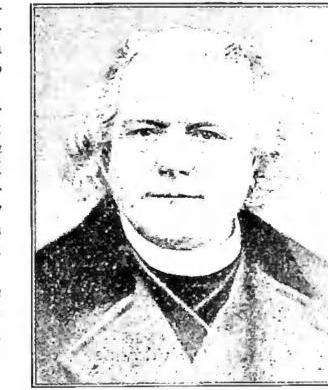
Quite opportune, on the other hand, was the publication of another work: Il Dogma e le scienze positive, highly praised by the Pontiff, in which S. intended to demonstrate how scientific investigations are in no way incompatible with revealed truths: a work of sound doctrine and of the highest apologetic value. On the same subject, the reconciliation of faith and science, S. returned in the final years of his life, with the two volumes of the Examereon, published posthumously (Turin 1893–94). He also ventured into the strictly literary field (for example, with the Asteroidi, a book of verse, Milan 1879), but with decidedly inferior results.
His blameless life, profound piety, lofty sense of priestly dignity, abundant charity, and apostolate, which he alternated with serious studies, are worthy of remembrance, so that he became one of the noblest figures of the Italian clergy in the second half of the nineteenth century.