
TASSONI, ALESSANDRO. — Poet, born at Modena on 28 September 1565, died there on 25 April 1635.
After studying in Bologna and Ferrara, he went to Rome in 1597 and remained there for a considerable time, wholly devoted to his literary work. From these years date the Considerations on Petrarch’s Rhymes, written not out of “ill will against Petrarch, king of the poets,” but against his “constipated” worshippers. In 1606 he was “prince” of the “Umoristi”; he was also a member of the Lincei and of the Crusca. When Carlo Emanuele I of Savoy went to war against Spain, T. supported the undertaking with two Philippics against the Spaniards (1615), which constitute the noblest and most vigorous oratorical prose of the seventeenth century. In 1618 the Duke appointed him secretary of the Piedmontese embassy in Rome and gentleman of his son, Cardinal Maurizio; in 1619 he summoned him to Turin as his first secretary; in 1621 he assigned him as companion to Maurizio, who was in Rome for the conclave. In the meantime he had composed The Stolen Bucket (1615), in 10 cantos, which he was able to print only in 1624, in 12 cantos. In 1620 he printed Various Thoughts, in 10 books. In 1626 he agreed to serve Cardinal Ludovisi; after the latter’s death (1632), he went, at the invitation of Duke Francesco I, to the court of Modena, where he ended his days.
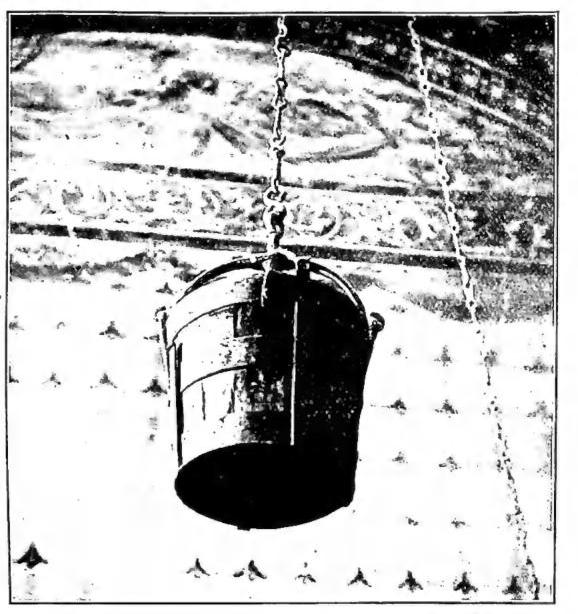
(photograph by Orlandini)
TASSONI, ALESSANDRO – The Secchia rapita. Historical relic: bucket taken by the Modenese from the Bolognese in battle in 1325, kept in the Cathedral Tower as a trophy of victory, and made famous by the mock-heroic poem of the Modenese A. T.
paradoxical, opposing reason to tradition, hostile to ideas accepted without examination and to the authority of the “ancients,” revealing new truths, although not free from curious prejudices. The Secchia rapita is the masterpiece of Italian mock-heroic poetry. T. wished to parody the heroic epic, which Tasso’s epigones were abusing and which stood in contrast to the miserable social and political reality of his time; and he succeeded in producing a felicitous poem, a sustained and swiftly moving narrative in which, with lively shifts of tone and with “laughter that falls unexpectedly amid serious things,” he passes agilely from the serious to the burlesque and the grotesque. It matters little that the characters in general are but slightly developed, that they are masks and caricatures rather than characters: they suffice to give colour to the parody of a poetic fashion and the satire of an inept and servile age. Particularly prominent, moreover, are the count of Culagna, the noble braggart and coward, whom T. presents as the nephew of “don Chisotto,” and Titta di Cola, the transformed Roman commoner, swaggering and boastful, a kind of Rugantino. No less felicitous is the realistic representation of a whole throng of peasants and townspeople, armed in the strangest fashions and speaking the most heterogeneous dialects.