
STENDHAL. – Pseudonym of Henry Beyle, French writer, b. in Grenoble on 23 January 1783, d. in Paris on 23 March 1842.
Of good bourgeois family and related to the great Napoleonic intendant P. A. Daru (1767–1829), S. was thereby given facilitated access to the military administration (1799) and then to the army (1800), in which he saw embodied his childish enthusiasm for revolutionary principles, vainly opposed by his father’s severe conservatism. He remained in Italy as a second lieutenant of dragoons from 1800 to 1802; he left the service to devote himself, in Paris,
to disorderly studies and literary attempts, and, in Marseille, to an unsuccessful commercial venture. Having returned (October 1806) to the military administration, he was retired by the Restoration, and spent in Milan the years he himself called the best of his life, in admiration of the art and beauties of Italy. The Vies de Haydn, de Mozart et de Métastase (1814) were followed by the Histoire de la peinture en Italie and Rome, Naples et Florence (1817), then, after his return to the French capital (June 1821), by the treatise De l'amour (1822), the two parts of Racine et Shakespeare (1823–25), a Vie de Rossini (1824), a first novel, Armance ou quelques scènes d'un salon de Paris en 1827, and in 1829 the Promenades dans Rome, a new portrait of Italy, where he had returned twice, between 1823 and 1828, watched hostilely and finally expelled by the Austrian police.
Recognizing in the novel the authentic depiction of truth, S., of an exceptionally acute sensitivity beneath an appearance of skeptical irony, found the best path for his own art. A crime chronicle (the attempted murder of Mme Michoud by the clerical tutor of her children, Berthet) suggested to him the plot of Le rouge et le noir (2 vols., 1831), in which the intention of offering a picture of contemporary society through even the most recondite and unconfessable feelings of the protagonists is matched by a stylistic construction that abhors every literary artifice. Equally compelling is La chartreuse de Parme, written and published after S.’s long stay in Italy, where he had been sent as consul to Trieste (1830), where the Austrian government denied him the exequatur, and to Civitavecchia (1831–1836 and 1839–41). The novel, S.’s masterpiece, is set in a small Italian state ruled by a cruel tyrant, in the early years of the Restoration; its love story concludes with the protagonist’s entering the cloister. It had been preceded by two works of autobiographical analysis, Souvenirs d'égotisme (1832: on the decade spent in France up to 1830) and Vie d'Henri Brillard (written between 23 November 1835 and 17 March 1836: childhood and youth), and by two other novelistic attempts, Une position sociale (1832, left after the opening pages), and, likewise autobiographical and unfinished, Lucien Leuwen (1834–36); all four were published posthumously in 1892, 1890, 1927, and 1894, respectively. The drafting of the Chartreuse was accompanied and followed by other stories, likewise inspired by accounts of crimes, mostly sixteenth-century and set in Roman surroundings, which S. assiduously collected during his stay in the Papal States; they were brought together in 1855 under the arbitrary title Chroniques italiennes; the longest and most significant is the Abbesse de Castro (1839).
Inspired by a cult of individual energy and sentiment, alternately cherished or minutely analyzed (which in him intersects with his devotion to the ideals of equality and liberty proclaimed by the Revolution and embodied by Napoleon, on whom he undertook a work
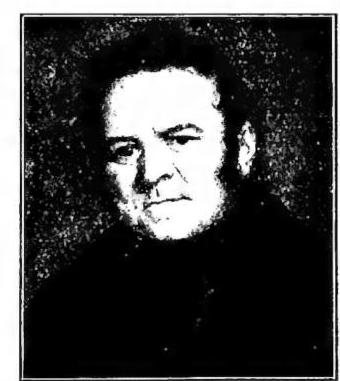
(from Aurea Parma, year XXXIV, no. II [187], July–December 1958, plate facing the title page)
STENDHAL - Portrait, painted by J. L. Oncis (19th century) - Florence, property of F. Gentile.
in various forms in twentieth-century literature, and which in any case contributed not a little to a full understanding of the writer, his introspective depth, and his stylistic originality. These same characteristics, far more than his hostility to the political and religious order of Restoration Italy (which he nevertheless passionately loved as an inexhaustible reservoir of anarchic energy), make his work the most significant prelude to certain orientations of twentieth-century taste, substantially anti-Christian. S.’s novels and tales of love were placed on the Index by decrees of 4 March 1828 and 20 June 1864.