
STENDARDO (signum, vexillum; banner, gonfalon). - In ecclesiastical usage, mentioned in the Rituale romano (tit. X, cap. 1, n. 5), they are banners in which the cloth hangs from a crosspiece horizontally attached to the vertical staff, which is surmounted by a cross.
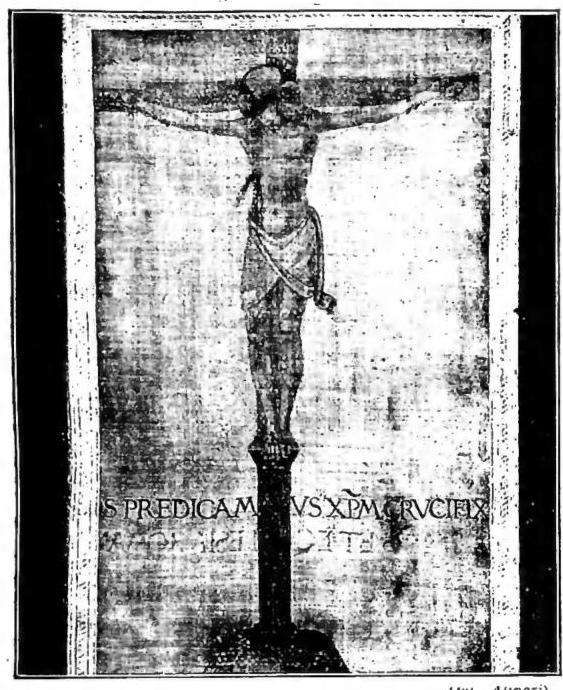
They originate from the processional Cross, carried on a vertical staff to which an ornamental cloth was attached. They are not in use during the first millennium; they appear for the first time in a miniature from the Troper of the Abbey of Prüm from the late 10th century (Paris, Bibl. naz. lat., 9448), as an altar ornament, and in an 11th-century fresco in San Clemente in Rome during a solemn procession of the translation of holy relics. They are subsequently mentioned many times by liturgists, and medieval ecclesiastical inventories enumerate many of them; every confraternity had its own s., often richly adorned with painting or embroidery. The s. is the symbol of the triumph of the Lord (Honorius, Gemma animae, I, 72; Durandus, Rationale, lib. VI, cap. 102); Christ descended into limbo or risen is represented holding the s.; likewise the Lamb of the Apocalypse. The s. is also the emblem of the Church Triumphant, and of the virtues of hope and fortitude.