
RACINE, JEAN. - Poet, born at La Ferté-Milon, in the Valois, on Dec. 21, 1639, died in Paris on Apr. 21, 1699. Descended from the lower bourgeoisie, orphaned since childhood, he was cared for more than her own children by his paternal grandmother, Marie Desmoulins, who had him
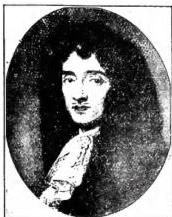
His life proceeds always attentive to opportunities, yet always detached from them: from when he interprets the solitudes of Port-Royal idyllically to when, while courting Louis XIV, he does not hide his devotion from the King, a fierce anti-Jansenist; he insinuates into the sacred drama of Esther courtly allusions to the decline of the royal favorite, Madame de Montespan, and in his letters to his son he applies that method of rigorous education from which he himself had cheerfully escaped in his youth. He conforms to diverse environments, but at the same time preserves a virtue and power of ultimate appeal, a voice and prayer that goes beyond the circles that had welcomed and sustained him. Thus in his tragedies (and regarding his single comedy, one may note the extremity of the comic play, the grotesque tension that overwhelms the very occasion of laughter): amid the thousand entanglements of academic rules (among others, the unities of time, place, and action), of scenic conventions (which prescribed the succession of entrances, the measure of dialogues and monologues, the form of elocution, the style of the drama, which drew facts from everywhere and then withdrew from their evidence, the sometimes pathetic, sometimes eloquent coloring of the passages), of the thousand echoes that coursed across the stage from the city and the Court, without relinquishing anything, he discovers his astonishing freedom precisely within limits. He always knows how to
educate at Beau-
vais, when she
retires to Port-
Royal; and to Port-
Royal the youth
is called in
1655. Then he studies
in Paris, at the col-
lege of Harcourt,
whence he emerges in
1659, to plunge
into worldly life
and try his literary
fortune. He stays
at Uzès, in
Languedoc, with
an uncle, vicar
general of the
diocese; in 1663,
upon returning to Paris,
he turns to the theater.
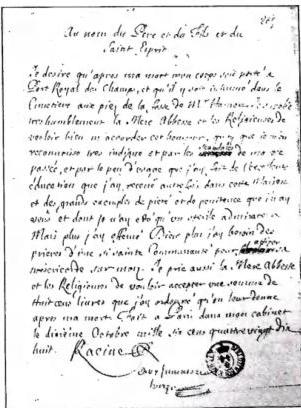
His themes are extremely varied, even within a meager repertory and with the constant, yet apparent, reduction of tragic creatures to the canon of fashion and the court; and beating and hammering away at the drama of love: the light of poetry invests even the most subterranean narrative with clarity; and the most desperate and perverse creatures, from Roxane (Bajazet) to Phèdre, redeem themselves precisely in their submission to confession: a purity of truth before being a light of poetic beauty. Every era read in them the confirmation of its own predilections: 18th-century Italy, after Metastasio, loved him for his persuasive sweetness; 19th-century France, after Baudelaire, for his intrepid firmness. Elusive limpidity seems the impression to anyone who observes so much heroic and gloomy life, so much history from the Greeks of Thebes to the Turks of the Seraglio, from the Empire of Nero to the Empire of Tito, from the camp of Aulis to the palace of Ahasuerus, from the Orient of Mithridates to the Orient of Jerusalem and the Temple (yet omnipresent is the court of the Sun King); and a turbid decline toward the nether zones of being, compared to the free will of Corneille's heroes. But behind his guidance the spectator, and even more the reader, and better than anyone civilization itself—which from a most accomplished literary form is constrained to extreme decisions—traverses an audacious itinerary toward an ultimate solitude: in a speech of high eloquence the Cornelian hero decided a destiny of greatness; but in his desert the Racinean soul decides an eternal fate.
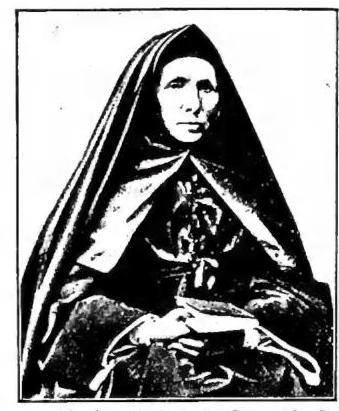
(from Congrégation des Sœurs du St Enfant Jésus, Paris 1928, p. 20) RACLOT, MATHILDE - Portrait.
He began his career in ecclesiastical history, particularly with studies on SS. Cyril and Methodius (Viek i djelovanje sv. Cyrilla i Methoda slavjenskih apoštolov, 2 vols., Zagreb 1857 and 1859, and Pismo slavjensko, ibid. 1861); on Croatian history he published a series of dissertations, often quite extensive, mostly edited by the Yugoslav Academy. Among these, his principal work remains Hrvatska prije XII. vieka glede na zemljišni obseg i narod (Rad. Jug. Ak., 56 and 57), to which must be added Nutarnje stanje Hrvatske prije XII. stoljeća (Rad. 70, 79, 91, 99, 105, 115, 116). Other works are in the Popis izdanja Jugoslavenske Akademije 1867-1950 (Zagreb 1951). Fundamental is the collection Documenta historiae Chroaticae periodum antiquum illustrantia (Zagreb 1877, published as vol. VII of the collection Monumenta spectantia historiam Slavorum meridionalium).