
FINLANDIA. —
I. GEOGRAPHY
The territory of F., larger than Italy (331,759 sq. km.), is roughly quadrilateral in shape, bounded by the Gulf of F. and the Arctic Ocean, the Gulf of Bothnia, and the depression extending from Lake Ladoga to the White Sea. It is a matter ofespecially in the southern regions. Favoured by the abundance of water power, but hampered by the lack of coal and iron, the other industries are no less important for this reason (metallurgical, mechanical, textile, chemical, etc.), and they too are exporters.
The population (4 million inhabitants; 11 per sq. km., considerably denser in southern F.) consists nine-tenths of Suomi, of Finnish stock, who differ from the Swedes living chiefly in the south-western regions (fewer than 400,000 in all), who are permitted to use their own language.
As regards religious denominations, Lutherans constitute 66.2% of the total, while Catholics number approximately two thousand. Only the capital, Helsinki (Helsingfors), is a large urban centre (over 300,000 inhabitants); none of the other cities (Turku, Tampere, Vaasa) reaches 100,000 inhabitants. Subject to Sweden for more than six centuries and united with Russia in 1809, F. proclaimed itself an independent democratic republic in 1917. In the last war it had to cede to the U. R. S. S. part of its richest territories; particularly serious was the loss of the so-called Karelian Isthmus with the city of Viborg.
BIM.: H. Schrepfer, F. Friburgo 1920; E. Migliorini, F. e Stati Istitici, Roma 1937. Giuseppe Caraci
II. HISTORY
The evangelization of F. began around the middle of the twelfth century. It was promoted by the king of Sweden, Erik IX the Saint, who placed himself at the head of a crusade: in F. there Uppsala (v.). The results of this undertaking were not, however, lasting. After the bishop was assassinated, the work of evangelization languished, as is demonstrated by a brief of Alexander III (1171), in which the Pope exhorted the archbishop of Uppsala to concern himself with the spread of the word of Christ in F. It was only in the first decades of the following century that Catholicism regained strength, thanks to the indefatigable missionary activity of Tomaso, Finnorum episcopus, who nevertheless in 1245 resigned his bishopric because the crusade he had led against the city of Novgorod had failed; its army, commanded by Alessandro Nevski, had defeated the crusaders on the banks of the Neva (1240). At the same time, Sweden, under the energetic leadership of the jari Birger Magnusson, who was the highest authority in the Kingdom after the sovereign, undertook a new crusade in F. in 1249, definitively binding western F. to the Swedish state and to the Catholic faith: the foundation of the first convent, the Dominican one at Åbo, also dates from that same year. In 1286 the first bishop, Johannes I, was canonically elected; he transferred to Åbo the episcopal residence, which until then had been established at Nousia and Räntämäki. The peace of Nöteborg (1323) between Sweden and Novgorod, by which Swedish sovereignty over western Carelia was recognized, opened new prospects for the missionary activity of the Finnish Church, and during the episcopate of Benedictus (1321-38) the solid foundations were laid upon which the Church ofF. would rest until the introduction of the Lutheran “reformation.” In this period two other prelates deserve particular mention: Hemming (1338-66), who continued the work of organization begun by his predecessor and strengthened the position of the Church in F., and Magnus II Tavast (1412-50), a figure of the greatest importance in the medieval ecclesiastical history of F.
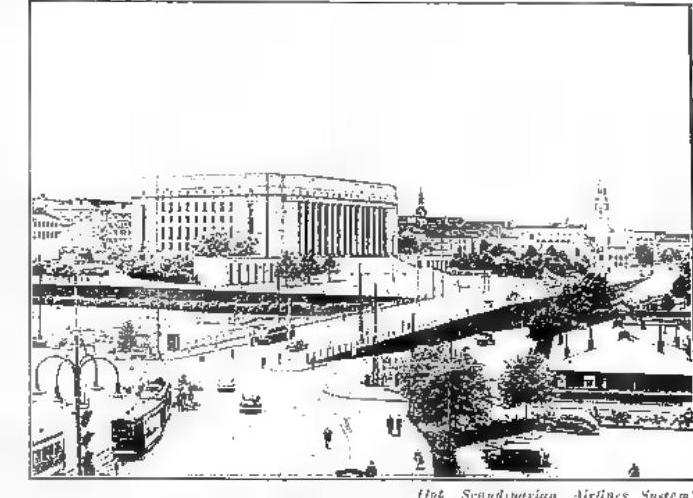
(phot. Scandinavian Airlines System)
FINLANDIA - Helsinki railway station square.
cola returned to his homeland after obtaining his doctorate and translated the New Testament and other sacred texts into Finnish. He also composed a prayer book (Racouskiria Bibliasta), which may be regarded as a veritable manual for priests. The “Reformation” finally took firm root in F. with the acceptance of the Augsburg Confession at the Synod of Uppsala (1593). The position of F. was, however, still uncertain. After the death of King John III (1579–92), a struggle began between Charles, Duke of Södermanland, the deceased king’s brother, and Sigismund III Vasa, son of John III and King of Poland, who wished to restore Catholicism in Sweden. F. was then governed by Klas Fleming, a person devoted to the late John III and to the new king, and he did not intend to take Charles’s side. But Fleming died, and Charles defeated Sigismund in battle and became King of Sweden under the name of Charles IX, forcing Sigismund to withdraw to Poland. This outcome of the struggle was of truly historic importance, because it definitively bound F. to Sweden’s political destiny and to the Lutheran faith. With the rise of Russian power, F. became Sweden’s outpost toward the East, a function it fulfilled for more than two centuries, until the Peace of Fredrikshamn (1809), when F. became part of the Empire of the tsars in the form of an autonomous and independent grand duchy. Proud of its freedom, F. has always kept alive the flame of its distinctive national sentiment. An independent republic since 1917, it defended its territorial integrity to the utmost during the two wars against Russia, in 1939–40 and 1941–44.
BIM.: On the general history of F., cf., among the more recent works, E. Hornborg, Finlands hävder, Helsingfors 1926–33; W. Sommer, Geschichte Finlands, Munich–Berlin 1938; E. Hornborg, Sverige och Ryssland genom tiderna, Stockholm 1941; T. Theraun, Finlands väg genom tiderna, ibid. 1948. On the ecclesiastical history of F.: E. Bergroth, Sonnen kirkan historia päätpisteletöä, Borgi 1891; id., Sonnen kirkan, I–II, ibid. 1902; W. Schmidt, Finlands kyrka genom tiderna, Stockholm 1940. On special subjects in Finnish ecclesiastical history during the Middle Ages and the “Reformation”: K. G. Leinberg, De finha hlattreus historia, Helsingfors 1809; K. Stjerna, Erik den helige. En saaphistorisk studie, in Lunds Universitets årskrift 1808; E. Anthoni, Till avvecklingen av konflikten mellan hertig Carl och Finland, I–II, Helsingfors 1935; W. Schmidt, Die Zisterzimmer im Baltikum und in Finnland, IV 1940; R. L. Montini, Storia moderna della F. (1809-1940), in Finlandia, edited by L. Salvini, Rome 1941, pp. 17–48; J. Jaakkola, Prens d'histoire de Finlande, Lausanne 1942; A. Giannini, Profits della storia della F. (1757-1941), Milan 1942; A. Tosti, Monochette a il dramma della F., Bologna 1940. Silvio Furlani
III. APOSTOLIC VICARIATE of F
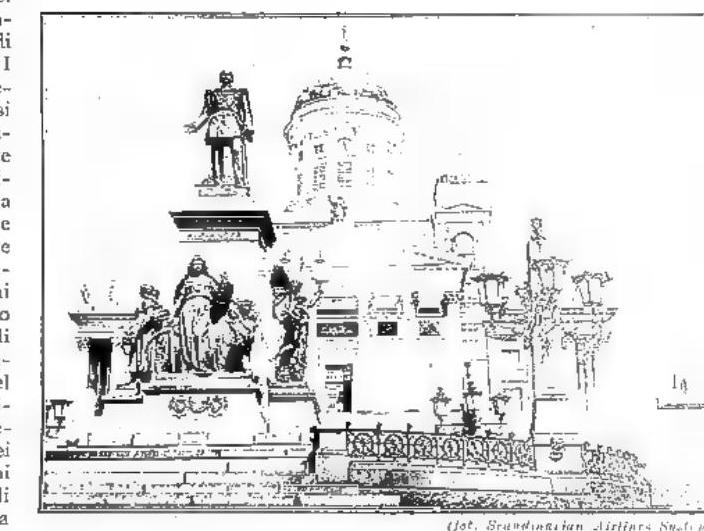
The apostolic succession of the bishops ceased when the Lutheran king of Sweden, Gustav I Vasa, placed the apostate Martino Skitte (1528–50) at the head of the diocese of Åbo. From that time the persecution began, with only a brief respite under the reign of John III and his son Sigismund, King of Poland and Sweden. Catholicism began to revive only in 1721, through the agency of Polish soldiers in the province of Viborg who had passed over to Russia. In 1781, in the Swedish part, the proi-(photo by Brandamöller, Alstom, p. 1)
FINLANDIA - Parliament Building and the monument to Tsar Alexander II.
Helsinki.
hibition of Catholic worship ceased, but in the Russian part all Catholic propaganda remained forbidden and missionaries were repeatedly expelled. In 1857 the archbishop of Mohilew, who had jurisdiction over all Catholics in Russian territory (excluding Poland), sent a chaplain to F. for the military. In 1860 another priest and some German nuns were requested for Helsinki; they subsequently had to withdraw (1880) for lack of resources. The Catholics then exerted themselves to find the funds necessary for their Church, but since the legislation recognized no authorized form for an association of persons professing the Catholic religion that might serve as a secure basis for determining the clergy’s maintenance, they explicitly requested permission from the civil authorities to found a Catholic parish in Helsinki. The request, submitted to the Faculty of Law of the University, received an affirmative answer in 1897; the church built in Helsinki (1860) and served by military chaplains was granted parish status under the archdiocese of Mohilew. The number of native Catholics grew slowly, and in 1912 a new church could be opened for them. In 1917, when F. obtained independence, the Holy See made it an autonomous apostolic vicariate (8 June 1920), separating it from the diocese of Mohilew.
The vicariate embraces the whole Finnish State, bounded by the Gulf of F., the Baltic Gulf, the Sea of Åland, the Gulf of Bothnia, and Lake Ladoga, with an area of 377,113 sq. km. The first head of the mission, Msgr. Michael Buks, was consecrated bishop on 15 Aug. 1923 in Helsinki by Card. Guglielmo Van Rossum, prefect of the S. Congregation of Propaganda Fide, assisted by the Catholic bishops of Sweden, Norway, and Denmark. In F. there is complete freedom of worship for every religion or religious denomination. Absolute predominance, however, belongs to the national Church, which is the State Church and as such depends on the President of the Republic. It is Evangelical-Lutheran and includes almost the entire population (approximately 3,500,000), grouped into four bishoprics (Qula, Porvoo, Tampere, Viipuri) and one archbishopric (Turku). Protestants adhering to other denominations number 10,000, while Catholics, almost all descendants of Polish soldiers who, after completing their military service, eventually settled there, scarcely reach 2,000. The Jews are of an equal number. Native Catholics are partly of Finnish and partly of Swedish origin. Among the educated classes, a strong interest is noted in the history of Catholicism, in the importance it had during a splendid period of the nation. In 1940 the S. Congregation of Propaganda Fide, on which the vicariate depends, authorized the Dominicans to open a centre of Catholic studies in Helsinki in order to facilitate F.’s cultural relations with foreign countries, especially those of Latin origin. A good Catholic library accessible to scholars and professors may gain great prestige and sympathy for the Roman Apostolic Church. The vicariate of F. includes four Catholic parishes (Helsinki, Viipuri, Turku, and Terijoki). The clergy consists of 7 missionary priests of the Sacred Heart and 3 secular priests. Fourteen nuns are engaged in charitable works and direct two colleges, the only ones in the mission. There are only two Catholic schools, while Protestant schools comprise 10,000 primary classes, 75 preparatory schools, 9 for the disabled, 3 universities (one in Helsinki and two in Turku), one polytechnic, and 359 vocational institutes. The legal situation of the Catholic Church in F. is currently normal. Like all other religions, it enjoys the protection of the State and may freely exercise its activity. The fact that the Catholic Church does not enjoy the right to establish convents properly so called is in reality only a theoretical clause: there are, for example, male and female religious who, without any difficulty, may concern themselves with the education and instruction of youth. The agency of the Finnish civil administration dealing with matters concerning the Catholic Church is the Ministry of Public Education.
BIBLIOGRAPHY: AAS, 12 (1920), pp. 268-66. Archivio Prop. Fide, Relazione quinquennale 1940, pos. 3316/48; id. Lettere di Prop. Fide, pos. nn. 1549/46, 2122/46, 4681/48, 1937/49, 2237/49; R. Henry, La question de Finlande au point de vue juridique, Parigi 1910, p. 9; La Finlande, aperçu de l'organisation politique et administrative, Helsinki 1921, p. 8 agg.; K. Willinen, Den historiska utvecklingen av Finlande forvaltningratt, Helsingfors 1934, p. 15 agg.; A. Inkinen, L'Eglise catholique en Finlande et sa situation juridique, Bourges 1936, pp. 1-44; Kustannusosakeyhtiö Kivi, Finlande Illustrade, Helsinki 1949, pp. 1-40. Antonio Marzi
IV. LITERATURE
Finnish literature is among the youngest in Europe: despite the fact that the Swedish population represents, in F., only one tenth of the total population, F.’s belonging to the Kingdom of Sweden for six centuries resulted in the Swedish language and culture dominating throughout the country (for Swedish-language literature in F., V. SVEDESE LETTERATURA). It is noteworthy that only during the second half of the nineteenth century was Finnish gradually recognized as an official language, alongside Swedish. The period of Russian domination (1809-1917), on the other hand, had little influence on the nation’s cultural life, although the general conditions unfavorable to the Finnish people continued to persist. One can begin to speak of Finnish literature, in the artistic sense of the term, only in the mid-nineteenth century. In the earlier period, the figure worth recalling above all is Michael Agricola, who translated the New Testament (1548) and part of the Old Testament. A Finnish grammar, the work of E. Petracus, appeared in 1649.In the climate of Romanticism, in an environment of distinctly Swedish culture, Elias Lönnrot (1802-84) wished to turn directly to Finnish folk poetry. Folk songs thus came to light which soon aroused the attention of all cultured Europe and revealed the hitherto-unknown values of F. The Finnish national epic, the Kalevala, was composed by Lönnrot from part of the folkloric material he had collected; an extremely ancient treasure of legends was selected and harmonized by the poet: the definitive edition (1849) comprises fifty songs. In an atmosphere of fervent national feeling and incipient political freedom, Alexis Kivi (1834-72) may be considered the first noteworthy modern writer of a truly European outlook. His work that deserves mention is: The Seven Brothers, a novel permeated at once by realistic and lyrical elements, unfolding in a harsh atmosphere of wooded solitude. Among the lyric poets, mention should be made of Kaarlo Kramau (1855-95), a poet of pessimism who, in his ballads, recalled painful episodes from Finnish history, and August Ahlqvist (1856-80), better known by the name Oksanen.
During the final decades of the nineteenth century, a realistic and social orientation asserted itself in Finnish literature, following the example of Western Europe in general and Scandinavia in particular, though interwoven with neo-Romantic currents that sought to emphasize national and more specifically poetic values against the predominance of an ever-spreading contentment. In a few decades, the very young Finnish literature thus showed signs of rapid maturation and an ability to assimilate the most varied aspects of European culture.
Minna Canth (1844-97) moved from Romanticism toward realistic and socialist accents: she wrote novels and stories inspired by the proletarian milieu. Arvid Järnefelt (1861-1932) was considerably influenced by Tolstoy. Juhani Åbo (1861-1921), besides being a master of style and language, was a subtle psychologist. Also worth recalling alongside these writers are Teuvo Pakkala, Santeri Ivalo, and Kasimir Leino.
As the moment of national independence drew nearer, Finnish literature seemed increasingly to free itself from the obligatory tracks that often characterize the beginnings of young literatures. With Eino Leino (1878-1926), lyrical values were reaffirmed above all, but he also established himself in the theater and as a narrator; his translation of the Divine Comedy is classical. Otto Manninen (born in 1872) is distinguished by his musicality and is also noteworthy as a translator of great ancient and modern poets, from Homer to Heine and Petőfi. Johannes Linnankoski (1869-1913) is known especially for one novel, The Song of the Red Flower, which unfolds, with modern sensibility, in a primitive setting, and for a “rustic novel,” The Juggiacchi. Aino Kallas (born in 1878), the wife of an Estonian writer, generally drew her inspiration from the Estonian milieu and also treated problems of female psychology with delicacy. Larin Kyösti (born in 1873) is a poet rich in imagination, at times with a fairy-tale setting; Kasimir Leino (1866-1919) has not unjustly been compared with the Parnassians. V. A. Koskenniemi (born in 1885) is a poet of classical taste, also known as a scholar of Lucretius, Goethe, and Kierkegaard.
It would nevertheless be impossible to cite all the most prominent names that have emerged in Finnish literature during this first half of the twentieth century. It will therefore suffice to recall Frans Emil Sillanpää (born in 1888; Nobel Prize 1939), who, after initially drawing inspiration from the Norwegian Hamsun, established himself as the most noteworthy modern Finnish narrator. His stories reflect the most diverse social milieux, against a rural background. His works that deserve mention are Life and the Sun, Meek Heritage, Watched over by Angels, The Way of a Man, and Young Dead (also known by the title Sifja).
The cultural life of F. was considerably affected by the troubled events of the last nineteen to forty years. National independence (1917) contributed enormously to the affirmation of the culture and to its emancipation from an atmosphere strongly permeated by foreign elements. The consequences of the Second World War, on the other hand, were extremely painful, being connected with the loss of part of the national territory and with serious destruction. Nevertheless, the Finnish people’s tenacious will to live succeeded in overcoming these harsh trials: cultural activity resumed in every field, with surprising energy.
V. ORDINAMENTO SCOLASTICO DELLA F
The Finnish Constitution provides for individual and national education. Freedom of conscience and the rights of minorities are guaranteed. Attendance at elementary school is compulsory and free, and lasts seven years. It is the duty of the elementary-school teacher to understand the pupil’s sphere of interests in order to guide him or her toward the proper profession in life. Elementary school is therefore regarded as the foundation of Finnish life, since it reveals the pupils’ abilities and selects them. Education is informed by the pedagogical doctrines of Comenius and Pestalozzi. Comenius’s influence was already felt in 1649 and is particularly strong in the schools of the Swedish minority. The Government strives to bring elementary education to the inaccessible regions.The number of illiterate persons is 0.8%.
The school system comprises four types of schools: elementary schools, secondary schools called schools of learning, schools of social learning, and the university.
Elementary schools are divided into elementary schools lasting two years, higher elementary schools lasting four years, and post-elementary schools lasting one year.
Secondary schools comprise the middle school, lasting five years; higher schools for boys, lasting eight years; and higher schools for girls, lasting nine years. Schools of social learning comprise the various vocational schools, 51 popular universities, and 34 work institutes, also called free institutes. The universities are in Helsinki (founded in 1640 in Åbo and transferred to Helsinki in 1828), the Swedish university in Åbo (founded in 1918), and the Finnish university in Åbo (founded in 1922).