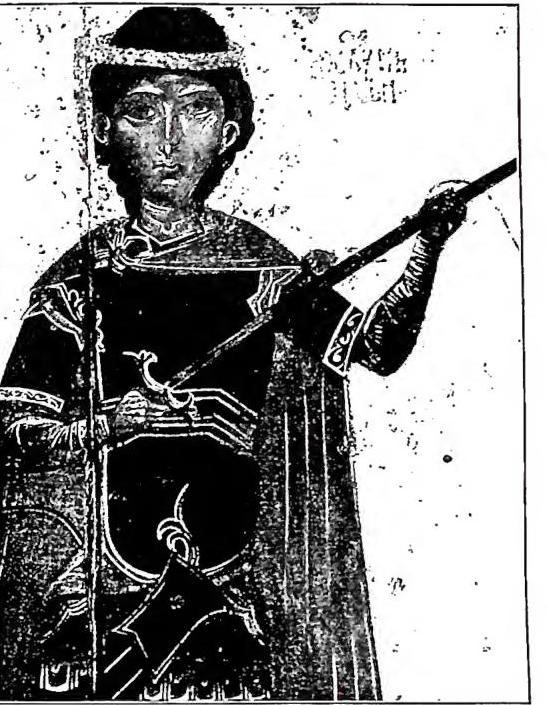
DEMETRIUS, tsar of MOSCOVY, called FALSE DEMETRIUS. — On 15 May 1591 the child prince Demetrius, son of Ivan the Terrible, had ceased to live. The infant’s death, still shrouded in mystery, was attributed by public opinion to Boris Godunov. At the beginning of 1604, in Krakow, a man proclaimed himself Tsarevich D., who had miraculously escaped the assassins sent against him by Godunov.
Russia was passing through one of the most troubled periods of its history: a struggle between the remnants of the old noble families humiliated by Ivan the Terrible and the “upstart commoners” whom the tsar had raised to the highest offices; fierce personal rivalries; Polish pressure on the western frontiers; years of tragic famines accompanied by agrarian revolts and by the formation of bands of brigands. The “resurrected” D., not highly educated but certainly intelligent and bold, immediately found strong support in the Polish magnate George Mniszek. Perhaps also for political considerations, D. secretly converted to the Catholic religion. Still in 1604, he burst into Moscovy’s territory together with several Polish volunteers. The most diverse social classes hoped that the “true” tsar would improve their conditions. The unexpected death of B. Godunov (13 Apr. 1605) removed every obstacle to the invader, who, amid the enthusiasm of the population, took his seat “upon the throne of his ancestors.” D.’s reign lasted only from June 1605 to May 1606. In Moscow, D. declared himself “faithful to the Orthodox religion,” emphasizing his determination to remain independent of Poland. Nevertheless, despite this, he soon aroused widespread discontent: to the upper classes his conduct did not seem fitting for a prince; moreover, he failed to observe numerous religious services and feasts; he was also surrounded by many-