
GAETANO da THIENE, santo. - Born of a noble Vicentine family in Oct. 1480, to Gaspare and Maria
(Ist. Gab. Ist. nat.)
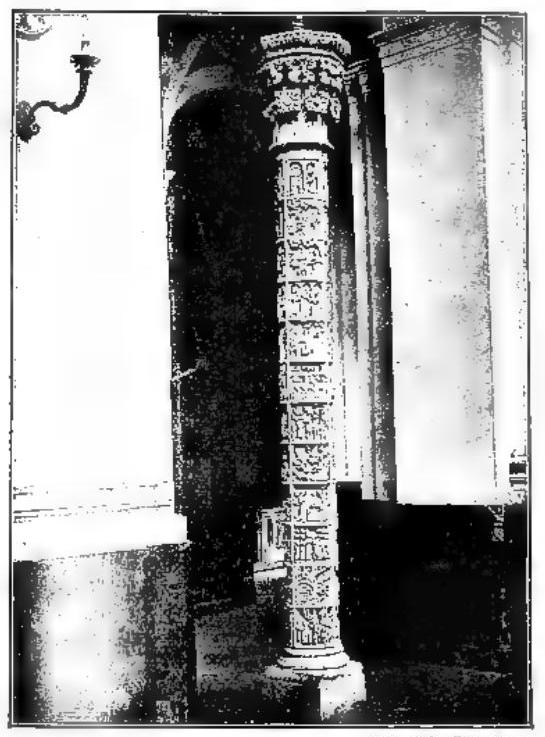
GAETA, ARCIDIOCESI di - Campanile. The base dates from the 9th century, the three tiers are the work of Nicola d'Angelo (1148-74), and the top section is from 1279.
(fot. Geb. Fot. Naz.)
Having formed a relationship with Gian Pietro Carafa, bishop of Chieti and Brindisi, and with two other companions, Bonifacio de' Colli and Paolo Consiglieri, after obtaining permission from Clement VII and renouncing with them the offices and benefices he held, on Sept. 14, 1524, he initiated the Congregation of Regular Clerics, commonly known later as the Theatines or Chietines, near the church of S. Nicola dei Prefetti and very soon on the Pincio. Imprisoned in 1527 during the sack of Rome, he managed to escape with his companions on Venetian ships stationed in the Tyrrhenian Sea in the service of the league and arrived in Venice, where, with the help of friends, he took up residence first at S. Clemente and then at S. Nicola di Tolentino, which became an active center of spiritual life and charitable activity. In fact, besides assistance to the Incurabili, other initiatives were set up, among them one for the benefit of orphans, a task assumed in particular by his disciple St. Girolamo Miani. As the number of religious grew, Carafa felt it appropriate in Aug. 1533 to yield to the desire of the Neapolitans by sending Thiene to their city; and Na-
ples was his ordinary place of residence, except for the three-year period 1540-43, when he resumed the governance of the Venetian community. After several provisional locations, the Saint established his residence in 1538 at S. Paolo Maggiore, which became the center of his spiritual activity. In Naples he repeated what he had accomplished in Venice, raising the tone of spiritual life and giving rise and growth to those charitable institutions that left such a broad trace in the life of the city. He died on Aug. 7, 1547, and the pacification of Naples at a very critical moment was attributed to his intercession. He was buried at S. Paolo, leaving Christendom a constant and heroic example of trust in Providence.
He was canonized by Clement X on Apr. 12, 1671. Feast day, Aug. 7. - See pl. CXXIV.