
BORRELLI, PASQUALE. - Philosopher, born at Tornareccio (Chieti) on 8 June 1782, died at Napoli in 1849. He led a highly eventful and adventurous life. Around the age of forty he was minister of police in the liberal government of 1820. Exiled to Trieste, he subsequently went to Graz, then to Baden, and finally to Vienna. In 1825 he returned to Napoli, where he pursued his activity, chiefly scientific, until his death.
His works, published under the anagrammatic pseudonym Pirro Lallebasque, are: Introduction to the Natural Philosophy of Thought (Lugano 1824); Principles of the Genealogy of Thought (there 1825); both reprinted in a new edition under the title Philosophical Works (4 vols., there 1839); Principles of Etymological Science (there 1830).
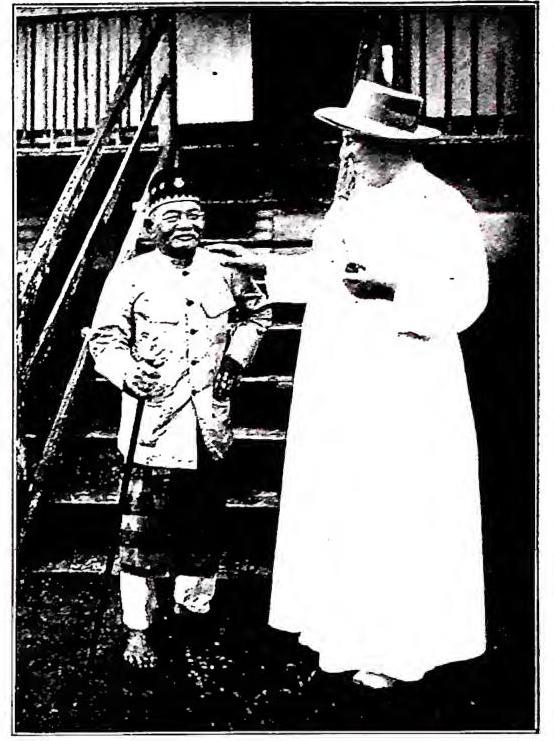
(from O. Beccari, In the Forests of Borneo)
BORNEO - Orang Kaya Tumauggong, capo Kayan del Barram.
però è negato il libero arbitrio che non è già potere di autodeterminazione, ma si riduce alla semplice immunitas a coactione, ossia a mera spontaneità.