
BOETIUS, ANICIUS MANLIUS TORQUATUS SEVERINUS. –
I. LIFE
B. was born in Rome, of the noble family of the Anicii, around the year 480, when the reign of Odoacer was about to succumb beneath the blows of the Ostrogoths. His father having died while he was still very young, he was probably educated in the household of his friend Aurelius Memmius Symmachus, the consul, whose daughter Rusticiana he later married. Entering public life while still young, at the age of twenty-five he was already a senator; in 510 he became consul without a colleague, a rather rare honor, even for one protected by Theodoric. His two very young sons, Symmachus and Boethius, were likewise raised to the dignity of the consulship in 522. Despite the demands of public office, B. devoted himself passionately to study, particularly to Greek philosophy, to which he had dedicated himself from his youth. Political events unfortunately brought to an all-too-early end a life already so fruitful and still rich in great promise. In 523, for having defended the senator Albinus, accused of secret collusion with the emperor Justin againstTheodoric, B. became involved in the same accusation, was exiled and imprisoned, and was finally tried and condemned to death on 23 October 524. The national and religious motive does not seem unrelated to this tragedy, since Theodoric was a barbarian and an Arian, whereas B. was a champion of Catholicism and Romanitas. According to tradition, B. was always venerated as a martyr. Leo XIII approved his cult for Pavia by decree of the S. Cong. of Rites dated 25 December 1883. His feast is celebrated on 21 July in Pavia, where he was killed, and in Rome in the church of S. Maria in Portico at Campitelli, which, according to legend, has special connections with B.’s family, having been endowed by his sister-in-law, St. Galla.
II. WORKS
B., a genuine scholar and a devoted lover of classical culture, although he had not studied at Athens, as some have erroneously asserted, left a great number of writings, despite the distractions of politics and the brevity of his life. We have from him treatises on arithmetic and music, as well as the doubtful Institutio geometrica, although it is certain, as his contemporary and friend Cassiodorus attests, that B. also wrote on geometry. There then follow the translations of Porphyry’s Isagoge and of various logical treatises by Aristotle, as well as commentaries on Porphyry himself, on Aristotle, and on Cicero’s Topica. Above all, however, mention must be made of his original works: five brief treatises on questions of logic, the theological opuscula, and the masterpiece De consolatione philosophiae. The theological opuscula, which enjoyed immense popularity throughout the Middle Ages, are: 1) Liber de sancta Trinitate, or Quomodo Trinitas unus Deus et non tres Dii; 2) Utrum Pater et Filius et Spiritus Sanctus de divinitate substantialiter praedicentur, in the form of a letter to the deacon Giovanni; 3) Quomodo substantiae in eo quod sint, bonae sint, cum non sint substantialia bona, a response to a question from the deacon Giovanni concerning the goodness of substances. This is the celebrated opusculum called by the scholastics De habdomadibus because of B.’s allusion therein to a work of his (now lost) on the Weeks; 4) De Fide catholica, which today, however, is not regarded as authentic; 5) finally, Liber contra Eutichen et Nestorium, also called in the Middle Ages Liber de persona et duobus naturis. The Boethian authorship of these opuscula cannot reasonably be called into question, both because of the unanimous tradition of the manuscripts and because of Cassiodorus’s testimony, which expressly attributes to B. a book «de sancta Trinitate et capita quaedam dogmatica et librum contra Nestorium» (Anecdoton Holderi, ed. H. Usener, Bonn 1877, p. 4). The chronology of these writings is very uncertain; nevertheless, they seem to belong to the final period of B.’s life, probably to the year 520. The text may be found in PL 64; critical editions, after the general edition of Venice (1491–92), include the Leipzig edition prepared by R. Peiper in the Teubneriana collection (1871) and that of H. F. Stewart (London 1926), with the English translation facing the original.Particular mention must be made of the De consolatione, to which B.’s name and reputation have been linked through the centuries. The Consolatione philosophiae, or rather Philosophicae consolationis libri V, is a philosophical poem, composed of prose and verse, which B. wrote in prison (523–24) as relief from his misfortunes. Already in the De hypothesis syllogismis, B. had declared that he placed life’s supreme consolation in the study of philosophy. Here now is how he develops this thought.
In Book I, B. bitterly laments to Philosophy, who appears to him in the guise of a most beautiful matron, his misfortunes, whose history he recounts. In Book II, Philosophy shows B. that he is wrong to complain about fortune, which is unstable by nature. Moreover, Philosophy continues in Book III, true happiness does not consist in earthly goods, nor is it possible to experience it here below. The supreme Good is God alone, and He alone is true blessedness; let us therefore turn our gaze toward heaven. Books IV and V are devoted to resolving the principal objections that B. raises against Philosophy, arguing from the existence of evil and from free will.
The Consolatione, which enjoyed immense success, with innumerable commentaries and translations down to our own day, is a sui generis work that bears the strong imprint of its author’s richly varied personality. Neither exclusively philosophical nor exclusively literary, it brings together the most diverse elements—philosophical, artistic, intellectual, and moral—and harmonizes them in a wholly distinctive manner that can only be called Boethian. It is therefore mistaken to regard the Consolation as a synthesis of B.’s philosophical thought. Rather, it is a synthesis of his entire scientific ideal, which naturally is not confined to philosophy alone and which also embraces a noble practical purpose. In short, the Consolation is B. himself, with his culture, his learning, his love of art and philosophy, his mind, his heart, and his moral integrity. And against Usener, who considered the Boethian masterpiece little more than a compilation, it must be said that there is originality in the Consolation; it consists precisely in having fused together, in an entirely personal manner, the most disparate elements, until they formed an organic, varied, and coherent whole that has withstood the erosion of the centuries and is still read today with genuine spiritual delight. The Consolation is therefore an original work without precedents, and one that found only a few, unsuccessful imitators.
The same cannot be said of B.’s philosophy. First of all, we do not believe that one can speak of a Boethian philosophical system, or even of a properly Boethian philosophy. B. is rather a harmonizer who sought to reconcile, as he himself tells us in his commentary on Aristotle’s De interpretatione, the two axes of Greek philosophy: Plato and Aristotle. Plato noster, Aristoteles meus is a phrase B. often has Philosophy utter with evident satisfaction. Plato, who from time to time willingly assumes a Neoplatonic coloration, if not spirit, predominates in the Consolation, whereas Aristotle predominates in the logical and theological works. Yet a more strictly Latin leaven could not be absent, and this emerges preferentially in Boethian ethics, which has a Stoic-Roman background.
Among the Platonic elements, one may note B.’s insistence on the ineffability of the first principle, but above all the doctrine of participation, according to which all things participate in divine goodness and return to II. This participation, however, despite certain expressions with a Neoplatonic flavor, is realized according to the Christian doctrine of creation and not according to Plotinian emanationism. Pantheism is expressly rejected by B. in several passages. The Aristotelian elements that B. employs in his synthesis are far more numerous and substantial. In logic there is the problem of universals, of which B. became aware through Porphyry’s Isagoge; but the solution he offers, although hesitant and obscure, certainly remains oriented toward Aristotelian realism. Another Boethian theory, famous throughout the Middle Ages, is the metaphysical theory of esse and quod est, whose genuine meaning is still the subject of vigorous debate. In any case, upon this pair, esse and quod est, B. bases his metaphysical thesis concerning the simplicity of God (ipsum esse, pure and simple form, forma essendi) and the composition of creatures, which are not pure being or pure form but all include parts: either matter and form in bodies, or something similar in angels (Liber de sancta Trin., II, 30; Stewart, p. 10).
Creatures, therefore, are more an image or diminution of being than being itself. Boethian epistemology is likewise Aristotelian, but here and there Plato reappears, as in Poem IV of Book I, V of the Consolation, where innate ideas emerge. And B.’s Platonism is also evident in the marked sympathy and intellectual affinity he displays toward St. Augustine, whose star was already high in the firmament of philosophy. Lesser influences are owed to the Stoics and the Pythagoreans, but B. makes use of the latter more as ornamental and illustrative motifs than as building materials.
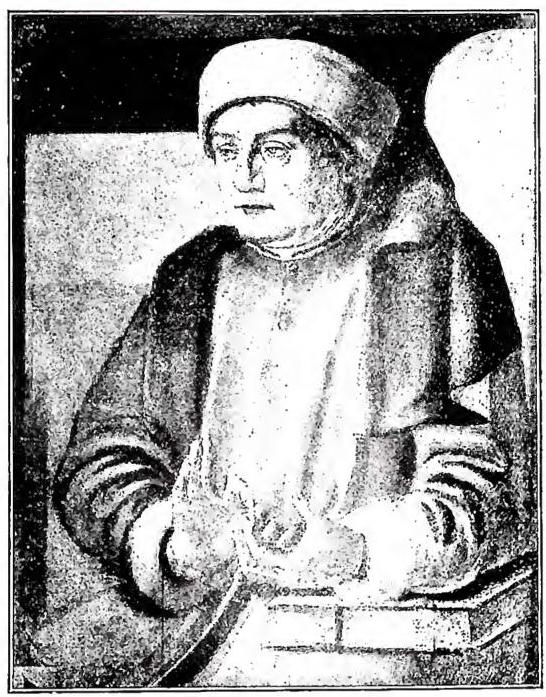
B. was venerated and listened to with the greatest attention throughout the entire Middle Ages. For the Scholastics, including s. Tommaso, who commented on his De hebdomadibus and in part on the De Trinitate, he was a true authority; and for centuries his works were, in the West, almost the sole source from which ancient Platonic-Aristotelian philosophy was drawn. B. was also the first to teach the Scholastics how to make use of Aristotle, especially his logic, for a rational synthesis of the Faith. Some of his definitions—those of beatitude, eternity, and the person—are positively classical and still living today. The Aquinate considered it an honor to cite B. frequently; according to some, Dante would call him his Doctor in Inf., V, 123. Cf. the high praise he gives him in Par., X, 121 ff.
At the beginning of the 18th century, a certain school of criticism, especially German, sought to cast doubt on B.’s Christianity because in the Consolation he is completely silent about Christ and makes no appeal to the consolations of faith, as one would naturally have expected from a Christian consecrated to death. Moreover, B.’s poem supposedly openly betrays the pagan spirit. But it is easy to reply that B.’s intention was quite definite and precise: to show what philosophy—not faith and theology—can accomplish amid the misfortunes of life. B.’s paganism, if indeed it exists, is merely superficial, a matter of culture and form, not of substance. Finally—and this is the principal and decisive argument—B.’s non-Christian character, or a merely apparent Christianity, has no positive historical basis whatsoever and is the product of short-sighted and prejudiced criticism. Today, moreover, no one seriously thinks of maintaining such a thesis after the thorough refutation
made by Semeria in his valuable work, though unfortunately it is almost impossible to find, Il cristianesimo di S. B. rivendicato (Rome 1900).
Umberto Degl'Innocenti