
VICENTE, GIL. – Portuguese writer, b. perhaps in 1465 and certainly d. before 1540. He is the greatest dramatist of his country and one of the greatest of the Iberian Peninsula; because of the value of his work, many localities, especially in the Minho and Beira, vie with one another for the honor of being his birthplace: criticism now tends to identify the dramatist with the well-known goldsmith of the same name who served Queen Donna Leonor and Don Manuel I, and whose most valuable work, the famous gold monstrance of the church of Nossa Senhora de Belém in Lisbon, was made with the first gold to arrive from the East discovered and colonized by the Portuguese.
G. V., having arrived in Lisbon at an undetermined date, presumably entered the court as tutor in rhetoric to the aforementioned Don Manuel; he subsequently accompanied the court during its various sojourns, well received—once he had made himself known through the theatre—and generously rewarded not only by Donna Leonor and Don Manuel, but also by Don João III.
V.’s work consists of 44 (or, according to certain contemporary scholars, whose opinion is still disputed, 46) autos: 10 tragicomedies, 13 farces, 17 “works of devotion” or “moralities,” and four compositions that are difficult to classify; of these, 16 are written in Portuguese, 11 in Castilian, and 17 are bilingual, whence the Iberian, and also linguistic, importance of this theatre. To G. V.’s first autos, the Auto da Visitação, or Monólogo do Vaqueiro (1502), the Auto Pastori Castelhano (1502), and the Auto dos Reis Magos (1503), is owed the transformation of the pastoral eclogue, inspired by Christian festivals, into dramatic production: with them the auto, the peninsular form of sacred drama, was born, attaining its highest peaks in the Spanish work of Calderón. But the horizon of the themes, characters, and states of mind represented in V.’s dramatic activity rapidly broadened, as documented by the chronology, often uncertain, of the autos. The titles of the most important are given here: the Farsa do Escudeiro (1508?)—commonly known by the opening words of the text, Quem tem farelos?—a powerfully realistic presentation of various human types; the Auto da Alma (1508?), inspired by the mystery of the Passion; the tragicomedy Exortação da guerra (1513), an ardent apology for war in the cause of faith; the Auto da Fama (1515), a fervent allegory of Portugal’s actions of discovery and conquest in Africa; the three Barcas, do Inferno (1516), do Purgatorio (1518), and da Gloria (1519), marvelous transformations into dramatic masterpieces of the medieval “dances of death,” whose traditional religious inspiration is retained, though with the addition of motifs of implacable social satire, within a vast and animated human panorama; the Pranto de Maria Parda (1522), the most celebrated of the minor compositions—the frenzied lament of a drunkard over the rising price of wine—a composition matched in vivacity among works of the genre only by Redi’s dithyramb Bacco in Toscana or, in painting, Velázquez’s picture Los Borrachos; the Farsa de Inês Pereira (1523), which presents, in a dramatically perfect form, both in its unity of action and in the astonishing yet entirely logical development of its scenes, the most expressive comic types of “Vicentine” theatre; the Auto Pastori Português (1523), which, in staging the love conflicts of shepherds from the Beira, provides an opportunity for scenes of enchanting popular lyricism; O Clérigo da Beira (1526?), an indirect but forceful reproach to the selfish indifference of the great ecclesiastical dignitaries toward the neglected clergy of the countryside; the Tragicomedia da Serra da Estrela (1527), another marvelous lyrical exaltation of the Beira, presented with an abundance of Mozarabic customs; the tragicomedy Prunfo do Inverno (1529), a Renaissance dramatization of the mythical theme
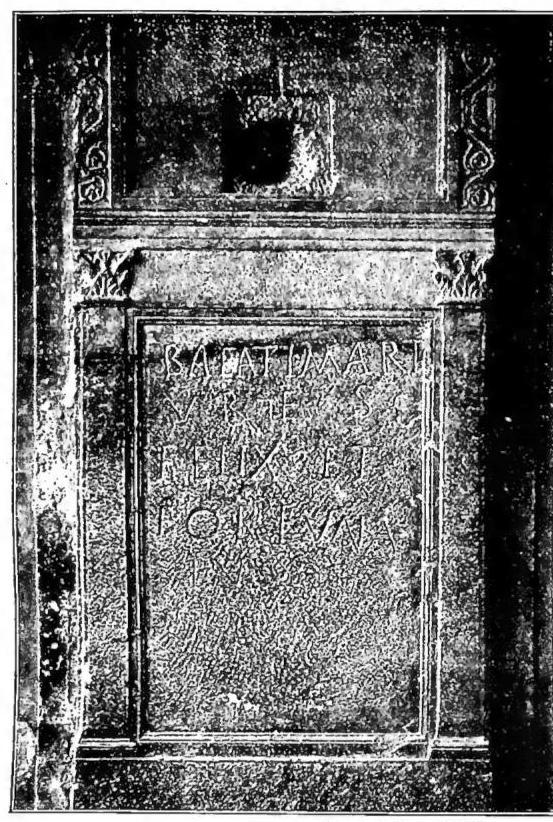
(courtesy of G. Manisse)
By its courtly nature, G. V.’s theatre has the immediate purpose of entertaining; the author’s vis comica corresponds admirably to what the period and its milieu demanded of him, and, in G. V., his detachment from life—which he scrutinizes keenly—enables him to perceive the comic in what surrounds him, while the task of conveying this comedy to the spectator is fulfilled by the extraordinarily lively mobility of the author’s artistic realization. But the profound sense of the medieval man present in G. V. gives this natural vis comica an extraordinary moral force and integrity, both socially and religiously; the latter is evident beyond certain attitudes of the dramatist that might outwardly suggest those of the rebels of the Reformation or their immediate predecessors (some have ideally compared G. V. with Erasmus), in his absolute devotion to the spirit of Catholic tradition. On the other hand, the strong culture—not merely religious—that underlies this assured faith does not diminish the freshness and enchantment of “Vicentine” theatre. One cannot say whether it is more evocative in its representation of the landscape (with a predilection for that of the mountainous region of the Beira) or in its depiction of the Portuguese people, who for the writer constitute a living, concrete entity, whose vitality stands out against the emptiness and externality of the courtiers’ way of being (for whom G. V. writes), themselves portrayed in their attitudes with equal acumen and artistic felicity. From the sincere love of the people and of the fatherland that inspires G. V. comes one of the most enduring aspects of his theatre:
the reproduction of national life through a lavish profusion of folklore, with a sudden lyricism that suggestively disrupts the dramatic framework, while at the same time reconstituting it through the power of expressive means and the artist’s psychological immediacy.
Giuseppe Carlo Rossi