
ROSA D'ORO. — This is a symbolic gift which the pontiffs customarily send, as a sign of particular esteem and benevolence, only to queens, although in the past they were accustomed to honor with this distinction sovereigns, princes, and eminent personages as a reward for important services rendered to the Church and to society, as well as illustrious shrines and important cities.
At times it consisted of a simple flower without stem or leaves and, at other times, of a flowering branch with leaves and thorns, until, in the time of Sixtus IV (1471–84), it assumed its present form, namely, a cluster of roses made entirely of gold and adorned with precious stones. Its central flower, larger than the others, bears at its center, within a small cup, balsam and musk.
It is not possible to establish its first origin with certainty. It is known only that in 1049 Leo IX, in exchange for exemption from the jurisdiction of the local Ordinary which he had granted to the monastery of S. Croce of Tulle in Alsace, imposed upon those nuns the annual sending to the Pope of a r. d'o.; but in the relevant document Leo IX himself speaks of the r. d'o. as something not new. The oldest historically attested record of the granting of a r. d'o. by the Pope dates to 1096, when Urban II, passing through Angers during the preaching of the First Crusade, presented one to Count Fulco of Anjou. During the Avignon period, the practice then began to spread of offering the r. d'o. to various illustrious persons of both sexes, to churches, and to cities. It is enough to mention, besides the various emperors, the kings of France Louis VII, Charles VI, and VII; the king of Naples and Aragon Alfonso, who received it in 1451 from Nicholas V for his victory over the Turks; Giovanni d'Austria, one of the victors at Lepanto, to whom it was presented by Gregory XIII in 1576; and Queen Casimira of Poland in 1684 for the victory of Vienna. Among the principal churches to have received the r. d'o. are the Roman basilicas of S. Pietro (five times), S. Giovanni in Laterano (four times), and S. Maria Maggiore (twice), and the churches of S. Maria sopra Minerva and S. Antonio dei Portoghesi, as well as, outside Rome, the shrine of Loreto, S. Maria del Fiore of Florence, S. Domenico of Perugia, and the basilica of Notre-Dame of Lourdes. Among the cities, on the other hand, must be numbered Venice, which received it several times, Bologna, Siena, Savona, and Lucca.
The last male to receive the r. d'o. was the doge of Venice Franc. Loredan, who received it from Clement XIII in 1759; from then on, except for certain churches, it was reserved exclusively for female sovereigns, among whom
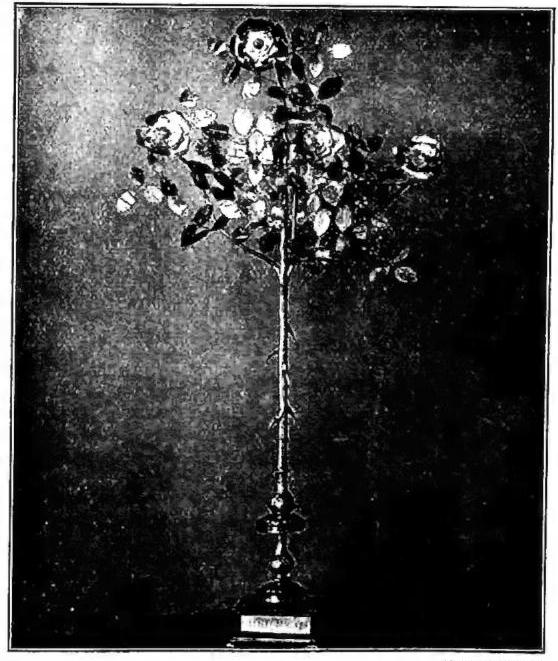
(from Acta SS. Septembris, II, Antwerp C/8, p. 281)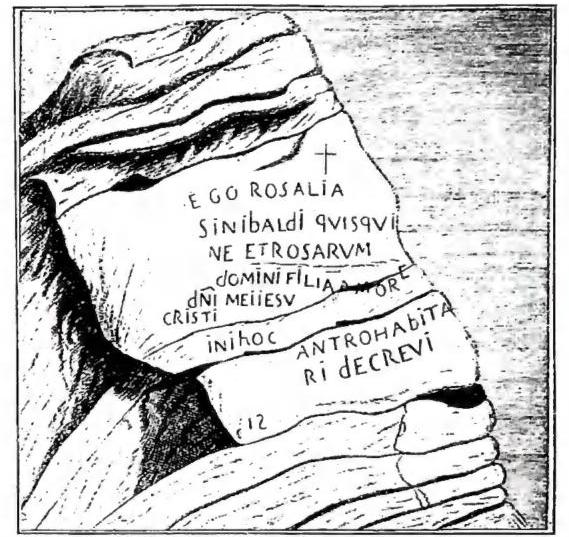
The former queen of Sardinia Maria Teresa (1825), the queens Isabella (1868) and Maria Cristina of Spain (1886), the empresses Eugenia of France (1856) and Elisabetta of Brazil (1888), and the queens Amelia of Portugal (1892) and Maria Enrichetta of Belgium (1893) received II.
The ceremony for the blessing of the r. d'o. formerly took place in S. Croce in Gerusalemme; but when the emperor was in Rome to be crowned, it was intended for him, and the ceremony of the blessing took place in S. Maria in Cosmedin. At present, the r. d'o. is blessed by the Pope on Laetare Sunday (the fourth Sunday of Lent), before Mass, in the Hall of Vestments, in the presence of many cardinals; it is then carried by him personally to the Sistine Chapel, where he entrusts it to one of the cardinal deacons, and it is subsequently placed on the altar. When the person for whom the r. d'o. is intended is in Rome, the Pope himself presents it to him or her upon leaving the Sistine Chapel; otherwise, an official bearer is appointed, chosen from among the supernumerary participating Chamberlains of Sword and Cape.
The tradition of presenting the r. d'o., interrupted during the pontificates of Pio X and Benedetto XV, was resumed by Pio XI, who awarded it in 1923 to the queen of Spain Vittoria Eugenia, in 1925 to Elisabetta, queen of the Belgians, and in 1937 to Elena, queen of Italy (d. 28 November 1952).