Machine translation of the 1948–1954 Italian original. The original text is authoritative.
PADILLA, JUAN de. - Spanish poet, born in Seville in 1468, died probably in 1522. He professed in the native Carthusian monastery of S. Maria de las Cuevas; hence the epithet "el Cartujo", by which P. is also known.
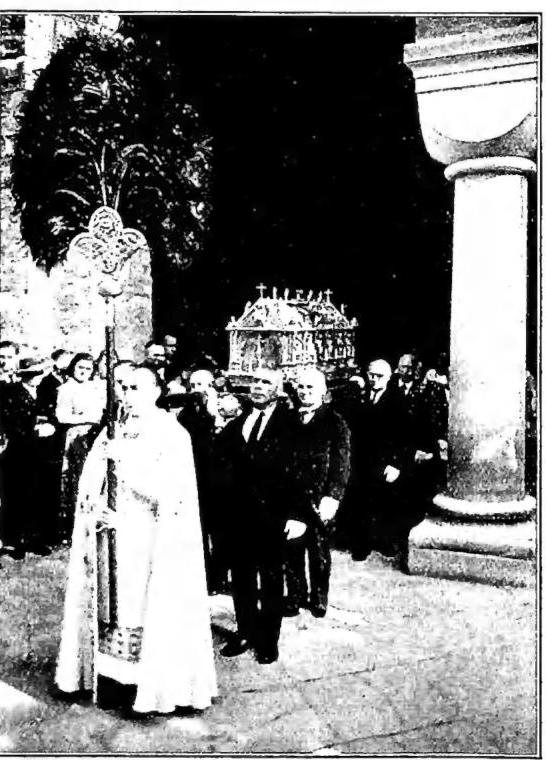
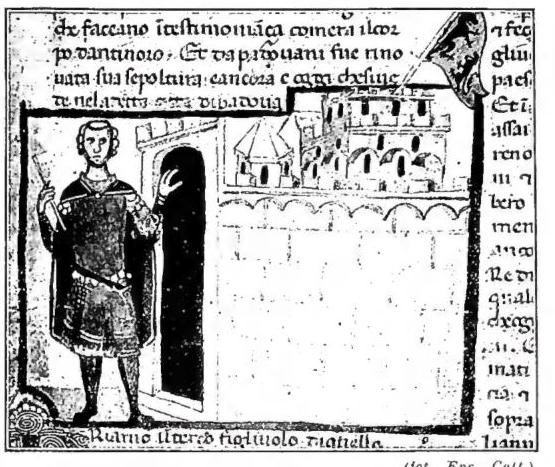
PADERBORN, ARCIDIOCESI di - Cassa reliquiario di s. Liborio (sec. XVII), preceduta dalla ruota del pavone, simbolo del Santo dal sec. XVIII. (fot. Theo Gockel)(fot. Enc. Cutt.) PADOVA, DIOCESI di - P. e il suo leggendario fondatore Antenore. Miniatura della Cronaca del Villani - Biblioteca Vaticana, cod. Chig. L. VIII, 296, c. 3° (sec. XIV).His poem Retablo sobre la vida de Nuestro Redentor Jesucristo (Seville 1516) has been compared to contemporary Spanish expressions in painting and sculpture. The other, Los doce triunfos de los doce Apóstoles (ibid. 1521), follows in the wake of Dante's Commedia (P. belonged to the allegorical-Dante school that arose in Spain through the work of Francisco Imperial), Petrarch's Trionfi, and J. de Mena's Laberinto; turbidness of imagination and delicacy of feeling, classical aspirations and a fundamental medieval spirit coexist strangely within it, dominated by three essential themes: fear of death, dread of hell, and nostalgia for childhood. Lost is his youthful poem Laberinto del Marqués de Cádiz, concerning the conquest of Granada.
BIBL.: ed. dei due poemi a cura di R. Foulché-Delbosc in Nueva bibl. de ant. esp., XIX, Madrid 1912. Studi: B. Sansiventi, I primi influssi di Dante, del Petrarca e del Boccaccio sulla letteratura spagnola, Milan 1902, p. 224 ff.; A. Farinelli, Dante in Spagna nell'età media, in Giorn. st. lett. it., 1905, suppl. n. 8, pp. 1-105; A. Valbuena-Prat, Historia de la literatura española, I, Barcelona 1946, p. 347 ff. Enzo Navarra
Cite this article
“PADILLA, JUAN DE.” Enciclopedia Cattolica, vol. IX (1952), p. 328. Azione Romana digital edition, https://azioneromana.com/article/padilla-juan-de.
 Enciclopedia Cattolica