
HISPANO-AMERICAN, LITERATURE. – It comprises the literary production of the various American nations of Spanish language and developed in three phases: the period of the Hispanic empire, that of the independence movements (19th century), and the modern period, begun with the work of Rubén Dario, which gives it originality while nonetheless establishing continual relations with the culture of Spain.
SUMMARY:
I. Argentina
II. Bolivia
III. Chile
IV. Colombia
V. Cuba
VI. Ecuador
VII. Mexico
VIII. Nicaragua
IX. Paraguay
X. Peru
XI. Uruguay
XII. Venezuela
XIII. Other Central American countries.I. ARGENTINA
The culture of Argentina perhaps differs from that of other Spanish-American states in the greater absence of racial “mestizaje” with the aboriginal element. With a predominance of Spanish and Italian blood, it has also been attentive to the various voices coming from Europe, especially from France, England, and Germany; hence it may be said that Buenos Aires is the most Europeanized center of American culture. In its first phase Argentine literature is provincial, inspired by the environment of the “pampas,” and finds expression in the poetry of the “payadores (troubadours) gauchos”; but the first works shaping the national spirit already appear, such as the Himnos a la libertad by López Planes (1784–1836), or those intended to evoke the country’s origins, such as the Triunfo de Ituzaingó by Juan Cruz Varela (1794–1839).During the Romantic period there worked the poet and novelist Esteban Echeverría (1805–31), author of Elvira o la novia del Plata, and Domingo Faustino Sarmiento, a teacher of national importance. Devoted to politics, he went into exile during the dictatorship of Rosas, against whom he wrote Facundo Quiroga (1845), a fictionalized biography of a figure who symbolized the author’s cultural and political ideas; among other works, he was also responsible for the collection Recuerdos de provincia. Also formative of the Argentine national consciousness were Juan Bautista Alberdi (1810–84), who wrote the Bases para la organización constitucional de la República argentina, and General Mitre, who, besides his political activity, composed biographies of Sanmartín and Belgrano.
A brief mention will suffice for Víctor Olegario Andrade (1838–1882), author of Atlántica, El nido de condores, and Prometeo, whereas the “gauchismo,” which constitutes the marrow of the first Argentine literary period, requires fuller discussion. Apart from dramatic production, inaccessible without the aid of stage performance, three names define it exemplarily: Hilario Ascasubi (1807–81), creator of the figure of “Santos Vega, el payador”; Estanislao del Campo (1834–80), author of the poem Fausto, an account, given by one “gaucho” to another, of a performance of Goethe’s drama; and, above all, José Hernandez (1834–86), author of the celebrated Martin Fierro, which must be regarded as the great epic of life in the American countryside during the intermediate period between independence and the progressive organization initiated in the twentieth century. The protagonist is a “gaucho” who recounts the misfortunes of his life in an immensely popular verse, full of grace and freshness, leaving a testimony of a vanished way of life, elegiacally experienced and sung in accents that recall Homeric modes. The meters and stanzas are those of the “payadores”: sestets of octosyllables. The added sections (La vuelta de Martin Fierro, etc.) give greater scope to folklore, as they are rich in interspersed popular songs. In Hernandez one must admire the skill with which he fuses narration and lyricism and handles a discursive language immediately derived from the people’s mouths. Welcomed upon its appearance as a national masterpiece, not only in Argentina but also in Spain (see, for example, Unamuno’s judgment), Martin Fierro was perhaps somewhat neglected by recent Argentine poetry, which has moved more toward European forms; it seems, however, that the value of this work is once again becoming operative in the present poetic consciousness.
Passing over two neoclassical poets—Carlos Guido Spano (1827–1918) and Leopoldo Díaz (born in 1862), author of Hellas—we come to the poetry of “modernismo,” which boasts one great name: Leopoldo Lugones (1874–1938), a contemporary and younger friend of Rubén Dario. The assimilation of French poetry did not succeed in silencing his intense patriotic feelings: thus there are aligned,
LA
LIRA ARGENTINA,
6 COLECCION
DE LAS PIEZAS POÉTICAS,
BABAR A LUX
EN BUENOS-AYRES
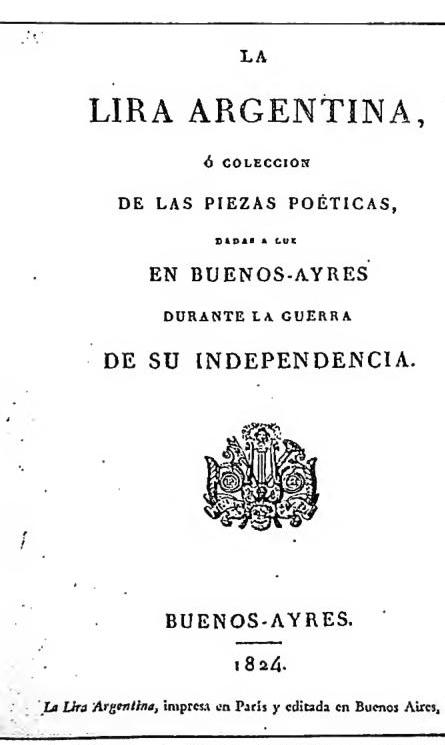
DE SU INDEPENDENCIA.
BUENOS-AYRES.
La Lira Argentina, impresa en París y editada en Buenos Aires, 1824.
(from J. A. Leguizanion, Historia de la literatura hispano-americana, I, Buenos Ayres 1848, p. 315)
ISPANO-AMERICANA, LETTERATURA - The Argentine lyre, Buenos Ayres 1824. Frontispiece.
alongside Los crepúsculos del jardín (1905), Lunario sentimental (1909), Las horas doradas (1922), other works such as Odas seculares (1910), which includes the famous A los ganadas y las miedes. Other poets of this period are: Evaristo Carriego and Conrado Nalé Roxlo, both cultivators of a poetry of the suburbs, of a twilight tone; Pedro B. Palacios («Almafuerte»), a poet of a somewhat naïve moral tone; Héctor P. Blomberg (b. 1890), singer of the illusion of the sea; Alfredo R. Bufano (b. 1895), poet (Romancero) and author of essays on Italian Renaissance mysticism; Rafael Alberto Arrieta (b. 1889), author of Alma y Momento; Enrique Banchs, B. Arturo Capdevila, Fernández Moreno, etc.
In prose, several names of novelists inspired by country life are encountered: Carlos M. Ocanos (b. 1860), Roberto J. Payró (1867-1938; Cuentos de Payo Chico, Divertidas aventuras del Nieto de Juan Moreira), Manuel Galvez, Benito Lynch (b. 1885; Los caranchos de la Florida; Se llevaron el cañón para Machimbo) and, above all, Ricardo Güiraldes (1886-1927), author of Don Segundo Sombra, which sums up the heroic character of the «gaucho» as found in Martín Fierro, though now seen from the outside: a legendary figure, more alluded to than directly described, moving through an environment and psychology that are rather lyrical and sensitive than epic.
The widely disseminated work of Hugo Wast (pseudonym of Gustavo Martínez Zuviria) leads toward a less poetic climate, but one that is highly varied and adapted to popular taste. In the case of Enrique Larreta (b. 1873), on the other hand, one should speak of a poetic novel, of a modern atmosphere, especially in the celebrated La gloria de don Ramiro, set in sixteenth-century Avila. Among his works are: Zogode, a novel of the «pampa»; La calle del amor y de la muerte, lyrics on Spanish themes; and the very recent La naranja (Madrid 1949).
In poetry, alongside the characteristic world of Alfonsina Storni (1892-1938), a poetess of vivid sensibility, to whom we owe Ocre (1923) and Mascarilla y trébol (1938), one observes the development of the so-called «avant-gardism». Besides Oliverio Girondo, Jorge Luis Borges (b. 1900) is important, founder of the journal Prismas and author of Ficciola, a prose work of fantastic and highly singular character. Subsequently, through Ricardo E. Molinari and Leopoldo Marechal (b. 1900), author of Sonetos a Sofía e El centauro, this poetry moves toward a more classical and at times Catholic and Hispanic sensibility, as in Ignacio B. Anzoátegui and Francisco Luis Bernárdez, born in Spain and author of La ciudad sin Laura.
Meanwhile, prose is given new life through the work of Eduardo Mallea (b. 1903), author of Todo verdor perecerá; Cuentos para una inglesa desesperada e La bahía de silencio, a description of the artistic and intellectual life of Buenos Aires, with evident influences from the English novelists and from Proust. Novelists and essayists worthy of mention are: Ezequiel Martínez Estrada (Radiografía de la pampa), Macedonio Fernández and Raúl Scalabrini Ortiz, author of El hombre que está solo y espera, an acute testimony to the anguish of the contemporary spirit of Buenos Aires.
The foremost folklorist is Juan Carrizo, collector of Argentine folk songs. Among the journals, Sur should be mentioned for its long continuity and its representative character of Buenos Aires ultra-Europeanism; it is directed by Victoria Ocampo, a Spanish essayist who lived for a long time in France.
II. BOLIVIA
During the Romantic period, Bolivia’s principal poet was Ricardo J. Bustamante (1821–84). In the «modernist» movement, alongside Rubén Darío and Lugones, the Bolivian Ricardo Jáimes Freyre (1868–1913), author of Castalia Bárbara, was also active, followed by Franz Tamayo (b. 1880). The best-known novelist is Alcides Arguedas (b. 1879), author of Vida criolla. Also worthy of mention is the narrator and critic Adolfo Costa du Rels (b. 1891), who often wrote in French.III. CHILE
Chile’s great national epic poem is not Chilean, but Spanish: La Araucana by Alonso de Ercilla, which recounts the war of conquest. Even in the seventeenth century, in Chile itself, a poet continued the narration of Ercilla’s exploits: Pedro de Oña, whose formal innovations upon the classical «ottava reale» employed by Ercilla have been highly praised by recent Spanish criticism. Dating from the period of the Spanish Empire are the novel El cautiverio feliz by Francisco Núñez de Pineda y Bascuñán, reassessed and published by the younger Chilean critics, and the chronicle Restauración de la imperial by Fray Juan de Barrenechea. Later is the (Latin) work of the Jesuit Manuel de Lacunza, founder, through his commentaries on the Apocalypse, of the so-called «millenarianism» in America, which in our own day retains a certain influence among a select group of Chilean Catholic intellectuals, even though they belong to the most faithful orthodoxy.The period of independence offers only a few isolated names of singers of the new revolutionary spirit, such as Camilo Enriquez (b. 1769).
In the period of nineteenth-century consolidation, which finds political expression in the state organization of President Portales, one must note the influence exerted over the entire nation by the Venezuelan Andrés Bello (1781–1865), famous for his grammatical works. José Victorino Lastarrias (1817–88) is of national importance, both in sociological doctrine and in the founding of Chilean narrative literature. In the nineteenth century as well, the novel flourished especially through the work of the so-called «Chilean Balzac», Alberto Blest Gana (1830–1920), and of others such as Luis Orengo Luco (1866) and Eduardo Barrios (b. 1884). The name of Pedro Prado (b. 1886) leads from the novel to poetry, which he also cultivated and for which he won the national prize in 1949. Poetry is generally more important in the Chilean literature of this period. After the years around the turn of the century, which produced such poets as Carlos Pezoa Velis (1829–1908), Manuel Magallanes Moure, Carlos Prendez Saldías (b. 1892), Max Jara (b. 1886), Luis Felipe Contardo (1880–1921), and Carlos R. Mondaca (1881–1928), there appears a great trilogy of poets of continental and universal importance: Gabriela Mistral, Pablo Neruda, and Vicente Huidobro. Gabriela Mistral (pseudonym of Lucila Godoy), b. 1889 and recently awarded the Nobel Prize, after the emotional depth of Desolación (1922), developed a progressive evolution in her conception of poetry through Ternura and Tala, which considerably enriches her lyric poetry with a new humble, ironic, and affectionate sense of small things, alongside the historical grandeur of her Cantos de América. At present she is consul of her nation at Petropolis (Brazil). Vicente Huidobro (1893–1948), on the other hand, together with the Spaniard Gerardo Diego, was the founder of «creationism», an avant-garde tendency whose spirit was attuned to the new trends of Paris. In the anthology published by the Chilean publishing house «Zig-Zag» on the occasion of his death, one can observe a progressive evolution of his poetry—in French and in Spanish—from its initial avant-gardism toward a more human sense (Altazor). His literary importance perhaps derives more from his masterful and renewing influence than from his work. But without doubt the most evident influence on the present-day poetry of the whole of America is that of Pablo Neruda (pseudonym of Neftali Reyes,
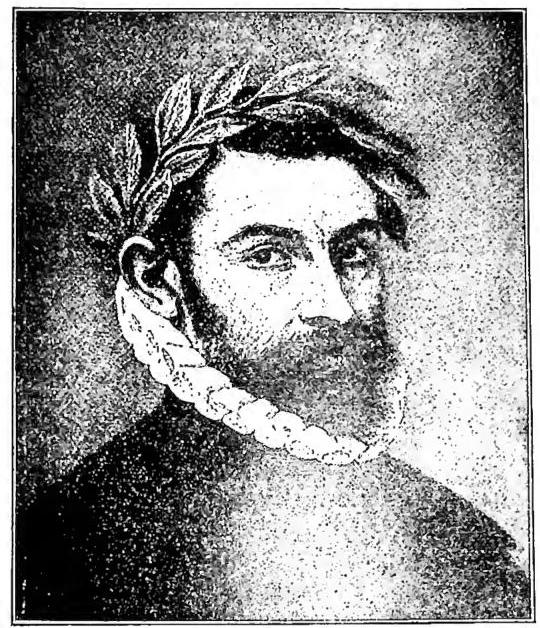
Ida J. A. Leguicunian, Historia de la literatura hispano-americana. II, Buenos Aires 1915, p. 261
ISPANO-AMERICANA. LETTERATURA – Portrait of Alonso de Ercilla y Zúñiga (1533–94). Painting by El Greco (ca. 1590) – Madrid, Prado.
(b. 1904). The most important titles in his oeuvre are: Veinte poemas de amor y una canción desesperada (1924), Tentativa del hombre infinito (1926), Anillos (1926), and, above all, Residencia en la tierra (Santiago del Cile 1933; 2 vols., Madrid 1933), more recently followed by Tercera Residencia (Buenos Aires 1945), which contains España en el corazón, Canto general de Chile, and other poems. His radical linguistic originality and the force of his obscure sentiment, conceived in a manner that might be called «surrealist», without detracting from his singularity, have made Neruda the currently most famous poet of Spanish America; his fame, however, is due in part to his political activity (he was a Communist senator), which has at times dangerously restricted his poetic horizon. Like his most recent production, issued phonographically by Arturo Soria in Santiago de Chile, the poems Alturas de Macchu-Picchu and Nuevas alturas de Macchu-Picchu should be mentioned (the most important study of his poetry is by Amado Alonso: Poesía y estilo de Pablo Neruda, Buenos Aires 1940).
IV. COLOMBIA
Colombia, throughout its literary history, has managed to remain a nation conservative in its classical and balanced outlook, with an inclination toward the cultivation of oratory and grammatical studies. As early as the seventeenth century there was a Gongorist poet, Hernando Domínguez Camargo, as well as the great nun and author of mystical works, Sister Francisca Josefa del Castillo y Guevara (1671–1742). In theeighteenth century, in response to the tendency of the period, the « Academia del buen gusto » was founded, a forerunner of the great Colombian academic tradition that has continued to the present day. The period of independence produced two poets: José M. de Salazar (1785–1828) and Luis Vargas Tejada (1802–29), the « Colombian Chénier ».
Romanticism was introduced into Colombia by José Joaquín Ortiz (1814–92), who represented for his nation what Quintana represented for Spain; but it truly reached its most characteristic expression with José Eusebio Caro (1817–53) and Julio Arboleda (1817–62). Subsequently, among innumerable other poets, Rafael Pombo (1833–1912) achieved national importance, without forgetting Gregorio Gutiérrez González (1826–72). At the end of the nineteenth century appeared the figures most decisive in the formation of a grammatical and humanistic consciousness: Miguel Antonio Caro (1843–1909) and, above all, Rufino José Cuervo (1844–1911), whom Menéndez y Pelayo called « the most eminent philosopher in the Spanish race in the nineteenth century », author of a famous Gramática española, another Latin grammar, a Diccionario de la construcción y régimen de la lengua castellana, and several other works. At this time there also appeared a novel that achieved great fame throughout the Spanish-speaking world: María by Jorge Isaacs (1837–95).
Colombian poetry, always abundant, produced one of its classics during these years: José Asunción Silva (1865–96), whose life, made unhappy by excessive sensitivity, was cut short by suicide. His Nocturno remains one of the most celebrated pieces of American lyric poetry. Later, through a long life of sparse and painstaking work suggestive of a Flaubertian or Parnassian attitude, Guillermo Valencia (1872–1943), author of Ritos, attained a prominent position. But perhaps the poet who is becoming increasingly interesting to contemporary taste is Barba Jacob (pseudonym of Miguel Angel Osorio, 1883–1942), a decadent personality corresponding to the French type of the « maudit », whose brief and varied work contains two or three poems (Los desposados de la muerte; Balada de la vita profunda) rightly reassessed by the most recent American and Spanish criticism. Besides several books of sonnets, José Eustasio Rivera (1889–1928) wrote La vorágine, regarded by many as the finest novel of the Hispano-American world. Among contemporary writers, none attains the high prestige of the poet Eduardo Carranza. Finally, mention should be made of the prose writer Germán Arciniegas and, among the ever numerous poets influenced by « piedracelismo », Helcías Martín Góngora.
V. CUBA
From the very “first breath of local flavor” found by Menéndez y Pelayo in the Oda a la piña of Manuel de Zequeira y Arango (1760–1846), Cuban literature developed rapidly, acquiring its own distinctive character. The Romantic period produced the great personality of José M. de Heredia (1803–1829), still formed in the classical mentality and author of a lyric poetry full of fire (El Teocallí de Cholula; Al Niágara). During the period of the war of independence, the name of the mulatto Placido (pseudonym of Gabriel de la Concepción Valdés, 1809–1844) is important: he was a poet of simple, popular style, with a combative and unfortunate life, like the other poet Juan Clemente Zenea (1832–71). The poet Gertrudis Gómez de Avellaneda is usually included in Spanish literature, because of her residence.The true shaper of the national consciousness was José Martí (1853–95), poet of the Versos sencillos, writer, journalist, and a casualty of the war of independence. As a premodernist poet, Julián del Casal (1863–95) may be mentioned. In the twentieth century there was a flowering of “black poetry,” anthologized by Emilio Ballagas (born in 1908), whose principal figure is Nicolás Guillén (Balada de los dos abuelos). In the more recent period we encounter Mariano Brull (born in 1891), Luis Palés Matos, and Fernando Ortiz, alongside the narrator Lino Novás Calvo. Poetry continues to flourish with considerable vigor: among the younger writers is the poet Dulce María Loynaz (Juegos
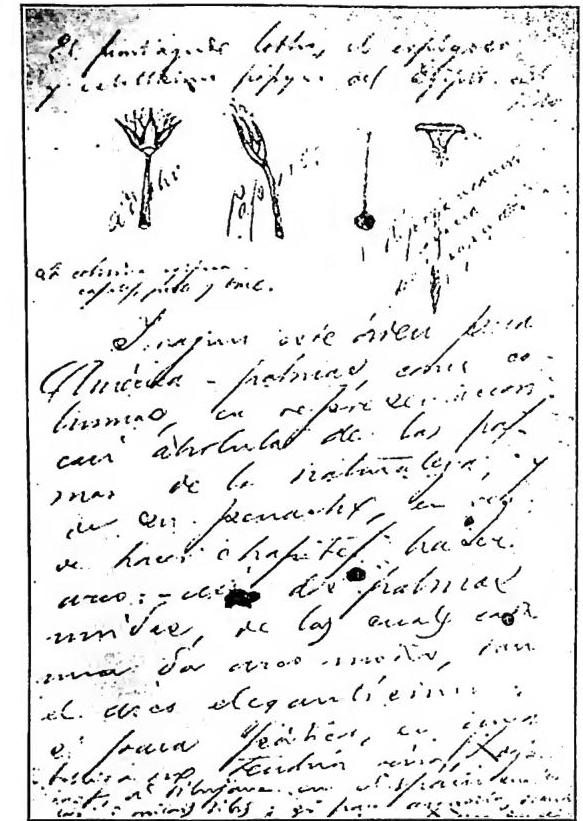
(from J. A. Leguizamon, Historia de la literatura hispano-americana. II, Buenos Aires 1913, p. 571)
ISPANO-AMERICANA, LETTERATURA — Autograph of José Martí, 1853–95 (Cuba). Page concerning the conception of an American architectural order — Havana, Gonzalo de Quesada Archive.
de agua, Madrid 1948; Versos, Santa Cruz de Tenerife 1948), Eugenio Florit, and José Lezama Lima, the inspiration behind the young « Origenes » group, which in turn includes poets such as Fina García Marruz, Eliseo Diego, and Cintio Vitier.
Literary criticism is practiced chiefly by José M. Chacón y Calvo.
VI. ECUADOR
Setting aside a few names from the seventeenth century, such as, for example, Fr. Jacinto Evia, compiler of a Ramillete, and Fr. Matías de Cordoba, more important names are found in the nineteenth century. José Joaquín de Olmedo (1780–1874) occupies the most prominent place in Ecuadorian poetry of this century, with his Pindaric verses (La victoria de Junín). President Gabriel García Moreno, famous for his Catholic fervor, was also a political and sociological writer. Other Romantic poets were Julio Zaldumbide (1833–87) and Numa Pompilio Llona (1832–1907). In the twentieth century, which was richer for Ecuadorian literature, poetry, renewed by the influence of European movements, first flourished with Jorge Carrera Andrade (born in 1903), whose production was abundant, and with Jorge Reyes (born in 1904), singer of his native land (Treinta poemas de mitierra).In our own day, the novelist Jorge Icaza is noteworthy; his novel Huazipungo has been translated into Italian. Finally, the poet José Rumazo published Raudal in Madrid and made known the portion already completed of his poem Memoria de la sangre, perhaps a seminal document of the new American lyric.
VII. MEXICO
From the very time of the Conquest, a mixed Indian-Castilian literature arose in Mexico, in the Maya, Aztec, or Nahuatl language, but in Latin letters, as in the case of the Popol-Vuh, a collection of aboriginal traditions, or the Chilam-Balam of Chumayel. Among the first Mexican historiographers were Juan Suárez de Peralta (Tratado del descubrimiento de las Indias), Fray Diego Durán, a mestizo (Historia de las Indias), Hernando de Alvarado Tezozomoc (Crónica mexicana; Crónica chichimeca), and Fernando de Alba Ixtlilxochitl, the latter two of royal Mexican descent, as well as Fray Agustín Dávila Padilla (Historia de la fundación y discurso de la provincia de Santiago de Mexico, del Orden de Predicadores). Francisco de Terrazas, praised by Cervantes, wrote the epic poem Nuevo Mundo y conquista, while Juan de Castellanos is the author of the very lengthy Elegias de varones ilustres de Indias (1589). The Baroque age boasts the name of the poet and learned nun Juana Inés de la Cruz (v.).In the eighteenth century the Franciscan Manuel de Navarrete founded the « Arcadia Mejicana », that is, the first academy. From the period of the struggles for independence came Fernando Calderón (1809-45: Soldado de la libertad), alongside more celebrated figures such as Manuel Eduardo Gorostiza (1789-1851), a dramatist who lived in Spain, Manuel Rodríguez Galván (Profecia de Guatimoe), and José Joaquín Pesado (1801-61: Los aztecos). The Indian Altamirano (1834-73: El Zarco) was of great importance, also as a national and political figure of the war. Other names, such as Manuel Acuña (1849-73), Justo Sierra, Manuel José Othon, and Salvador Díaz Mirón, lead toward « premodernism », best represented by Manuel Gutiérrez Nájera (1859-95). The poet and critic Francisco A. de Icaza (1863-1925), who lived for a long time in Madrid and was poetically portrayed by Antonio Machado, was active during this period. The age of « modernism » had as its Mexican poetic representatives Luis C. Urbina, José Juan Tablada, author of « hai-kais », Amado Nervo (1870-1919), who enjoyed wide success, especially in Spain (El arquero divino; La amada inmóvil), with a lyrical tone lying between becquerianism and prosaism, and Enrique González Martínez (born in 1871), who inclined toward a greater sentimental and psychological intimacy, rising up against ornamental rhetoric (« Tuércele el cuello al cano... »). Among the new poetic generations are Carlos Pellicer (born in 1899), Xavier Villaurrutia, more avant-garde (Nostalgia de la muerte, 1908), Jaime Torres Bodet (born in 1901), and talented poetesses such as Concha Urquiza, Margarita Paz Paredes, etc. Ramón López Velarde (1888-1921) sang of provincial life, in a style midway between humor and tenderness (La suave patria; Zozobra).
As a thinker and philosopher, José Vasconcelos (born in 1884), who converted to Catholicism, established himself as the creator of the concepts of the « cosmic race » and the « fifth race » (Indologia; El monismo estético; Estética; Tratado de metafísica; Ética; Historia del pensamiento filosófico, etc.).
Literary criticism boasts Alfonso Reyes (born in 1889), a poet, author of essays, and editor of the classics (Cuestiones estéticas, 1910-11; Simpattas y diferencias, 1921-26; Cuestiones gongorinas, 1927; La antigua retórica, 1942; La experiencia literaria, 1942; El Deslinde, 1945; etc.). The novel, too, has been cultivated, from Federico Gamboa (1864-1939), known as the « Mexican Zola », to Martín Luis Guzmán (born in 1887) and Mariano Azuela, author of Los de abajo and a novelist of popular life.
VIII. NICARAGUA
Its limited size and population did not prevent Nicaragua, during this half-century, from placing itself at the forefront of Hispano-American poetry. Above all, it was the homeland of the great pioneer Rubén Darío, pseudonym of Félix Rubén García Sarmiento. Born in Metapa, now Ciudad Darío, in 1867, he died in León (Nicaragua) in 1916; he lived for many years in Paris, Spain, and Argentina. After assimilating French modernism and symbolism, which Valera had discerned in his youthful Azul, he turned toward Spanish classical forms, contributing decisively to the flowering of poetry in Spain from the time of the so-called «generation of ’98», although at times the less profound and more rhetorically musical aspect of his multifaceted work exercised greater influence upon the public.Rubén’s all-absorbing continental renown did not prevent the continuation of poetic life in Nicaragua; thus, two or three nearly contemporary names are found before the emergence of the two current young poetic generations: the priest Azarias H. Pallais (born in 1885), teacher of the younger avant-garde group, Salomón de la Selva (born in 1893), also a poet in the English language, and, above all, Alfonso Cortés, who, born at the end of the 19th century and insane from his youth, is one of the most enigmatic and magical figures in American poetry. Between 1925 and 1930, a «vanguardia» group appeared in Nicaragua, formed among former Jesuit pupils: this explains why its political tendency was always oriented toward Catholic, Hispanic, and hierarchical ideology. The great master of this group was and is—without forgetting the influence of the aforementioned Fr. Pallais—José Coronel Urtecho (born
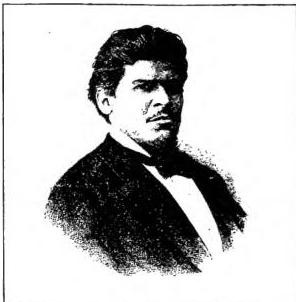
(from J. A. Lujiazán, Historia de la literatura hispano-americana, I, Buenos Aires 1915, p. 638)
ISPANO-AMERICANA, LETTERATURA — Portrait of Ignacio Manuel Altamirano, 1834–93 (Mexico).
born in 1906), translator of North American poetry, folklorist, playwright and, above all, a continuous and effective conversationalist. The most notable and active figure in this group, which has now attained a more complete maturity, is the poet Pablo Antonio Cuadra (born in 1912), founder of the Cuadernos del Taller de san Lucas and theorist of the idea of “Hispanity” (Hacia la Cruz del Sur, Madrid 1936; Breviario Imperial, there 1940; Entre la cruz y la espada, there 1946). Joaquín Pasos (1915–47), with his telluric lyric poetry (Misterio Indio; Canto de guerra de las cosas), marks the beginning of the work of a very young generation, from Ernesto Mejía Sánchez to Carlos Martínez Rivas (born in 1924) and Ernesto Cardenal (born in 1925).
IX. PARAGUAY
In Paraguayan lands, poetry was cultivated, especially during the period of modernismo, by Juan O'Leavy (b. 1879), Pablo Max Insfran (b. 1894), and Carlos Zubizarreta.X. PERÚ
During the Spanish imperial period, the literary life of Lima left, besides names such as that of General Alfonso Picado, the memory of an anonymous poetess, “Amarilis,” who sent Lope de Vega a metrical epistle, meriting a lengthy response in verse.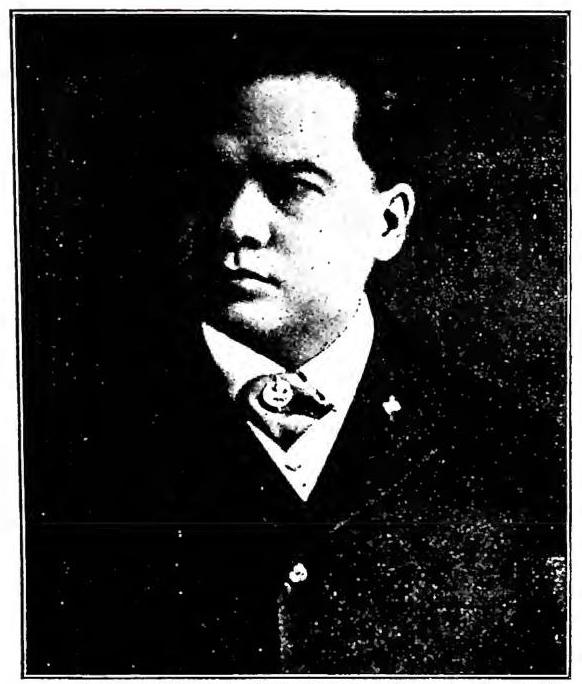
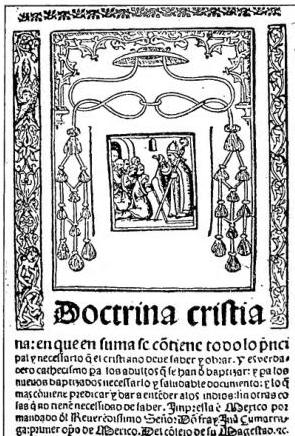
(from J. A. Lujiazán, Historia de la literatura hispano-americana, I, Buenos Aires 1915, p. 72)
ISPANO-AMERICANA, LETTERATURA - Doctrina cristiana, Messico 1545. Title page.
(from R. D., Cuentos y poemas en prosa, Madrid s.a., tov. f. t.)
ISPANO-AMERICANA, LETTERATURA - Portrait of Rubén Darío,
1867–1916 (Nicaragua).
From the aristocratic José M. Eguren, one arrives at César Vallejo (1898–1938), whose lofty and genuine lyricism is spreading its ever-growing influence throughout America and Spain. With his books (Los heraldos negros; Trilce; Versos humanos; España: aparta de mí este cáliz; El tungsteno) Vallejo has created a new language, strongly expressive of original emotion, and now recognized as one of the essential American voices.
Among the younger writers, apart from other poets such as Sologuren or the hermetic Martín Adán, a group of sociologists and political intellectuals should be noted, including Luis Alberto Sánchez, Mariátegui, and Xavier Abril. Historiographers worthy of mention are José de la Riva Aguero and, at present, Raúl Porras Barrenechea and Guillermo Lohmann Villena.
XI. URUGUAY
Uruguay’s literary flowering occurred relatively late: in the early nineteenth century we find the name of the neoclassical poet Francisco Acuña de Figueroa (1790–1862), but it was only at the end of that century that a noteworthy work appeared, the epic poem Tabare, a fantastic narrative of an episode of the conquest, by Juan Zorrilla San Martín (1855–1931). After him, the principal Uruguayan novelist was Carlos Reyles (1870–1939), author of El embrujo de Sevilla.The age of modernismo had its first poetic representative in Julio Herrera Reissig (1875–1910); but the most singular development (apart from that of the Franco-Uruguayan poets, that is, French by life and language but Uruguayan by birth, such as Isidore Ducasse—“comte de Lautréamont”—and Jules Supervielle) was the emergence of several poetesses of continental renown: Maria Eugenia Vaz Ferreira (1875–1924), the delicate Delmira Augustini (1890–1914), and the passionate Juana de Ibarborou—“Juana de América”—(born in 1895).
The thinker José Enrique Rodó (1871–1917), especially in Ariel, but also in Motivos de Proteo and El mirador de Próspero, advocated the preservation of traditional Greco-Latin values in the face of Saxon and North American material splendor. Other poets worthy of mention include Carlos Julio J. Casal, Carlos Vaz Ferreira, Fernán Silva Valdés (born in 1887), Carlos Sabat Ercasty, Alvaro A. Vasseur, translator of Whitman, and Emilio Oribe, who subsequently devoted himself to philosophy (Teoría del nom). Essays by Alberto Zum Felde exerted considerable influence.
XII. VENEZUELA
The literary history of Venezuela includes, in the eighteenth century, the Gongorist poet Alonso de Escobar; during the Enlightenment and the early nineteenth century, José Antonio Martín, Abigail Lozano, a Romantic poet, and José Ramón Yepes. Thus we come to the great philologist and grammarian, teacher of the Colombian Cuervo: Andrés Bello (1781–1865), who in Chile exercised a decisive influence on the intellectual formation of the nation and was also the author of lyrical poems (Silva a la agricultura de la zona tórrida).Recent writers include, among the poets, Rufino Blanco-Fombona (1874–1944); among the novelists, Rómulo Gallegos (b. 1884), author of Doña Bárbara; La Trepadora; Cantaclaro; Canaima and Pobre negro, which convey the sense of virgin American nature, dominating man. For the present day, there remain to be mentioned Mariano Picón Salas, a narrator, author of essays, and eminent critic, and the historians Angel C. Rivas (1873–1930) and Laureano Vallenilla Lanz (1870–1936).
XIII. OTHER CENTRAL AMERICAN COUNTRIES
Still in the nineteenth century, a Jesuit from Guatemala, Rafael Landívar, wrote a long Latin poem, Rusticatio mexicana, much praised by Menéndez y Pelayo. In Guatemala itself, after other names such as J. Batres (1809–44), those of Rafael Arévalo Martínez (born in 1892), a poet of limited but highly interesting output, and Miguel Angel Asturias recur. Puerto Rico produced Eugenio M. de Hostos (1839–1903), a political writer of the period of independence. The Dominican Republic (Santo Domingo), besides the eminent critic and theorist of literature Pedro Henríquez Ureña, can boast the poet Manuel del Cabral, whose Antología Tierra, a selection made in Madrid (1949, La encina y el mar, ed. Cultura Hispanica) of his entire work up to that year, reveals a simultaneously very human and inventive sense of language. On the same island, leaving aside French-speaking Haiti, there lives a group of young poets: Franklin Mieses Burgos, Antonio Fernández Spencer, etc.Honduras has the poet and anthologist Rafael Heliodoro Valle. Costa Rica numbers among its poets R. F. Guardia, María Isabel Carvajal, and the critic and teacher Roberto Brenes Mesén. Poets of El Salvador are Juan Bernal, J. J. Cañas, J. Aragón.
BIBLI: In addition to those cited incidentally and to the special bibliographies of the respective authors, the following may be consulted for a general orientation: M. Menéndez y Pelayo, Historia de la poesía hispanoamericana, 2 vols., Madrid 1911–15; M. Picon Salas, Hispanoamérica, posición crítica, Santiago 1931; F. de Onís, Antología de la poesía española e hispanoamericana, Madrid 1934; L. A. Sánchez, Vida y pasión de la cultura en América, Santiago 1935; Antología de la poesía moderna en lengua española, México 1941; A. Zum Felde, El problema de la cultura americana, Buenos Aires 1943; L. Panero, Antología de la literatura hispanoamericana, 2 vols., Madrid 1944; R. E. Scarpa, Lecturas americanas, prosa y verso, Santiago de Chile 1944; E. Diez Canedo, Letras de América. El Colegio de México, México 1944; L. A. Sánchez, Nueva historia de la literatura americana, Buenos Aires 1944; J. A. Leguizamón, Historia de la literatura hispanoamericana, 2 vols., there 1945; A. Torres Riosco, La gran literatura iberoamericana, there 1945.