Machine translation of the 1948–1954 Italian original. The original text is authoritative.
MARIANA, JUAN. – Jesuit, theologian, and humanist, b. at Talavera (diocese of Toledo) in 1536, d. at Toledo on 16 February 1624. From 1561 he taught exegesis in Rome; theology from 1564 in Sicily and from 1569 in Paris. In 1574, for reasons of health, he moved to Toledo, where he devoted himself to composing his works.
His masterpiece is considered to be the history of Spain, first written in Latin: De rebus Hispaniae (Toledo 1592, the first 20 books; Mainz 1605, the complete work in 30 books), subsequently revised and translated by him into Spanish: Historia general de España (2 vols., Toledo 1601). Other works include: De ponderibus et mensuris (there 1609); Tractatus septem (Cologne 1609); Scholia in Vetus et Novum Testamentum (Madrid 1613).
But two works made his name more widely known: De rege et regis institutione libri tres (Toledo 1599), in which he discusses the lawfulness of tyrannicide (book I, chap. 6) and, going further than many medieval theologians (who maintained that the action of one who, in order to liberate his country, killed a usurper was meritorious, provided that there were no higher authority capable of pronouncing
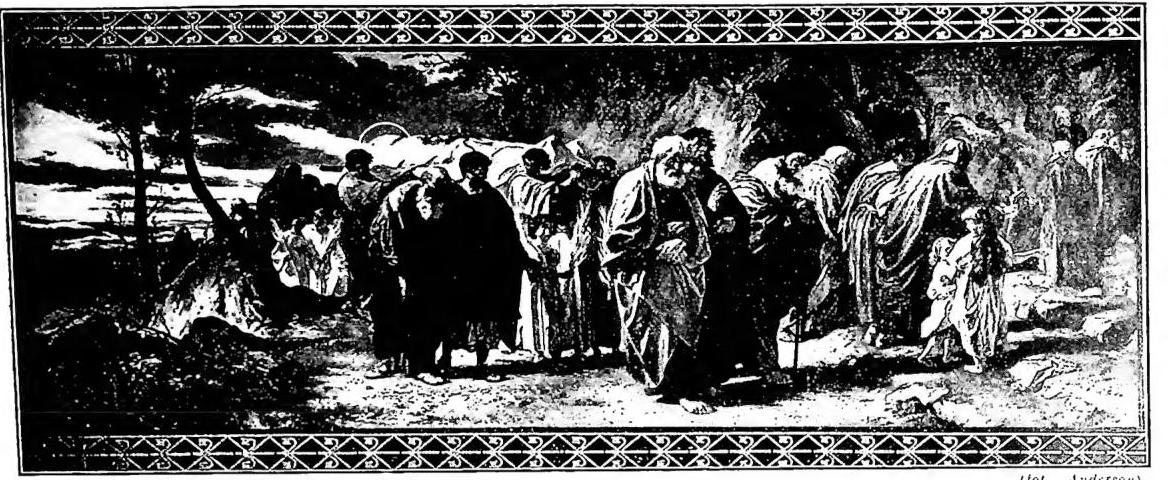
MARIANI, CESARE – St. Stephen carried to the tomb. Fresco by C. M. (1870), formerly in the basilica of S. Lorenzo fuori le mura. Destroyed in the bombing of 19 July 1943 – Rome.(the condemnation), he extends the doctrine also to the case of a legitimate sovereign who abuses his position to a grave degree, bringing the fatherland to ruin and despising the public laws and religion. M. expressly qualifies this judgment of his, however, as a personal one. In fact, the superior general C. Aquaviva, informed by the superiors in France of M.’s opinion, which was undoubtedly reprehensible despite its many limiting clauses, deplored the publication and ordered it corrected (cf. Jouvaney, op. cit. in the bibliography, nn. 86–87, 157). And when the assassination of Henri IV at the hands of Ravaillae stirred up the French Parliament against M. and the Jesuits, as the cause of that regicide, he once again prohibited, under pain of excommunication (6 July 1610), every member of the Order from publicly or privately upholding, as a counselor or teacher or in writing, the licitness of anyone’s killing kings or princes, or attempting against their lives, under any pretext of tyranny; and shortly afterward (14 August 1610), he specifically prohibited all writings for or against M.’s book (ibid., n. 157). The other work that caused a sensation was: De monetae mutatione (the fourth treatise of the work Tractatus septem). In it M. openly accused the ministers of Philip III of ruining the people by reducing the value of the currency; he was therefore confined, as in a prison, in a Franciscan convent and released only a year later. His irascible character also led him, as early as 1593, to take sides against the superior general Aquaviva and in favor of a separatist movement within the Order in Spain (cf. his Discursus de erroribus qui in forma gubernationis Societatis Jesu occurrunt, published posthumously at Bordeaux in 1625). M.’s native city erected a monument to him in 1888.
BIBL.: Sommervogel, V, cols. 547–67; J. Jouvaney, Historiae Soc. J. liber XII, Rome 1710, pp. 83–85, 124; B. Duhr, Jesuitenfabeln, 4th ed., Freiburg im Breisgau 1902, pp. 704–37; Italian translation, II, Florence 1908, pp. 237–55; A. Astrain, Hist. de la Compañía de Jesús en la Asistencia de España, III, Madrid 1909, pp. 328–333, 557–63; IV, there 1913, pp. 95–105; L. Laures, The political Economy of J. M., New York 1928; S. Hirt, s. V. in Staatlexikon, III, cols. 1150–52; M. Los Rios, El p. J. M. escriturario, in Estud. biblicos, 7 (1935), pp. 247–63; M. Ballesteros-Galbrois, J. M., Cantor de España, pensador y político, 2 vols., Santander 1938–39; A. Pasa, Un grande teorico della politica nella Spagna del sec. XVI, il gesuita G. M., Naples 1939; A. Ullastres Calvo, La teoría de la mutación monetaria del p. J. de M., in Anales de economía, 4 (1944), pp. 273–304.
Celestino Testore
Cite this article
“MARIANA, JUAN.” Enciclopedia Cattolica, vol. VIII (1952), p. 115. Azione Romana digital edition, https://azioneromana.com/article/mariana-juan.