### MINORCA, DIOCESE OF
On the island of the same name (Balearic Islands, Spain) in the Mediterranean. Area: 669 sq. km. It is part of the ecclesiastical province of Valencia. It has a population of 45,800 inhabitants, of whom 45,300 are Catholic. It comprises 14 parishes, served by 47 diocesan priests and 5 religious, as well as 4 male and 25 female religious communities (1949).
At the beginning of the 5th century, Minorca had its own episcopate, as evidenced by the letter of Bishop Severus (year 417). During the Vandal and Muslim invasions, the episcopal see of Minorca disappeared. After the Christian reconquest (1287), it was incorporated into the Diocese of Majorca until 1795, when Pius VI erected it as an independent diocese. Since then, 12 prelates have governed the diocese, which remained unharmed during the British dominations of the 18th century. From 1936 to 1939, Minorca suffered the terrible effects of the godless domination, which resulted in the killing of half of the clergy and the devastation of all churches.
**Archives:** The diocesan archive, partially destroyed during the last revolution.
**Libraries:** The episcopal palace library and the seminary library.
**Cultural institutions:** The conciliar seminary in Ciudadela, established in 1858.
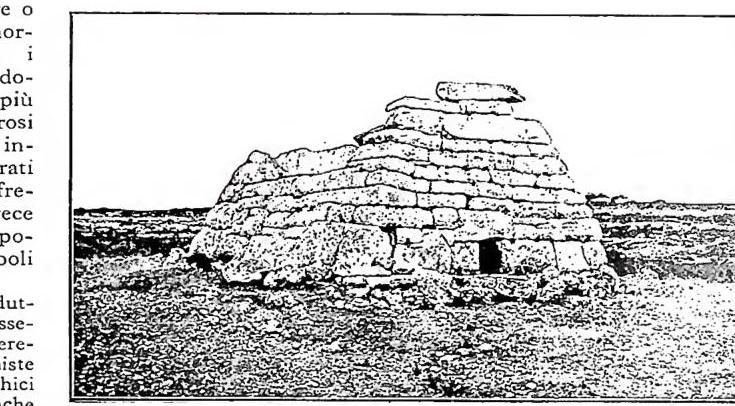
**Monuments:** The most important is the cathedral church in Ciudadela, built in the 14th century with a 19th-century façade, consisting of a single, very spacious nave. It was restored after 1939.
**
Fernando Martí
---
Corruption of minors refers to the actions of those who commit acts of lust with persons under an average age of around 16 years; the crime exists whether such acts are committed on the minor, in their presence, or by inducing them to commit acts on themselves, the seducer, or others. Apart from the turpitude of the incriminated acts, the abuse of the inexperience and naivety of an adolescent—who has either not yet reached or has only just passed the age of childhood, the age when education and good example are most needed, the age of developing passions and unstable character—is certainly grave. Thus, nearly all legal systems protect the minor’s lack of awareness, applying the maxim, *eo ipso* from a higher law of nature: *maxima debetur puero reverentia*. Every corruption, every seduction is punishable (v. SCANDAL), but of particular gravity is the incitement to corruption that exploits the minor’s age, often opening the door to another serious social disorder: juvenile delinquency.
Therefore, nearly all penal codes prescribe penalties against those who corrupt minors. The age threshold is not always 16, as in the Italian Penal Code (cf. arts. 530, 539–544); in other national codes, a lower age is considered; for example, the Austrian Code sets it at 14, the German Code at 16 and 14 depending on the gravity of the libidinous acts. Another constitutive element of the crime is the materiality of the acts of lust, i.e., acts directed toward sexual satisfaction. Certain harmful acts, such as a speech, a reading, an obscene book, or a lewd performance—condemnable from a moral standpoint—escape penal sanctions, as they do not constitute the crime in question, which requires that corruption occur through acts of lust. The punishable acts of lust, as outlined in various penal codes (including the Italian Penal Code and the *CIC*), can be committed either on the minor or in their presence in any form that, though lacking physical contact, possesses a corrupting power by arousing the minor’s concupiscence. Even a single act suffices to constitute the crime, provided it has the corrupting efficacy that justifies the incrimination.
The crime is also present when the victim consents, as the law aims to protect youth from acts for which the minor cannot generally be presumed capable of valid consent. According to certain judicial trends, the crime persists even if the minor is already corrupted and regardless of the degree of corruption attained, since the minor’s precocious sensuality does not negate the perversity of the abuser, making redemption more difficult. In any case, it is certain that even in a corrupted subject, there are degrees of corruption, and the law would be remiss if it did not punish those who push a minor—already initiated into corruption—further down the path toward the most unbridled debauchery. Acts of corruption can occur over time through the initial efforts of multiple individuals with progressively worsening influences, so that those who complete the ruin of innocence and virtue are no less guilty than those who began II.
The perpetrator of the crime does not require specific intent, which is nearly impossible to define psychologically. Ordinarily, the legislator aggravates the penalty if the crime is committed through deceit or if the offender is an ascendant of the minor or is entrusted with their care, education, instruction, supervision, or custody.
A special configuration arises in cases of violent acts of lust against the minor. Other circumstances may aggravate the crime, such as commission in a public place or one exposed to the public, or against a minor without a legal representative, etc. More than the law itself, it is often jurisprudence that determines their weight; jurisprudence that, to fulfill the law’s purposes, should prioritize the protection of the minor over that of the corrupter. The crime of corruption is generally prosecuted through private action, i.e., following a complaint by the injured party, except in certain cases, such as when the crime is committed by a parent or guardian of the minor or by a public official; in such cases, prosecution is pursued *ex officio* (Italian Penal Code, art. 530).
The *CIC* stipulates that laypersons lawfully convicted of crimes against the sixth commandment committed with minors under 16 years of age are automatically considered infamous (*infamia iuris*: a *latae sententiae* penalty, can. 237 § 1) and grants the Ordinary the faculty to impose additional penalties if deemed appropriate (*ferendae sententiae* penalties, can. 2357 § 1). If the offenders are clerics, the following penalties apply: for minor clerics (those not bound by the law of celibacy), suitable penalties, not excluding suspension from the clerical state (can. 2358); for major clerics, they are to be suspended, declared infamous, deprived of any office, benefice, dignity, or assignment, and in more serious cases, deposed from their clerical state (can. 2359 § 2).
**
JUVENILE DELINQUENCY. — The delinquent, unless he falls within the sphere of pathology, carries out an activity that is conscious and freely willed. In the case of minors, however, this awareness may be lacking due to natural causes arising from the lack of physical-psychic development, or from the still immature intellectual and freely willed faculty. In the first case, irresponsibility is presumed; in the second, diminished responsibility is recognized.
Juvenile criminality is generally distinguished from that of adults by a special character. The minor’s crime is usually the result of an impulsive character in which suddenness and immediate concreteness of aims prevail, whereas adult delinquency is marked by complex, intelligent activity and a more distant goal. Crimes requiring sagacity, prudence, muscular and intellectual development are characteristic of mature age. In minors, crimes are driven by violent passions and carried out through rapid attacks, sometimes descending to brutality. Such crimes are committed precisely during the period of pubertal crisis, when the boy, beginning to assert his physical-psychic personality, feels a morbid need to “se faire valoir.” This is, in fact, the period of inconstant will, of illusions, of enthusiasms, of easy oscillations between virtue and vice, between pain and its transgression. At this stage, the imbalance between physical and psychic maturity is most severe; and the senses, already well adapted to life, dominate a mind not yet fully mature.
1. Students of criminal anthropology and psychology agree in classifying the causes of crime under a twofold order or nature: social causes and individual causes. Crime is thus also a bio-sociological phenomenon, in the sense that its production is contributed to in varying measure, on the one hand, by individual conditions concerning the development and physical and psychic characteristics of the individual; and on the other, by social conditions which include the degree of civilization, economic, cultural, and political situations, climate, education, environment, etc.
a) Age and sex. — The period in which juvenile delinquency most frequently manifests itself is that of growth. Due to the complex and largely antagonistic relations established between this phenomenon and psychic development, the minor does not possess full faculty to control instinctive-affective exuberance or to inhibit increasingly strong and distinct organic impulses. Particular importance may be assumed, in relation to the development of criminality, by the biological condition linked to sex. Statistics in fact show a marked difference in the number and nature of offenses committed by females compared to those committed by males. The different physiological and psychic characteristics and the particular tasks proper to women explain how in her case criminality also follows a qualitatively and quantitatively different course. Crimes requiring muscular strength, boldness, and aggressiveness are not found in female delinquency. Woman, more than to violence, resorts to cunning, slander, and in the case of murder, to forms of poisoning. It is noted, however, that juvenile female delinquency is more easily habituated. Thus, recidivism among female minors exceeds that among males. This is certainly due to the more prompt treatment of the male, who is subjected to corrective measures before he has contracted the habit of crime.
b) Heredity. — The hereditary factor is connected with the origin of the various biological processes that can influence criminal activities. Morelli, Lombroso, and in general all adherents of the doctrine of atavistic degeneration, which denies the regenerative power of lineage, attribute almost exclusive importance to the hereditary factor in the genesis of crime in general and of juvenile delinquency in particular. Experience and scientific investigation, however, show that delinquency itself is not transmitted, but only a predisposition to delinquency (v. HEREDITY). If such a predisposing complex to crime is produced by individual causes, other preparatory or triggering causes arise and mature in the environment.
c) The family. — In a depraved or disrupted family environment, the minor cannot achieve healthy and moral formation; rather, succumbing to the allure of passions unleashed by the disorder surrounding him, he may degenerate into outright delinquency.
d) Poverty. — Likewise, poverty, whether caused by material need or by idleness, exerts its deleterious influence. In such a state, minors suffer from the lack of resources afflicting their families, which in them excites morbid desires and passions.
e) Moral contagion. — Finally, deleterious are the influences that the contagion and suggestion of delinquents can exert on minors, especially those already predisposed to criminal impulses. Lying, anger, and the instinct for cruelty are easily learned; and experience teaches how dangerous are the associations of juvenile delinquents formed through imitation of adult delinquents.
1940. Correction of minors
The enormous gravity of juvenile delinquency and the danger it poses to social order have led to the enactment of norms for its prevention (v.) and correction of delinquent minors.The Church, sensitive to such correction, was the first to promote remedies. Clement XI, with the motu proprio of 14 November 1703, establishing the first correctional houses for minors, decreed that youths under the age of 20, instead of being sent to ordinary prisons, should be confined to correctional houses. Confinement aimed at the re-education of the young through Christian religious instruction, vocational training, and the teaching of a trade.
The current Code of Canon Law, although lacking specific legislation, takes particular account of delinquent minors.
It distinguishes between infancy and minority. The infans, who is under seven years of age, is presumed, by a presumption iuris tantum, to be irresponsible. The minor, however, may be considered, at the judge’s discretion, to be at least partially imputable. Even for the less than full imputability of minors, the presumption iuris tantum applies, unless the contrary is established. The reason for this reservation lies precisely in the consideration of the minor’s psychological state, which is still in the period of crisis.
The Code of Canon Law (can. 2230) further advises that impubes be subjected rather to educational punishments than to severe vindictive penalties. Generally, among penal remedies are listed admonishment, correction, precept, and surveillance, which becomes obligatory if the gravity of the case so requires and especially if there is danger of recidivism (si causa gravitas ferat et praecipue agatur de eo qui in periculo versatur relabendi in idem crimen): cf. can. 2306-11). For puberes, in addition to the aforementioned educational penalties, severe vindictive penalties and even censures may be imposed.
The Italian Penal Code considers those under 14 years of age not responsible (art. 97). For those, however, who have completed 14 but not 18 years of age, imputability is demonstrated by their capacity to understand and to will (art. 98). The penalty, however, in this case is diminished.
The competence to proceed in all crimes committed by minors under the age of 18 is entrusted to the juvenile court (*tribunale per i m.*), established by Royal Decree-Law No. 1404 of 20 July 1934. For the execution of judicial measures, juvenile reformatories (*case di rieducazione dei m.*) and observation centers (*centri di osservazione*) have been established, where a scientific examination of the minor is conducted to determine the degree of their personality and, consequently, to identify the most suitable means for ensuring their reintegration into public life (arts. 1–8). The juvenile court has the authority to order that a delinquent minor be committed to a reformatory for correction (*riformatorio per i corrigendi*), if it is established through evidence that the minor has contracted illicit habits and shows clear signs of moral corruption (art. 25). Of particular interest is Article 2, which stipulates that magistrates must possess special competence and a deep understanding of the psychological nature of minors. Finally, a procedure is implemented that is particularly suited to minors, suspending those procedural requirements related to deadlines, formalities, and the solemnities of the trial, which are less appropriate to the mind and psychology of the minor. With this, however, an effective method of prevention is still far from being achieved (cf.).