FILIPPI. — The first city of Macedonia evangelized during the second apostolic journey by Paolo and Sila, joined on the way by Timoteo and Luca. The passage into Europe followed two interventions of the Holy Spirit (Act. 16, 6 ff.), who directed the journey toward Troas, where a Macedonian appeared to Paolo in a dream and implored his help (Act. 16, 9). The year was 50 or 51: a date of great importance for the Christianization of the European continent, even though there was already in the capital of the Empire—although Pietro had not yet come there—a nucleus of active Christians.
In two days the missionaries reached the port of Neapolis (Cavalla), from which F. was about 15 km distant. The information supplied by s. Luca corresponds very well to what abundant written and monumental sources tell us about F. The city (Colonia Iulia Augusta Philippensis or Philippensium) was governed by the ius Italicum; its citizens boasted the title of “Romans” (Act. 16, 21); justice was administered by the duumviri iure dicundo, whom Luca calls (Act. 16, 20, 22, etc.) στρατηγοί; they were preceded by lictores (βαβδοῦχοι, Act. 16, 35, 38). The difficulty raised by Act. 16, 12, which would seem to make F. the capital of one of the four districts (μερίδες) into which Macedonia had been divided after the Roman conquest, whereas this title belonged to Amphipolis, has been resolved in various ways (cf. A. Wikenhauser, Die Apostelgeschichte und ihr Geschichtswerk, Münster 1921, p. 334 ff.; H. J. Cadbury, in F. J. F. Jackson-K. Lake, The beginnings of christianity, IV, London 1933, p. 180; P. Collart, p. 457).
The evangelization of F. began one Saturday morning on the bank of the Ganges or Gangites, in the precinct of the Jewish προσευχή, where several women readily welcomed Paolo’s message. Among them, a generous merchant dealing in purple, originally from Tiatira in Lydia, distinguished herself; she lodged the missionaries in her home. This thus became the spiritual center of the nascent community. The deliverance of a young pythoness provoked, through the machinations of her economically injured masters, a sort of popular uprising, during which the magistrates had Paolo and Sila flogged and then threw them into prison.
The two prisoners’ nocturnal prayer and a miraculous earthquake led to the conversion of the jailer and his family. The almost clandestine order for their release, given the following morning, afforded Paolo an opportunity to assert his rights as a Roman citizen, forcing the magistrates, concerned about the consequences of their rash act, to go personally to release the prisoners. Everything served to strengthen the young community, which, when Paolo and Sila, complying with the request of the duumviri, left F., seems to have remained for several years in Luca’s care. Indeed, the “we” does not reappear until Act. 20, 5, toward the end of the third missionary journey. The female element played no small part in the development of the community at F. With the conversion of the jailer and his family, a first nucleus of pagans who had had no contact with Judaism entered it; and the Gentile Christians formed the bulk of this Church. Other prominent figures are a certain Clemente, the “genuine Sizigo” (Phil. 4, 3: is this a proper name?), and the two women Evodia and Sintiche, who are courteously urged to come to an agreement (Phil. 4, 2).
Paolo returned to F. for Easter in 56 or 57 (Act. 20, 6), almost certainly during the journey through Macedonia mentioned in Act. 20, 2; in all probability, after the end of the first Roman imprisonment (I Tim. 1, 3). In addition to these visits, there were epistolary relations between Paolo and F. (v. FILIPPESI, SPISTOLA 31) and relations conducted through envoys of the two parties (Act. 19, 22, 29; Phil. 2, 19-20).
This Church, greatly loved by Paolo, must have remained in prosperous condition for a long time. Two letters rich in elegies and Pauline reminiscences are addressed to it: one by s. Ignazio of Antioch, the other by s. Policarpo. The bishops of F. appear as signatories at four or five councils: Porfirio at the Council of Sardica (344); Flaviano at the ecumenical Council of Ephesus (431), where he also represented the bishop Rufo of Tessalonica; Sozon at both the latrocinium Ephesinum (449) and the opposing ecumenical Council of Chalcedon (451). Today it is a titular archdiocese.
becoming the pars orientis of the Empire and then gradually returning to being a Greek city of the East.
The excavations carried out on several occasions at F. by the «Ecole française d'Athènes» have brought to light not only the civil monuments and those of pagan worship, but also the Christian ones, thanks above all to the recent fundamental work of P. Lemerle, both on Christian antiquity and on the Justinianic period.
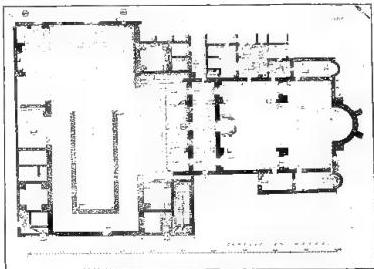
The Christian monuments of F. that have survived to the present day are not earlier than the Constantinian period. Two imposing Christian basilicas were built—
An entire chapter of Lemerle’s work is devoted to the Christian epigraphy of F. Several crosses were scratched on a relief of the acropolis; a cross and a dove were also engraved on the side of a cippus dedicated to Isis Regina, together with an invocation to the Redeemer to protect the city; against the city gate, where the «Eguata» Way heads toward the sea, marble slabs were set bearing fragments of the apocryphal correspondence between Abgar of Osroene and Jesus Christ (C. Picard, Un texte nouveau de la correspondance entre Abgar d'Osroene et Jésus-Christ, gravé sur une porte de la ville à Philippe, in Bull. de correspondance hellénique, 44 [1920], pp. 41–69).
The Christian funerary inscriptions are all in Greek; mentioned among them are a deaconess Posidonia and a canoness Pancaria (charged with performing the last rites for the dead), an Aurelius Ciriscus, an instructor, and an Aurelius Capitone, priest of the Catholic Church, who died in 381; on six inscrip-