
CATACUMBAS, CIMITERO in. - From the Greek κατὰ κόμβας, it was originally a topo-
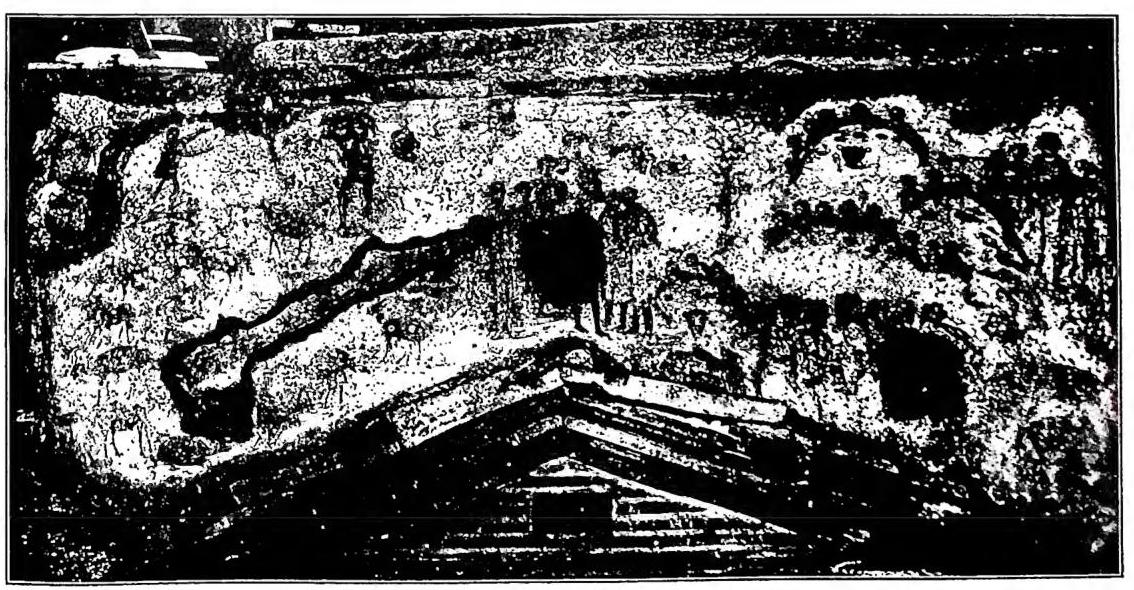
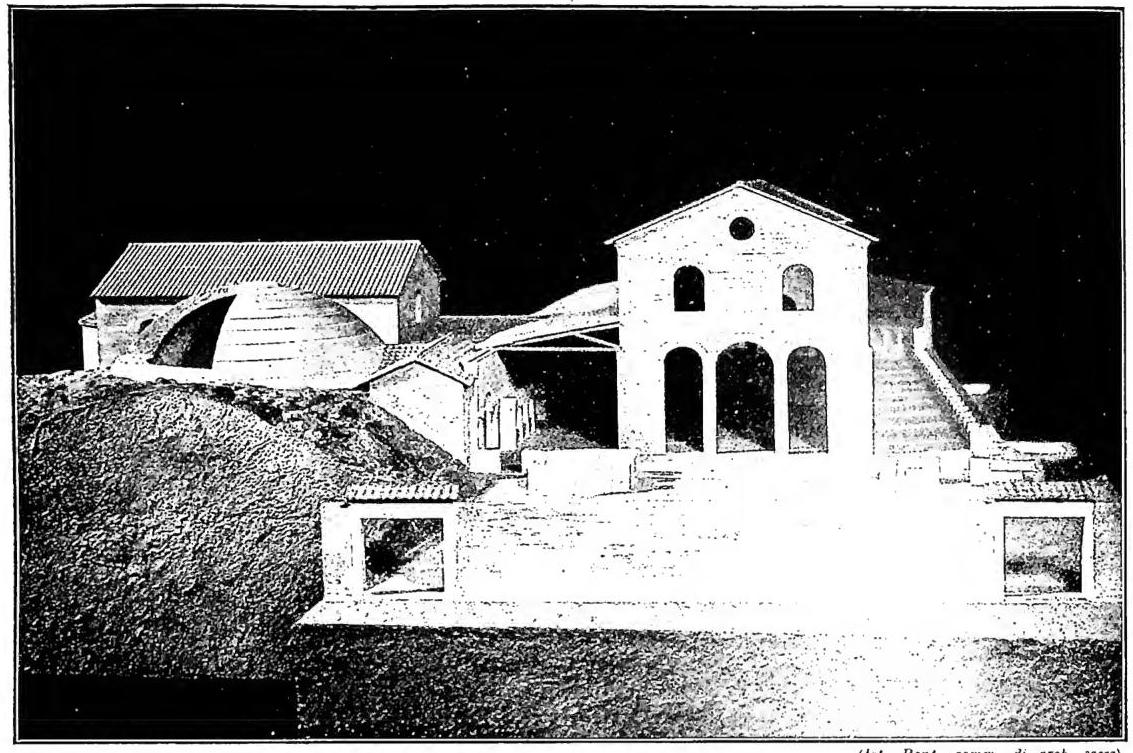
In this area lies one of the most important and complex monumental complexes of Christian subterranean Rome; it has been the subject of numerous studies, especially since 1915, when the Memoria Apostolorum came to light. The monuments that compose it date from the 1st to the 4th century A.D. At the original level of the hollow, the remains of a private road that crossed the via Appia can still be seen: on its north side was a two-story private house and other buildings most probably connected with the funerary cult. Indeed, two series of columbaria were built on the same side of the road: in one of those closest to it, an inscription still in situ of a freedman of Vespasiano clearly proves it to be from the 1st century, while those of the other series are somewhat later. In the latter, however, there are also Christian elements (paintings and inscriptions) from the first half of the 3rd century: a sign that the owners had embraced the new faith.
Toward the middle of the 3rd century, the hollow was partially backfilled and a kind of trapezoidal courtyard on an inclined plane was built: the so-called Triclia. It was certainly a place of Christian gatherings, since the walls of this courtyard are full of graffiti which, in addition to the rite of the refrigerium, to promises or fulfillments of vows, refer almost unanimously in Greek or Latin to prayers addressed to the apostles Pietro and Paolo. The discovery of these graffiti was made in 1915, and the monument was commonly called the Memoria Apostolorum. Scholars' opinions, however, differ regarding the nature and purpose of the Memoria. Ancient literary traditions (Liber Pontificalis, Martyrologium Hieronymianum, Itineraries, Passiones) all mention a temporary burial of the apostles Pietro and Paolo in C.; none, however, has determined the site more specifically, nor have excavations revealed anything positive and definitive. The study of literary sources has divided authors into three camps: 1. the Memoria is an actual sepulchral monument originating from the temporary burial of the bodies of the apostles Pietro and Paolo, either immediately after their martyrdom and before the definitive arrangement at the Vatican and on the via Ostiense, or in 258 during the persecution of Valeriano; 2. the Memoria was built to commemorate the dwelling of the two Apostles during their lifetime in one of the houses in C.; 3. the Memoria arose in connection with the establishment of a liturgical feast in honor of the two Apostles in C. begun in 258, when, because of the persecution of Valeriano, Christians were forbidden entry into cemeteries and therefore could not venerate the tombs of the Apostles in their respective places.
In the first half of the 4th century, a new and more extensive backfilling was carried out: all preexisting monuments, pagan and Christian, were sacrificed for the construction of the grandiose basilica Apostolorum, as it was initially called. In its original structure, this presented an architectural form unique in Christian basilical tradition: indeed, rather than by columns, the side aisles were demarcated by brick pillars that formed almost an ambulatory behind the apse. It appears that the basilica was intended as a place of burial; indeed, numerous mausoleums were opened around the perimeter walls. The most important of these is the one located to the left of the apse, commonly called the Platonia, in which Pope Damaso placed one of his poems, and, in the 5th century, the body of the martyr Quirino di Siscia was transferred following the barbarian invasion of Pannonia.
Before the construction of the basilica, however, an underground cemetery had begun in C., in which were buried the martyrs Eutichio, to whom Pope Damaso dedicated a poem, and Sebastiano, whose tomb was later arranged with a crypt featuring a double staircase to the left of the basilica. The presence of these two martyrs was certainly the cause of the cemetery's development in the 3rd and 4th centuries, and the cult paid to s. Sebastiano led to both the cemetery and the basilica being designated by his name.