
COLONIZATION. — The history of modern c. begins with the discovery of the lands beyond the ocean, in search of which the Portuguese and Spanish explorers set out. One of the principal motives for their adventurous undertakings, besides extending national dominion, was to spread the faith. Thus the sovereigns of the two principal colonizing peoples of the 16th century, like the navigators, were unable to separate political and economic motives from the religious motive; consequently, a crusading spirit pervaded the entire perilous work of exploration, of which Cristoforo Colombo, who, as soon as he landed on the new land, raised there the banner of the Cross and the flag of Castiglia, would always remain a symbol.
As a result of this spiritual attitude, in keeping with the religiosity of the time, c. tended toward the spread-
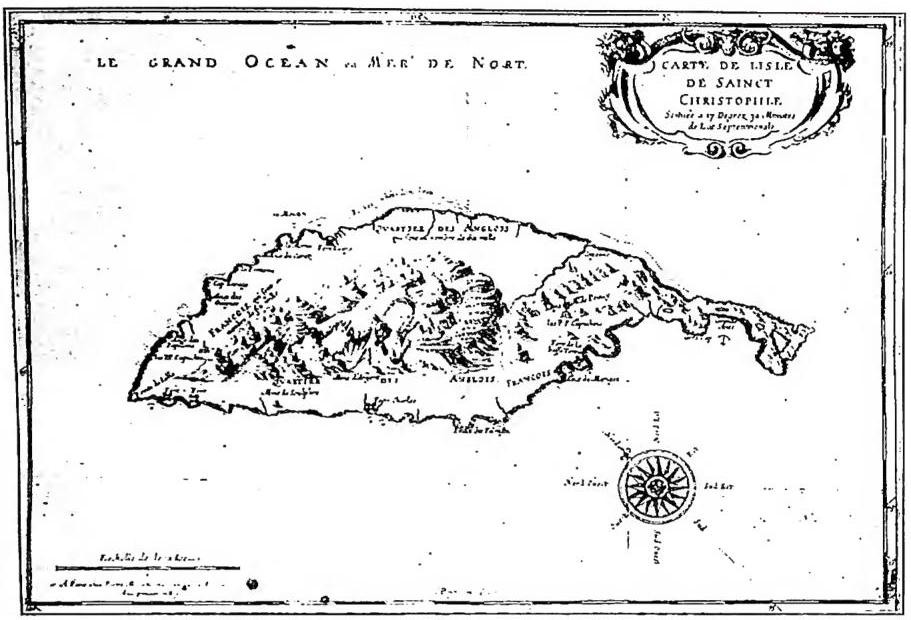
COLONIZZAZIONE - Map of the island of S. Cristoforo. Engraving by A. Peyrounin (Paris, ca. 1667).
London, British Museum Maps. 82170 (1).
…expansion of Christian civilization, for which the sovereigns themselves urged the dispatch of missionaries to the new possessions so that they might devote themselves to the education of the indigenous peoples. Thanks to this royal concern, large numbers of missionaries, subsidized by the public treasury, streamed out of Europe. Together with the conquerors, Augustinians, Franciscans, Dominicans, and Jesuits took to the sea, heading toward every corner of the vast colonial empires that were taking shape. At the express request of the king of Portugal, Giovanni III, Francesco Saverio set sail for the Indies, and in his footsteps came the numerous missionaries of the new religious Order to which he belonged. Spain followed the same policy in America. The first Dominicans and Franciscans, who arrived immediately after the discovery, were followed by the Augustinians, and all began the civilizing of the barbarous tribes.
In these directives of Spanish and Portuguese colonial policy, not everything was pure idealism; it nevertheless remains true that colonization was not then understood as a simple work of exploitation, but also as a sacred mission of civilization. Isabella’s instructions to Cristoforo Colombo on the occasion of his second voyage emphasize this meaning, since they ordered the admiral to regard the conversion of the indigenous peoples to Christianity as his first and principal concern, without her caring whether the treasury might be burdened in order to achieve II. The Church did not fail to encourage and confirm this political orientation. The concessions granted by the popes to Portugal and Spain were directed toward this end. Two acts of Alessandro VI document this action. In 1497 he granted the Portuguese Crown the exclusive right over the colonies of West Africa, together with a series of privileges, subject to the restrictive clause that the indigenous peoples submit voluntarily. A similar concession, made to Spain in 1493 in three consecutive acts, ordered Ferdinando, in the bull of 3 May, “to send to the mainland and islands mentioned upright men, God-fearing, skilled, and capable of instructing the inhabitants of the said regions in the Catholic faith and in good morals.”
There were certainly abuses in Spanish and Portuguese colonization, against which the missionaries rose up. This nevertheless does not alter the fact that the directives of the courts were sound and humane, as Spanish colonial legislation demonstrates. On reading the collection of
laws for the Indies, one cannot fail to acknowledge the wisdom of the Spanish laws and the humanitarian spirit that inspired them. Indeed, the order was always given to regard the Indians as subjects of Spain and as free men, and to protect and defend them; indeed, for this purpose they were granted the privileges that the law recognized for minors, together with the right to dispose of their own property and the exceptional favor of being able to rescind contracts. These general provisions, issued by the royal authority and the Council of the Indies, were often followed by particular ordinances marked by the same spirit.
Despite the abuses, the colonial problem always presented itself to the Spanish legislator as a problem of civilization and humanity. The indigenous person was not despised; no racial hatred separated him from the rulers; no ordinance rendered him ineligible for marriage with whites. Madrid merely insisted that unions contracted with women of color be regularized through lawful marriage. As a result of this broad colonizing policy, a mixed population arose in New Spain, which became the cradle of the modern nations of Latin America and of their culture.
As a point of contrast, the parallel legislation of Virginia in North America may be cited. In 1660 the General Assembly of that State granted whites the power to capture indigenous people and sell them as slaves in compensation for any damage they had caused; in 1663 it established the principle of the collective responsibility of the entire village if a white person had been killed in the vicinity; in 1665 it deprived the Indians of the right to elect their chiefs; in 1676 it decreed that every Indian taken prisoner would fall into perpetual slavery; in 1692 it prohibited any marital union between whites and people of color, while one article of the code deprived blacks, mulattoes, and Indians of the right to own property.
The ultimate effect of this colonial policy, from which every sense of humanity was absent, was the extermination of the indigenous populations, against whom a merciless war was waged. Consequently, no new nations arose in North America from the fusion of indigenous and immigrant populations; rather, as the white race expanded, it extinguished life around itself. The abuses of the colonizers were therefore no less serious in North America; but whereas here they received legal sanction, in the south they remained almost always illegal and were partly corrected by the work of the missionaries and the intervention of the Church.
The history of the missions in South America is intimately intertwined with the history of colonization. The distressing and often barbarous condition of the indigenous peoples, reduced to slavery, was opposed by the missionaries with a courage that still today commands the historian’s admiration. In Brazil, where the legislation was less consistent, p. M. Nobrega and p. Anchieta worked and fought for the cause of the Indians; they are still remembered in the annals of Brazilian history.
The same battle was fought in the Spanish possessions by other noble figures who entered the struggle against the Encomienda regime, which had degenerated into concealed slavery. The best known among them were the Dominicans Antonio Montesinos and Bartolomeo Las Casas.
The Church supported the work of these pioneers through its intervention. In 1537 Paolo III published the celebrated bull Veritas ipsa, in which, after recognizing the Indians as true human beings, he prohibited their being deprived of their freedom or enjoyment of their possessions, or being reduced to slavery. Later, in 1741, Benedetto XIV, reaffirming what Paolo III and Urbano VIII had already decreed, imposed the excommunication latae sententiae on all those who deprived the Indians of their freedom. The condemnation included not only those who directly took part in transactions intended to strip them of their possessions and reduce them to slavery, but even those who indirectly contributed to maintaining and favoring such practices.
Conceptions changed in the eighteenth century, during which the European powers competed with one another in conquering the overseas lands defined as nullus, in order to extend their influence, increase national prestige, strengthen strategic positions, and above all seize new sources of raw materials for their increasingly developing national industries, as well as markets for their manufactured goods. In accordance with the egoistic spirit that inspired the motives just mentioned, colonization was founded on the principle of the maximum exploitation of the wealth of the soil and the market, exclusively for the benefit of the colonizing power and with little regard for the indigenous populations, often subjected to harsh servitude and treated as merchandise among other merchandise. This mercantile mentality persisted almost to our own day, although there was no shortage of intellectual movements seeking to establish a more humane conception.
These movements led in the nineteenth century to the abolition of slavery and induced the powers to accept, through the General Act of Berlin of 1885, somewhat more elevated principles. With regard to the colonization of Central Africa, the powers concerned undertook therein to direct their efforts toward increasing the material and moral well-being of the indigenous populations and to establish the most suitable conditions…
most favorable to the development of commerce and civilization. These provisions were subsequently confirmed by the General Act of Brussels in 1890 and at St-Germain in September 1909, with some modifications. Nevertheless, in the conventions mentioned, the nations went no further than making a common declaration of humanitarian intentions, the implementation of which they undertook individually, without creating any supervisory body to monitor fulfillment of the obligations assumed.
Only with the League of Nations was the colonial regime of the countries removed from the domination of the powers defeated in the First World War decisively founded upon the pre-eminence of the welfare of backward populations, and once again colonization was understood as a sacred mission of civilization. To implement this new program, the Covenant of the League of Nations created the institution of the Mandate, which introduced into the international order the new juridical figure of the tutelary regime, revived by the Charter of the United Nations after the Second World War under the name of trusteeship administration. In this latter convention, however, the concept that colonization is a mission of civilization entrusted to the more advanced nations was accepted by all the colonial powers as a principle to be applied not only to the territories placed under trusteeship administration, but also to the colonies subject to their sovereignty; and this marks a notable advance over the Covenant of the League.
The ideas that finally succeeded, after so long and gradual an evolution, in penetrating the international order, nevertheless hark back to the distant tradition of Catholic thought. Already in Spanish legislation, the figure of the Indian appears as that of an immature person to be placed under guardianship. The concept that colonization is a mission of civilization predominates in the memoranda written by Las Casas on behalf of the indigenous peoples. He maintains therein that the original inhabitants of the Indies were free men before the conquest and remained so after II. They are subjects of the king of Spain only insofar as they are willing to recognize him as such, and his right to govern them rests solely upon this act of voluntary submission, not upon a right inherent in his power. Colonization is therefore not arbitrary conquest, but the spontaneous submission of backward populations to a more advanced authority, so that the latter may provide for their civic and religious education. These principles, merely sketched by Las Casas, received a theoretical systematization from the lucid mind of Francisco de Vitoria, with whom the doctrinal cycle properly begins.

This community is governed by special laws, deriving in part from nature and in part from consent and conventions, all of which have justice as their common principle. Having established these general principles, Vitoria proceeds to discuss the question of colonial expansion, which he does not condemn absolutely, but admits when supported by a just cause, reducing the particular problem to the more general one of the justice of war. Accordingly, he rejects many of the titles that had been advanced in his time
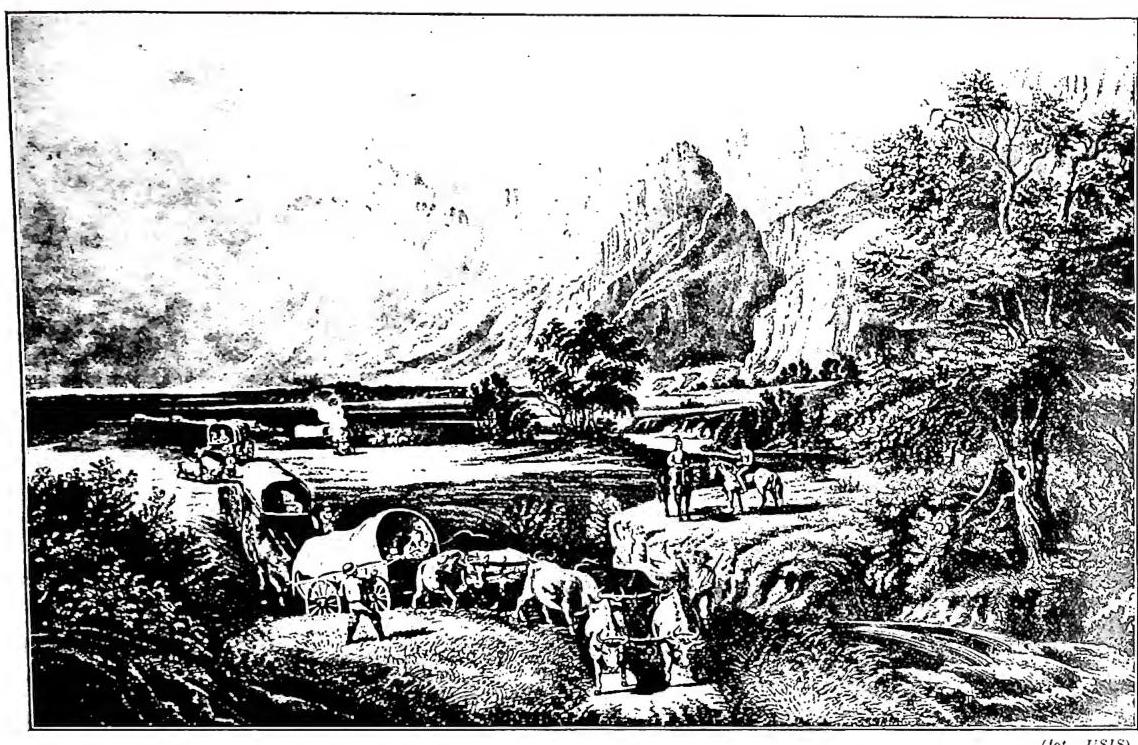
(phot. USIS) COLONIZZAZIONE - Church of Williamsburg, capital of Virginia at the time of c., built in the 18th century, reconstructed on the original plan by J. P. Rockefeller, Jr., in 1930.
(photo 1/818)
He admits the title of voluntary choice, because volenti non fit iniuria, yet in the case of the Indians he does not consider it sufficient, because the requirements for concluding a true contract of subjection are lacking owing to the immaturity of one of the contracting parties. Colonial expansion can be based only on certain universal rights, such as those of free passage, trade, and exchange, possessed by all peoples, and the violation of which by backward peoples may give rise to a just cause for subjugating them through the use of force, after peaceful means have been exhausted. He further admits as a legitimate title the salvation of innocent persons, because natural law entrusts one’s neighbour with their aid; he remains doubtful, however, concerning the title of civilization, with regard to which he was ahead of his time, proposing for the attainment of this end a system of tutelage, the terms of which have come to life again in the mandate system. The doctrine of the fathers Francesco Suárez and Taparelli differs little from that of Vitoria; it is merely more resolute in rejecting the title of civilization, maintaining that individual and social progress cannot be imposed by force, because it is not a juridical duty whose transgression can inflict injury upon others.
The theory remained in the positions described until a few years ago, when, especially in France and Belgium, an attempt was made to detach colonial expansion from the general doctrine of just war. To this end, new titles were proposed. Starting from the principle, already upheld by Vitoria, that the goods of the earth were originally given to humanity so that it might use them to attain the purposes of life and advance in progress, it was concluded that peoples are not true owners of
their territories, but merely administrators on behalf of humanity. If, therefore, their resources remain unproductive in the hands of one people, that people may justly be deprived of them by another more advanced people, so that their exploitation may contribute to the general welfare.
Two new titles were based upon this argument: the economic necessity of highly industrialized nations, in need of raw materials and commercial outlets; and expropriation for reasons of public utility. Against them it was observed that the principle according to which peoples are merely administrators of their goods is erroneous. Peoples, like individuals, are true owners, although subject to the laws governing the use of property, since the original community of goods upon which the argument relies was simply negative and not positive, and the means established by nature so that earthly goods might serve humanity consists in the division of property through the act of occupation, which binds such goods to a physical or moral person, generating a true right.
The title of civilization has also been proposed anew, basing it upon an alleged delegation which the colonizing nation would receive from the society of nations to educate the backward people. Tradition, as mentioned above, is opposed to this title. It rests upon a twofold misunderstanding: it imagines a non-existent delegation, since the society of nations, as an unorganized society, possesses neither personality nor organs for exercising powers; it leaves to the subjective judgment of the advanced nation the expediency of occupation for purposes of civilization; it forgets that one’s own perfection is not a juridical duty whose observance can be imposed by force.
More recently, appeal has been made to vital necessity. From the fact that there exist sparsely populated territories rich in resources left idle, and at the same time overpopulated nations with poor soil incapable of feeding the demographic surplus, relying upon the principle that this condition may give rise to a serious case of necessity, to which nature attaches the right to occupy another’s property within the limits of that necessity and of the right arising from it, it has been concluded that an overpopulated nation may legitimately expand into colonial territories with scant population and abundant unused resources.
Nor is this argument accepted by all. The Codice di morale internazionale rejects it, holding that emigration is the most suitable means of relieving demographic pressure and resolving the case of necessity. On the other hand, however, it has been observed that emigration is not a means free from harm for the nation compelled to adopt it, since it takes away its best elements, impoverishing it of sound and capable forces, and moreover does not solve the problem. It is clear, indeed, that a prolific people will always be tormented by demographic pressure, despite the safety valve of emigration. Finally, no natural law compels it to serve as a human nursery, dispersing its children throughout the world and forcing them to renounce the patrimony of their language and culture.
Catholic doctrine therefore remains uncertain even now concerning these latest theoretical developments, while it is unanimous in maintaining that, once the colonial territories have been occupied, c. must provide above all for the welfare of the subjugated populations. It is the duty of the colonizing State to administer the colonies in such a way as to harmonize its own advantage with the material and cultural interests of the indigenous populations, toward whom it must fulfil all the functions of public authority that provides for the common good of the country which has passed under its control. Once occupation has taken place, that is, the moral and juridical laws of sound government come into force, which in the colonial sphere are no different from those existing within the colonizing power itself. - See plate I.
#### COLONIZZAZIONE INTERNA: V. IMMIGRAZIONE; EMIGRAZIONE.