
AFFRESCO. - This is the name given to any mural painting executed with colors dissolved in water on a thin layer of plaster that is still "fresh", generally superimposed over another much thicker and rougher layer called the arricciato. In the process of transforming calcium hydrate into carbonate, the color incorporates itself into the plaster and the painting thereby acquires durability
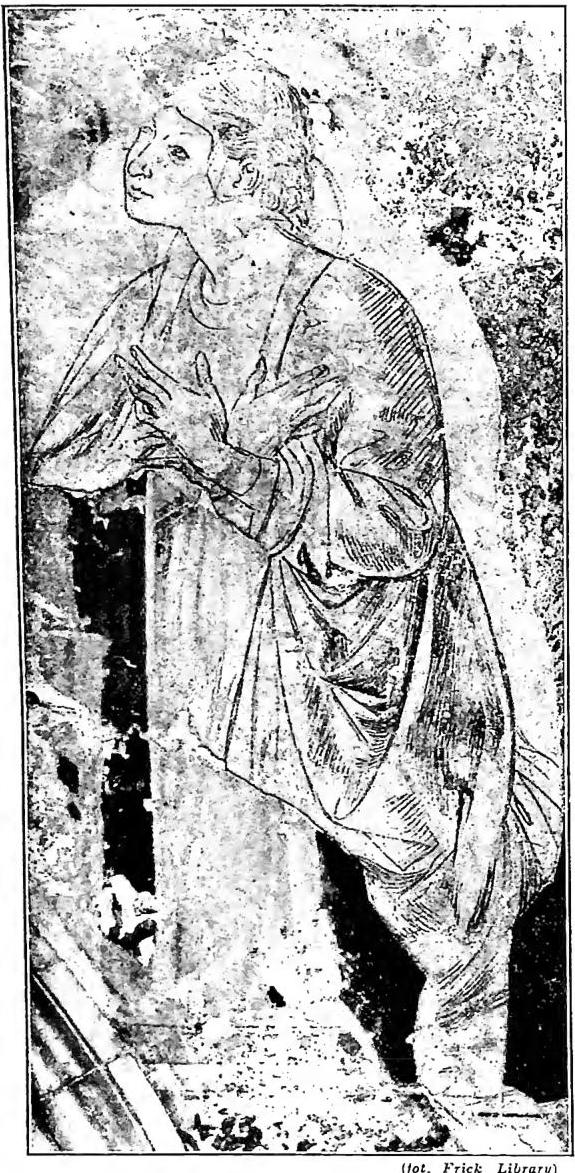
The a. of the catacombs were executed with a thick color paste, rapid juxtapositions of hues, and without
contours, according to a manner that the ancients called compendiaria, very similar to our Impressionism. Subsequently, the contours became more pronounced, defining zones that were filled with flat color. As long as Byzantine influence prevailed, that is, until the thirteenth century, the custom was to apply the darkest tint onto the plaster and bring out the half-tints and lights in light or white while the layer was still damp. Highlights applied a secco are very rare; in any case, the final glazes are quite stable because they were applied with very dense color. Through Cennini we know the technique of fourteenth-century fresco painters, who used to prepare the work in verdeterra and first work out the modeling by hatching the shadows and highlights, then finishing with flesh tones and black outlines. This manner, which allows one to achieve the luminous transparency of so many fourteenth-century works or the subtle chromatic nuances of the International Gothic, was greatly simplified by the major masters. Giotto used thick color pastes directly, and Simone Martini used broad, barely varied washes. The technique used by Masaccio was also immediate and rapid, whereas P. Uccello returned to the traditional preparation in green earth, and Baldovinetti finished largely in tempera. Leonardo's Last Supper, rather than a true a., is actually a painting executed with tempera colors on waxy stucco; hence its incurable decay. Michelangelo's technique is of surprising vigor, using very complex pastes directly and then glazing irregularly. That of Raphael is admirable, combining the body of the color with very liquid tints upon which the transparency of the tones is entrusted. Correggio, on the other hand, blocks out in body and then juxtaposes various glazes so as to obtain atmospheric vibrations. Veronese finishes with brilliant brushstrokes and draws luminosity from the juxtaposition with blacks. In the seventeenth century, the practice—already established earlier—of finishing in tempera, condemned by Vasari, spread with the aim of finding, through a dense and impenetrable, and consequently opaque, body of color, effects similar to the luminism of oil painting; examples include the Neapolitan works of Battistello or the Roman ones of Cortona, Pozzo, or
For the diseases of ancient a., restoration methods, and transfers to canvas or wire mesh,