
ABSIDE - 1. Manoppello, S. M. d'Arabona (13th century). (Gavini, St. dell'Arch. in Abruzzo). - 2. Chiusi, S. Vittore (11th century). (Toesca, St. dell'arte ital.). - 3. Sampierdarena, S. Bartolomeo (12th century). (Toesca, op. cit.). - 4. Porto, Basilica of the so-called Xenodochium of Pammachius (4th century). (Rivoira, Origini dell'Arch. lombarda). - 5. Bari, Duomo (12th century). (Toesca, op. cit.). - 6. Como, S. Fedele (11th century). (Toesca, op. cit.). - 7. Carignano, SS. Giov. Battista e Remigio (18th century). (Brinchmann, Baukunst des 17. u. 18. Jahrh).
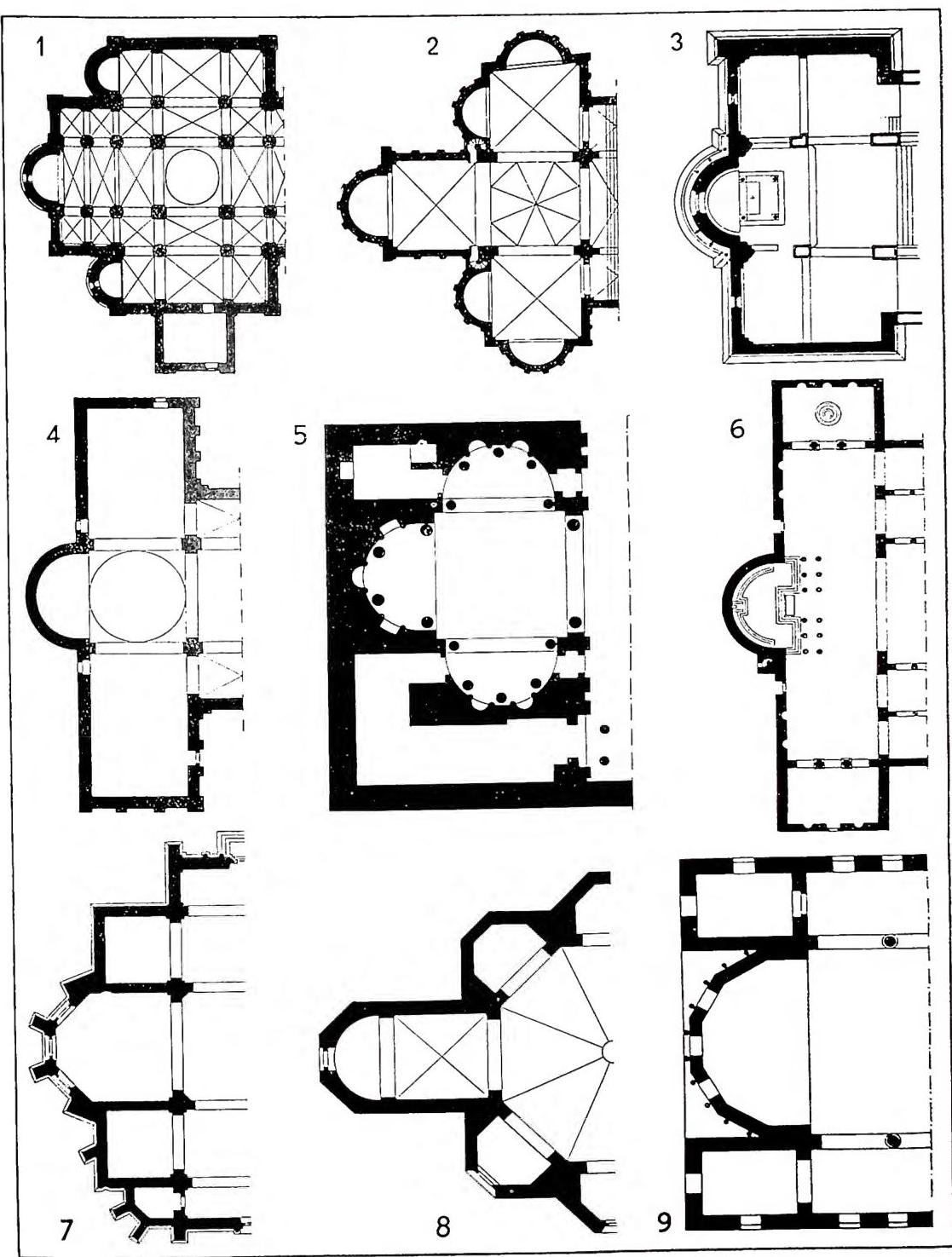
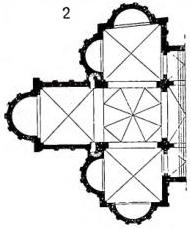
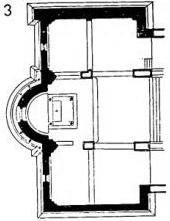
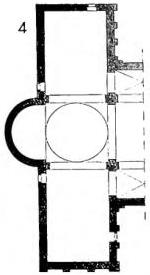
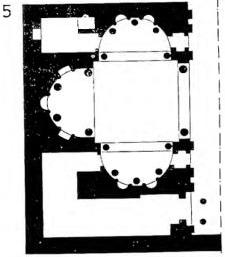
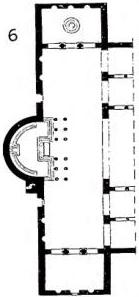
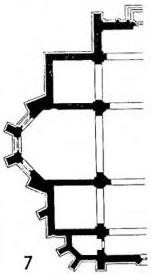
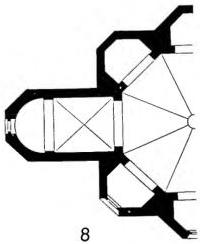
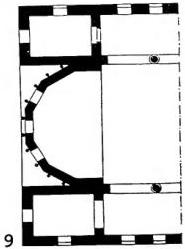
ABSIDE - 1. S. Maria di Portonovo (sec. XI). (Toesca, op. cit.). - 2. Parma, Cattedrale (sec. XI). (Toesca, op. cit.). - 3. Castiglione a Casauria, S. Clemente (sec. XII). (Gavini, op. cit.). - 4. Pisa, S. Paolo a Ripa (sec. XII). (Toesca, op. cit.). - 5. Egitto, Basilica del Convento Rosso (sec. V). (Wulff, Altchr. u. byzant. Kunst). - 6. Roma, antica basilica di S. Pietro (sec. IV). (Wulff, op. cit.). - 7. L'Aquila, S. Domenico (sec. XIII). (Gavini, op. cit.). - 8. L'Aquila, S. Bernardino (sec. XV). (Gavini, op. cit.). - 9. Basilica di Turmanin (sec. V-VI). (Wulff, op. cit.).
3. CONTEMPORARY ART
When it is not suppressed due to a changed conception of space and new construction systems, in the modern age the a. often takes on its own monumental character, returning to assume a predominantly scenographic importance, in relation to the urban complex in which it is situated.Sometimes there is an element in it that appears to be a simplification of Romanesque decorative details, but the building materials used are generally exalted for their own sake. The presence of windows depends on the interior lighting system, and they may even be absent when, as in many Italian or foreign examples, the rear of the church is left in semi-darkness, concentrating the light in the naves.
Particular construction materials and functional requirements (acoustics, lighting, etc.) that contemporary architecture values as formal elements suggest particular forms tied more to the general taste governing various current trends than to the peculiar character of the a. in the traditional sense.
V. ARCHITETTURA ECCLESIASTICA
Vedi Tavv. XI-XII-XIII-XIV.Guglielmo Matthiae
"ABSTINENTES": V. ENCRATITI.