
BELLINI. — A celebrated family of painters to whom, essentially, the renewal of Venetian painting from the beginning of the fifteenth century to the first years of the sixteenth is owed. Its founder was Jacopo, born, it seems, in the early years of the fifteenth century and already mentioned in 1424 as a painter and pupil of Gentile da Fabriano. Jacopo was a friend and father-in-law of Mantegna, to whom he gave his daughter in marriage in 1453. He was still alive on 17 January 1470, but had already been dead for some time by 23 November 1471. His major works have been destroyed: among those that remain, we may mention the Christ on the Cross in the civic museum of Verona, poorly preserved; the Madonna and Child in the Accademia Gallery in Venice, still rigid and with Gothic reminiscences in the ornamentation; the Madonna and Child in the Tadini Gallery at Lovere, inspired by Gentile da Fabriano; the Madonna and Child in the Uffizi, in which hieratic solemnity is moderated by the human gesture of teaching the son the gesture of blessing; and the Madonna from the church of Legnaro near Padua, now in the Accademia in Venice, in which the influence of his son Giovanni seems perceptible. The Madonnina in the Brera Gallery is dated 1448.
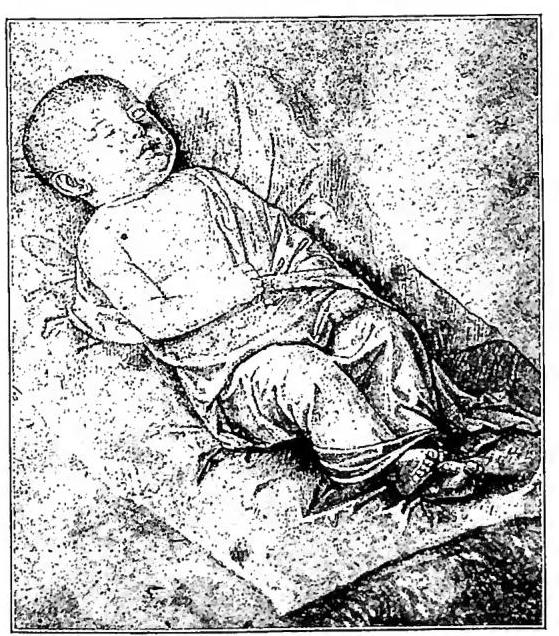
The works preserved by themselves would not be sufficient to enable us to understand Jacopo’s art and his importance in the development of Venetian painting, were it not for his two books of drawings, one in the British Museum in London and the other in the Louvre, perhaps prepared by him for his sons. These drawings reveal that Jacopo was truly the initiator of the new Venetian painting: they contain studies of figures and movements, landscapes, and architectures partly drawn from life, in which Gothic and antique elements mingle. The artist was especially skilled at rendering the atmosphere, preparing the way for one of the most notable achievements of the great Venetian school of painting.
GENTILE, son of Jacopo, born in Venice, almost certainly in 1429, and died there on 23 February 1507. He followed his father’s art and was influenced by his brother-in-law Mantegna, as can be seen especially in the organ shutters now in the museum of the Opera di S. Marco. His first dated and signed work, from 1465, is the large tempera painting representing the Blessed Lorenzo Giustiniani, now in the Accademia in Venice. The Saint is shown in profile with sharply defined contours. This painting displays Mantegnesque reminiscences and those realistic tendencies that would assert themselves in the portraits, in which the artist was highly accomplished. Famous is the Portrait of Maometto II (London Gallery), which Gentile painted at the invitation of that sultan in 1479.
One of the three teleri executed for the confraternity of S. Giovanni Evangelista is dated 1496: the Procession of the Relic of the Cross in Piazza S. Marco. This painting displays Gentile’s skill as a view painter of documentary exactness: the square is represented scrupulously, with all the details of its buildings, so much so that on the façade of S. Marco we can discern all the original mosaics in their proper places. Although the artist strives to render movement and to break up the uniformity of the procession by varying the figures’ attitudes, as can be seen in the bearers of the baldachin, his figures nevertheless—including some painted with portraitistic intent—remain awkward and uncertain in their movements. For the same confraternity, Gentile painted in 1500 the Discovery of the Relic in the Canal, also interesting as a view, in which perspectival uncertainties and a certain archaism in the figures persist. The third canvas, dated 1501, represents the Miracle of the Liberation of Pietro da Lodovico from Fever. In the Preaching of S. Marco in the Brera Gallery, the intervention of his brother Giovanni serves to impart movement and unity to the scene. Gentile marks a kind of transition between the Flamboyant Gothic style and Mantegna’s Renaissance; he seeks to represent the crowd, but fails to interpret it as a unified whole because of the pedantic symmetry and rigidity of his immobile rows of figures.
GIOVANNI (called Giambellino), Gentile’s brother, born in Venice around 1429; first mentioned in 1459; died on 20 November 1516. The dates
of his fifteenth-century works are uncertain. Already in his earliest paintings, which, like almost all his others, were religious in subject, his predilection for pictorial effect is revealed (for example, the Madonna holding the sleeping Child on her knees in the Accademia in Venice). During the second period of his activity, he was receptive to the influence of Mantegna, as shown by several Madonnas and the Transfiguration in the Correr Museum, in which the figures are rough and betray the effort to render relief, while Giambellino’s characteristic pictorial quality is visible only in the background. Equally Mantegnesque is the Agony in the Garden in the London Gallery, but the landscape has a broader expansiveness, the chiaroscuro is painterly and the lights are no longer harsh; the Apostles, although displaying Mantegnesque foreshortenings, are more human, the landscape is airy, and the entire painting presents greater variety and freedom. More closely attuned to religious inspiration than Mantegna, the artist appears in the Pietà of the Doge’s Palace in Venice, rich in tragic feeling and set against a landscape background. The Pietà in the Poldi Pezzoli Museum in Milan still retains traces of Mantegnesque squaring, but the light and chiaroscuro soften the contours; likewise, in the Crucifixion in the Correr Museum, the originality of the luminous landscape and the diffused light make one forget the mannerisms not yet abandoned. In the Pietà of the same collection, the figure of Christ splendidly conveys, without harshness, the abandonment of death. The Pietà in Brera marks a further advance, both because of the greater freedom of composition and because of a deeper expressiveness.
In the Transfiguration in the picture gallery of Naples, Mantegna is almost forgotten; the landscape predominates, and a luminosity is diffused throughout the painting, becoming more intense in the central figure of Christ. The Madonna in the Bergamo Gallery already anticipates the type of his most celebrated Madonnas.
The series of the great altarpieces begins with the altarpiece of S. Giobbe, now in the Gallery of Venice, in which the composition unfolds broadly and the sense of colour is already almost tonal. The celebrated altarpiece in the sacristy of the Frari, signed and dated 1488, shows a further advance in the power of the colouring. Mantegnesque traces can still be noted in the altarpiece of S. Zeno, but there the artist increasingly humanizes the divine figures, so much so that the Virgin appears above all imbued with maternal feeling. The colourism that would produce the great century of Venetian painting is already fully formed here: a light warm as old gold rises from the painted apse within which the Virgin is enthroned and causes the colour of the saints, in a coppery tonality, to emerge with still greater force.
The Sacred Allegory in the Uffizi is a mystical fantasy in which Tiziano is foreshadowed in the landscape, while the gradation of the colours and the softness of the transitions initiate tonal painting (v. VENEZIA, ARTE di). The same softness of the chromatic transitions, together with a uniformly blended colouring, is found in the Madonna with Two Saints in the Gallery of Venice; and it intensifies in the justly celebrated Madonna degli alberetti in the same gallery, especially in the face of the Virgin, which almost loses the sharpness of its contours.
In the altarpiece of S. Zaccaria, signed and dated 1505, the painter returns to the manner of that of S. Giobbe, but at the sides he represents patches of sky and small trees. In the S. Girolamo with S. Agostino and Cristoforo in the church of S. Giovanni Crisostomo in Venice, signed and dated 1513, Giambellino rivals Giorgione, so much so that
For Giambellino, beauty and piety are identified and united to form a perfect work of art. - Vedi Tavv. LXXV-LXXVI.