
HONOLULU. - Capital (300,000 inhab.) of the Polynesian archipelago of Hawaii (about twenty islands, of which 8 are major; altogether 17,000 sq. km.), which has been an unincorporated territory of the United States since 1900.
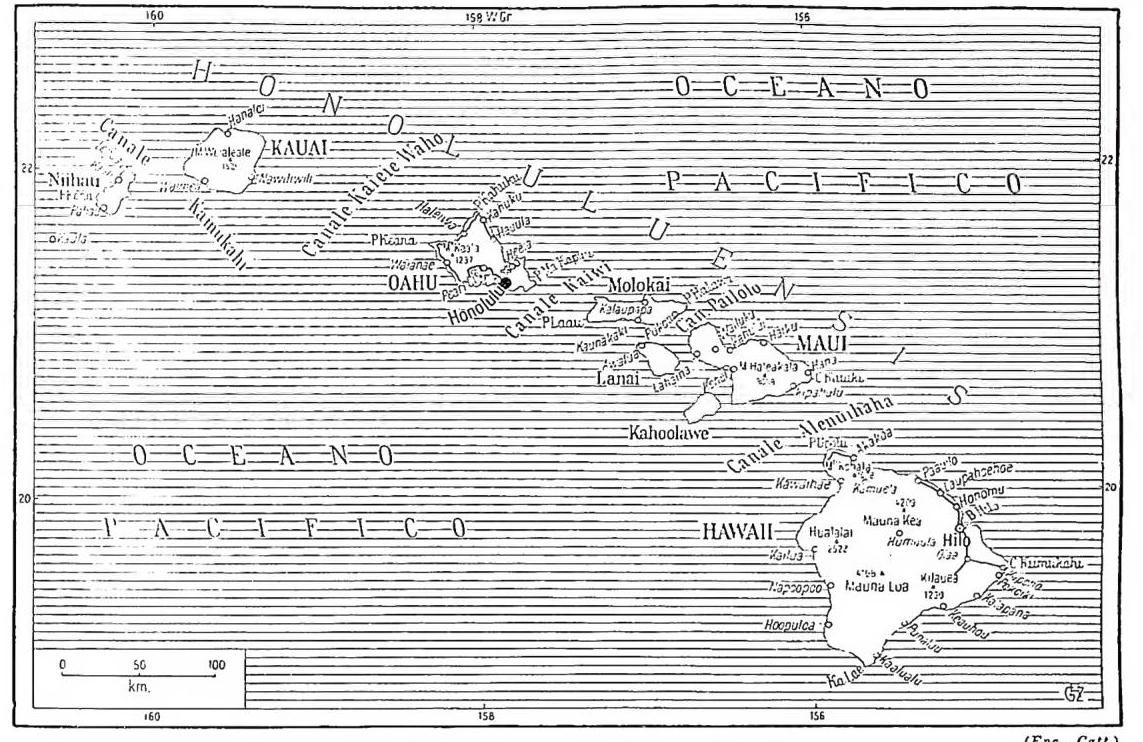
(Enc. Catt.)
DIOCESE of H. - The first to evangelize the Sandwich or Hawaiian Islands were the missionaries of the Society of the SS. Hearts of Jesus and Mary of the Belgian religious province, led by Fr. A. Bachelot who had been appointed apostolic prefect on Dec. 3, 1825. But at the end of 1827 the missionaries were expelled and deported to California. By apostolic decree of May 20, 1833, the mission of the Sandwich Islands became the basis of the apostolic vicariate of Polynesia or Eastern Oceania, still entrusted to the aforementioned missionaries.
The apostolic vicariate of the Sandwich Islands was erected on Aug. 13, 1844. On Jan. 25, 1941, the diocese of H. was erected as a suffragan of San Francisco.
The diocese has an area of 20,480 sq. km. with a population of 522,000 inhabitants, of whom 145,000 are Catholics (1948); it has 105 churches, 4 chapels, 60 missions, 50 parishes, 5 diocesan and 113 regular priests; 5 male and 8 female religious communities; a diocesan seminary, 6 high schools, 20 parochial elementary schools; in 1946 there were 635 conversions.
The Cathedral is dedicated to Our Lady of Peace.