
ANNUNCIATE, (ANNUNCIADE) ORDER OF THE. — The Order commonly known by this name is that of the contemplative religious women founded at Bourges by the Blessed Joan of France (J. of Valois, 1464–1505), daughter of Louis XI, King of France, and of Charlotte of Savoy, with the cooperation of Fr. Gabriel Maria (Gilbert Nicolas, 1462–1532). The first rule, the only one known to the foundress, approved by Alexander VI on 12 Feb. 1502, was clearly inspired by the type of double monasteries of the Order of Fontevrault, and set as its program of life the imitation of the “ten joys and virtues” of the Virgin. The second rule (22 May 1515) and the third (29 Aug. 1517) abandoned the principle of double monasteries, but continued in the program of imitating the virtues of the Virgin. The official title “Order of the Virgin Mary” assumed by them never supplanted the common denomination: “Order of the Annunciation.” The nuns are still known today by the name of “Annunciates.” They are also called “Red Annunciates,” to distinguish them from the “Blue or Turquoise Annunciates,” founded at Genoa by Vittoria Fornari in 1634. At the death of the foundress (5 Feb. 1505) the Order had only the monastery of Bourges; it numbered nine at the death of the co-founder Fr. Gabriel (1532) and about fifty at the beginning of the French Revolution.
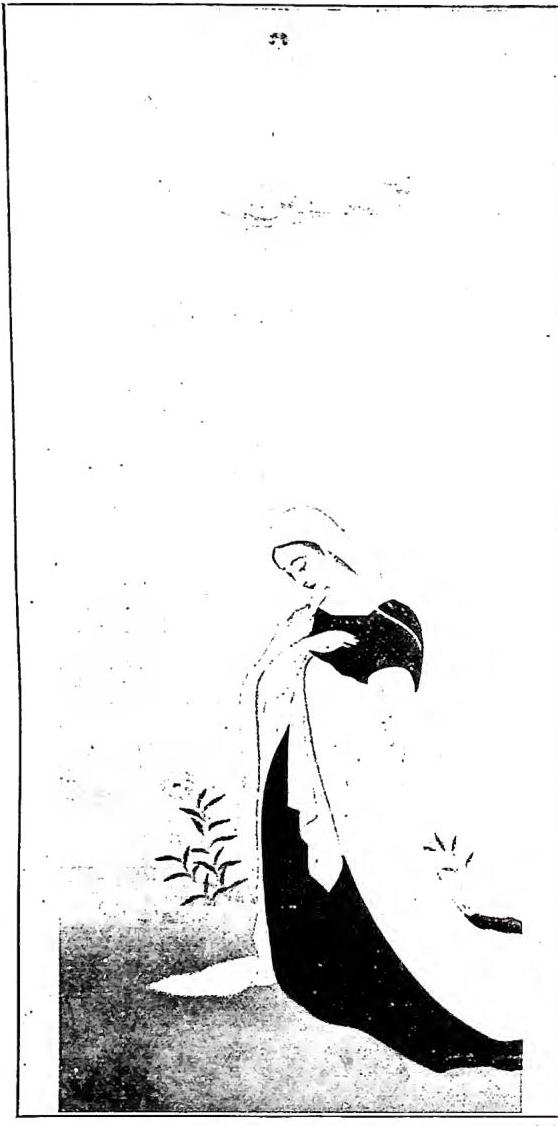
Founded in France by a daughter of the King of France, the Order had spread only to that country and its neighbors: Belgium, the Netherlands, the Rhineland, and Westphalia. The Revolution dispersed all the communities, with the exception of that of Tirlmont, which, though changing its residence several times, managed to survive. Of the other monasteries, only two were reopened: that of Villeneuve-sur-Lot in 1816, and that of Boulogne-sur-Mer in 1818 (the latter moved to St. Margaret’s Bay, England, in 1903). Other foundations were later made at Geel and Merksen, Belgium, in 1853 and 1883, and at Thiais in 1925. The Order of the Annunciation is composed of autonomous monasteries. At first the houses were under the jurisdiction of the major superiors of the Order of Friars Minor, but in the 17th century many obtained permission to pass under the jurisdiction of the diocesan bishops. This perhaps explains the halt in its expansion. Indeed, from 1657 to the Revolution there were no new foundations, whereas there had been 34 between 1600 and 1657. The constitutions approved in 1932 placed all monasteries under the jurisdiction of the bishops, leaving to the Friars Minor the canonical visitation in the name of the bishop.
ANNUNCIATE, KNIGHTLY ORDER OF THE HOLY MARY. — The Supreme Order of the H.M.A., among the oldest in Europe, was the highest honor of the monarchy of Savoy. Founded by Amadeus VI in 1364 under the name of the Order of the Collar, it became a religious-military sodality, according to the usage of the East, when the founder hastened in 1365 to Constantinople to aid his cousin John V Palaeologus. It is dedicated to the Virgin, and thus the knights, who represent the fifteen mysteries, are bound to common prayers, entitled to common suffrages, while in the charterhouse of Pierre Châtel, established as the Order’s church by the will of the Green Count, fifteen Fathers will pray for the living and deceased knights. The Order of the Collar later changed its name to that of the “Collar of the A.” with the statutes of Charles III the Good.
The first statutes drawn up by the founder have been lost. The oldest now extant are therefore those of Amadeus VIII of 1409, in 14 paragraphs written at Châtillon, to which four more were added in 1434. They prescribe faithful service to the prince, mutual aid even of a spiritual nature, and arbitration for any dispute among the knights. On 13 Sept. 1518 Charles III, who may be considered the second founder and principal legislator of the Order, increased the number of knights from fifteen to twenty, “without stain,” adding to the memory of the fifteen mysteries of the Madonna that of the five wounds of Jesus. On 18 Oct. 1577 Emmanuel Philibert excluded from the twenty the Grand Master and the hereditary prince, prescribed Catholic orthodoxy and nobility tracing back to ancestors, granted the right to the Senate, financial and judicial exemptions, and subsidies: privileges confirmed in 1620 by Charles Emmanuel I (who in 1607 transferred the Order’s church from Pierre Châtel, which had passed to France, to the Camaldolese of Turin) and then by Charles Emmanuel II. Charles Albert in 1840 renewed the statutes, confirming the character and privileges of the Order, but abolishing those of a tributary and forensic nature, and established its religious seat in the charterhouse of Collegno. Victor Emmanuel II in 1869 removed the noble exclusivity, requiring for admission exceptional services in high state offices; and Victor Emmanuel III, with the reform of 1924, did not include in the twenty knights the Sovereign Grand Master, the hereditary prince, ecclesiastical dignitaries, or foreigners.
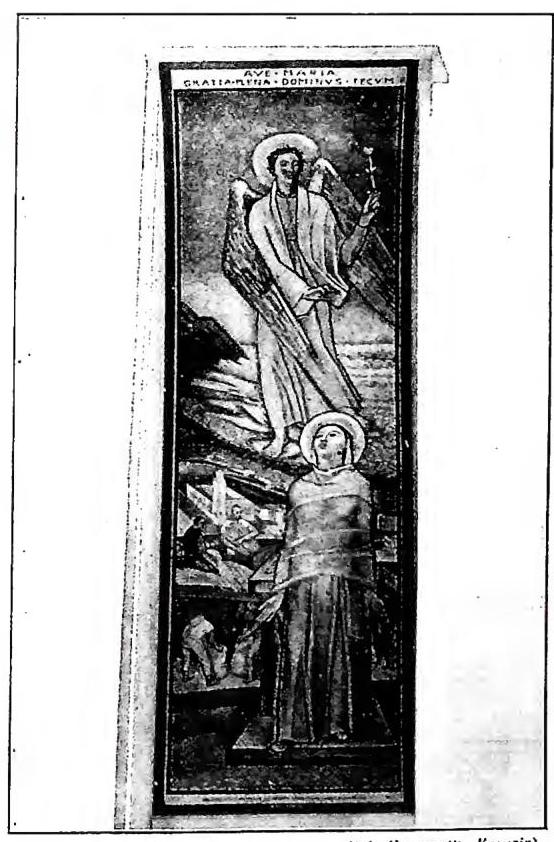
The insignia were initially fifteen collars of gilded silver dog-collars, purchased by Amadeus VI from a goldsmith in Avignon, and whose clasp consisted of three love-knots with the double knot, with the motto “F.E.R.T.” In 1518, after adopting the personal collar of Charles I, formed of fifteen knots alternating with as many white roses, Duke Charles III appended to it a medallion with the openwork image of the Annunciation of Mary, to which the Order was dedicated, preserved to this day as the great ceremonial collar, to be worn with a gold plate affixed to the left side of the breast, also gilded, bearing the effigy of the A. in a frame of flames; commonly replaced by a small collar of simpler form. The habit is of amaranth color, embroidered in silver, lined in blue. The mantle, prescribed by Charles III, is fashioned after that of the Golden Fleece. The knights have the title of “Excellency” and “Cousin” of the sovereign king; they take precedence over state officials, immediately after the cardinals, with the right to military honors. The collars, on which
The earliest statutes issued by the founder have been lost. The oldest ones now extant are therefore those of Amadeus VIII from 1409, consisting of 14 paragraphs written at Châtillon, to which four more were added in 1434. They prescribe faithful service to the prince, mutual aid—even spiritual—and arbitration for every dispute among the knights.
On 13 September 1518, Charles III—who may be considered the second founder and principal legislator of the Order—increased the number of knights from fifteen to twenty, “without stain,” and added to the commemoration of the fifteen mysteries of the Madonna that of the five wounds of Jesus. On 18 October 1577, Emmanuel Philibert excluded the Grand Master and the hereditary prince from the twenty, prescribed Catholic orthodoxy and nobility tracing back to ancestors, and granted the
names of successive holders were engraved, and they revert upon the knight’s death.
The feast of the Order is celebrated on 25 March, the solemnity of the Annunciation of the Blessed Virgin Mary.