
CHRISTIAN ARCHAEOLOGY. – Etymologically, it is the science of ancient things (λόγος τόνος ἀρχαίων).
Summary:
I. Concept
II. Object, method, divisions
III. Importance and usefulness
IV. Sources, aids, criticism
V. Topography
VI. Particular questions and approaches.I. Concept
The word was used frequently from the time of Thucydides onward. Dionysius of Halicarnassus published in 7 B.C. his *Roman Antiquities* (*'Ρωμαϊκή Ἀρχαιολογία*), that is, ancient history of Rome, and in the same sense Flavius Josephus entitled his work on the ancient history of the Jews *Jewish Antiquities* (*'Ιουδαϊκή Ἀρχαιολογία*). The Latins used the term in that broad sense, and thus Varro’s work *Antiquities of Human and Divine Things* (*Antiquates rerum humanarum et divinarum*) was a history of sacred and profane antiquity. For the Latins, however, *antiquarius* was synonymous with *librarius* (lover and copier of old books). Throughout the Renaissance and Baroque periods, only the Latin terms *antiquitates* and *antiquarius* were used to designate the study of antiquity, but in a very broad sense and increasingly including the science of institutions and monuments. It seems, however, that as early as 1685 Giacomo Spon, in the preface to his *Miscellanea eruditae antiquitatis*, had the precise idea of a special science which he called *archaeographia* and defined as “the knowledge or study of ancient monuments by which the ancients sought to propagate among posterity their religion, history, politics, and other arts and sciences.” He also proposed a division of this science into various branches, but it did not gain acceptance.In the 17th century, the use of the Greek term *archaeologia* was revived in England (e.g., *Archaeologiae Atticae* by Rous in 1637), and in 1770 the Society of Antiquaries of London began publishing the periodical *Archaeologia*. In 1799, the first *Manual of Archaeology* (*Handbuch der Archaeologie*) by J. F. Siebenkees appeared in Nuremberg. Up to this point, the term *archaeologia* still retained the general sense of the study of all antiquity, both literary and monumental.
With the reconstitution of the *Pontifical Roman Academy of Archaeology* by Pius VII in 1816 (previously called the *Roman Academy of Antiquities and History*), the term *archaeology* came to designate in practice the study of monuments in contrast to that of written documents. This concept was later theoretically affirmed by Gerhard in his *Grundzüge der Archaeologie* (*Principles of Archaeology*) in 1833.
He defined archaeology as “that half of the universal science of classical antiquity which is based on monuments,” in contrast to the other half, based on literary documents. According to this definition, Christian archaeology (*a. c.*) would be “the science of Christian antiquity according to non-literary monuments.”
It need only be noted that today archaeology is sometimes confused with “history of ancient art,” whereas the object of the history of art is the works of man insofar as they exhibit artistic qualities. In Germany, since the 18th century, the term “archaeology of the history of art” has been used to denote the study of material objects (*realia*) which must be considered in the history of art.
II. OBJECT, METHOD, DIVISIONS
*The material object* consists of all those ancient artifacts which can reveal something about Christian antiquity. They may also be pagan (i.e., works by non-Christians), such as the inscription of Ari-canda (q.v.) and the Arch of Constantine; or syncretistic or simply heretical works may be judged with even greater reason. Often they are inscribed monuments; of this kind, Christian archaeology excludes from its field only monuments written on paper, parchment, and papyrus, and those which have a distinctly literary character (such as the *Res Gestae* of Augustus inscribed on the Temple of Ankara and the epistle of St. Athanasius *Ad monachos* preserved as a painting in an Egyptian hermitage), leaving these to philology as its proper domain. *The formal object* of Christian archaeology is the study of these monuments insofar as they can reveal something about the life and culture of ancient Christians as such. The study of monuments which, even if Christian, have nothing specifically Christian about them (such as the basilica and the baths of Constantine) or which illustrate ancient life in general rather than as Christians belongs instead to pagan archaeology in general.Literary documents often enter indirectly into the study of archaeology insofar as they provide information about monuments or aid in their proper understanding. In this sense, they may be considered auxiliary sources of archaeology.
The direct or principal sources are above all the buildings of worship, funerary monuments, many objects of domestic use, and those of liturgical use. Their study focuses especially on topography, architecture, iconography, epigraphy, and usage.
The method for the study of Christian archaeology is that proper to historical and philological sciences. It begins with the search for monuments through topographical studies and the practice of excavation; the proper study then concerns the authenticity of the monument, that is, its ancient origin, its original purpose, its meaning and age, and finally its preservation and possible restoration. This applies both to individual monuments and to entire classes or complexes of monuments. The proper aids are bibliographies and archaeological inventories.
There are various divisions. Spon, already cited, recognized great freedom in this field and stated: “To me it seems that eight principal subjects must be established, corresponding to eight branches: coins (*numismatographia*), stones (*epigrammatographia*), buildings (*architectonographia*), statues (*iconographia*, which describes statues, paintings, and mosaics), reliefs (*toreumatographia*), manuscripts (*bibliographia*), and all kinds of instruments (*angeiographia*).”
Today the most common divisions are geographical (eastern and western; of Italy, Africa, Gaul, etc.) and intrinsic divisions according to the various branches into which this science is subdivided for the convenience of study (architecture, sculpture, painting, epigraphy, topography, glyptics, numismatics, etc.).
The question of the chronological limits of our science is much debated. The first masters and founders of the discipline (De Rossi, Garrucci, Kraus) and many others have held that it should end with the 6th century. Le Blant extended it a century further in his collection of Christian inscriptions of Gaul; others propose the year 726, when the iconoclastic controversy broke out. In our view, although the problem deserves a somewhat different solution according to the various branches of Christian archaeology, the limitation proposed by De Rossi should nevertheless be considered more accurate. With the death of Gregory the Great in 604, the ancient period in its cultural and artistic manifestations truly comes to an end in the West, and in the East the last impulses of the powerful Justinianic renaissance fade, while the Arab invasion soon marks a decisive turning point.
### III. IMPORTANCE AND UTILITY
The importance of Christian archaeology within the framework of specialized studies, particularly sacred ones, is evident from what has been said. The role of monuments in understanding antiquity is often decisive, especially regarding private life and the evolution of a people’s artistic qualities. Institutions and major public events also frequently receive striking illustration or at least highly significant topographical clarification. For these general reasons, archaeology has always been held in the highest regard by ecclesiastical authorities, repeatedly praised and encouraged—especially from the late 18th century onward—and actively promoted. Consider, for instance, the establishment of a museum of Christian archaeology (1757), the Pontifical Roman Academy of Archaeology (already mentioned), the Pontifical Commission for Sacred Archaeology (1852)—the official body for excavating and preserving ancient monuments—and, above all, the grand patronage of Pius IX in support of De Rossi’s work on excavating and illustrating Rome’s great cemeteries. These traditions were later revived by Pius XI, who, with substantial resources and through the *motu proprio* of December 1, 1925, founded the Pontifical Institute of Christian Archaeology (v.) and revitalized the two older pontifical institutions, the Academy and the Commission.
This keen interest in Christian archaeology is particularly explained by its recognition as a science of great apologetic value. The monuments of early Christianity, Pius XI states in the aforementioned *motu proprio*, “are witnesses, equally venerable and authentic, of the faith and religious life of antiquity, and at the same time, sources of the highest order for studying Christian institutions and culture from the earliest apostolic times.” However, one should not entertain the illusion that such monuments can provide a complete apologetic for all the Church’s dogmas. Although since the second half of the 18th century Christian archaeology has often been studied with a view toward a theology based on monuments—and various works have even been attempted in that direction—it remains certain that neither ancient Christians intended nor were able to express the majority of dogmas in inscriptions, paintings, or sculptures. The monuments attest only to those truths that were naturally expressed in funerary contexts; to seek others is generally highly speculative or at least devoid of secure results.
It must never be forgotten that the true sources of Christian doctrine are quite different: the living magisterium of the Church, Scripture, and the writings of the Fathers. Monuments, in general, are more an illustration of articles of faith than a *locus theologicus*. Nevertheless, it cannot be denied that Christian archaeology can provide genuine proofs for certain Catholic theses, such as immediate judgment and retribution after death, the communion of saints, the efficacy of prayers for the dead by the living and vice versa, the existence of purgatory, the cult of saintly martyrs, the coming of St. Peter to Rome and his preeminent position in the Church, and the very ancient use of certain Sacraments like Baptism and the Eucharist. In this matter, however, expressions must be weighed carefully, for in the general religious syncretism of the pre-Nicene era, one risks mistaking terminology that is also characteristic of Stoic, Neoplatonic, or mystery religions for specifically Christian dogmatic language. Every name, every epithet, every inscription revealing noble religious sentiment is often taken as a Christian monument; every tomb marked by some singular sign is presumed to be that of a martyr. Christian symbolism, like the exegesis of certain theologians and preachers, becomes an art of extracting from any monument whatever one wishes. Since too much attention is often paid to external resonances rather than the true meaning of a monument, one is content with probabilities and seems more concerned with amassing than with discerning, more with multiplying so-called proofs than with weighing them. This difficulty, so evident in older archaeological apologetics, is not absent from even the most modern treatments of this kind.
### IV. SOURCES, AIDS, AND CRITICISM
The primary sources for archaeological studies would be the monuments themselves; however, these are more properly considered the object of study, while the term “sources” refers to ancient literary documents that aid in their interpretation. Among these are the Acts of the Martyrs, especially Roman ones, which provide much generally reliable information about their tombs and shrines; the same applies to calendars and various related documents that were compiled in the extensive *Martyrologium Hieronymianum*, often offering useful topographical details. Some information can also be gleaned from liturgical books such as sacramentaries and lectionaries. The writings of the Fathers are of immense importance, as they often describe churches and their decorations (e.g., Eusebius on Constantinian buildings, Prudentius on many Spanish and Roman monuments, Paulinus on Nola, etc.). Particularly valuable is the official biography of the Popes (*Liber Pontificalis*), an inexhaustible source of information on the churches and cemeteries of Rome.
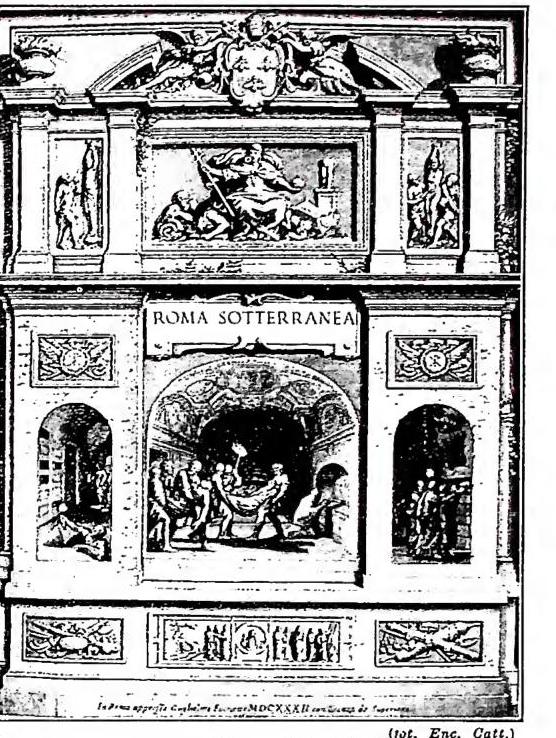
From the 4th century onward, those who traveled as pilgrims to the famous shrines of Christendom, especially in the Holy Land and Rome, left curious accounts of what they observed. Beginning in the 6th century, alongside these so-called itineraries, collections of monumental and hagiographical inscriptions also began to be compiled. These were partly copied and confused with one another in various ways, surviving alongside the itineraries.
In the 11th century, the famous dispute over precedence in dignity between the Vatican and Lateran basilicas gave rise to several valuable descriptions of them, such as the *Liber de sanctis sanctorum*, the *Liber de ecclesia Lateranensi*, and the description of St. Peter’s by Peter of Manlio, which includes the first index of Rome’s catacombs in nineteen entries. Also from this century are the various editions of the *Mirabilia Urbis Romae*, a very elementary guide to Rome that also includes a chapter on cemeteries. Parallel to these developments in the West, descriptions of monuments in Syria and Palestine emerged in the East, including guides or itineraries by the monk Epiphanius (9th century), John Phocas (11th century), Perdiccas of Ephesus (14th century), Daniel of Smyrna, and another anonymous writer of the 15th century. The city of Constantinople, in turn, was illustrated by special works on its monuments as early as the 6th century: Procopius (*De aedificiis*) and Hesychius of Miletus (*Patria Constantinopolis*), followed in the 9th century by the vast topographical-descriptive compilation of the Pseudo-Codinus (*Patria Constantinopolis*) and in the 10th by the highly useful *De Ceremoniis* of Constantine Porphyrogenitus. This genre finds a certain counterpart in Rome with the canons of the *Beneventan* Order of St. Peter at the beginning of the 12th century.
Among the aids for the study of Christian archaeology, the practice of excavation remains the most valuable; nothing is more instructive or can replace II. Excavations are usually incidental, rarely conducted with a predetermined plan; in the latter case, they can be quite dangerous if pursued with a preconceived thesis.
Monuments once discovered should, if possible, be suitably arranged where they were found; if moved elsewhere, they generally lose much of their eloquence. When this is not feasible, especially due to lack of security, they are usually transferred to museums; but in such cases, it becomes all the more necessary to keep a careful excavation log and an exact catalog of individual objects with their provenances. Many monuments in our museums have lost much of their significance precisely because they lack proper identification. For those who are too far from museums or when monuments cannot be transported, photography, surveys, casts, and scale reconstructions now serve as excellent substitutes for personal study. Plaster casts are especially recommended for sculptures, while those made of drying paper or polished casts are better suited for inscriptions. In any case, they must always be accompanied by an accurate on-site description. Unfortunately, it is often forgotten today that direct study of originals cannot be replaced without significant drawbacks to scholarship. Nevertheless, such collections of casts, photographs, etc. (as those attached, for example, to the University of Berlin and the École des Hautes Études in Paris) offer great advantages for teaching. Other powerful aids include specialized libraries such as that of the Pontifical Institute of Christian Archaeology, congresses (the fourth held in Rome in 1938), and combined teaching courses for the training of specialists (as at the aforementioned Pontifical Institute in Rome). Two highly useful initiatives also exist in Rome: the Pontifical Academy of Archaeology, which in practice deals predominantly with Christian matters, and the Society for Christian Archaeology Conferences, aimed at fostering the exchange of views among specialists.
Archaeological criticism often begins with authenticity, namely the examination of the antiquity of an object itself. Many coins and small objects, especially valuable ones, were counterfeited in past times in Italy, and it is not always easy to judge the authenticity of, for instance, gems and cameos; today, objects of Oriental origin are especially counterfeited due to high demand. The most refined forgers often limit themselves to reworking pieces that are genuinely ancient. Important impressions, especially for objects that travel extensively, such as fabrics, silverware, miniatures, and the like. In the absence of historical data, stylistic arguments are readily resorted to, and the same is done when determining the age of a monument. But this often leads to a vicious circle, attributing a monument to a certain age and place based on its resemblance to others that were dated or located only on stylistic grounds. It should always be borne in mind that very similar artistic phenomena often occur in vastly different places and times, and that the location where a monument is found (unless it is in a museum or collection) is always presumed to be its place of origin until proven otherwise.
Another crucial aspect of criticism is the exegesis or interpretation of the monument, whether it is Christian or not and what its meaning is. The issue becomes complicated and often insoluble when part of it has perished, making it necessary to guess what is missing. The comparative method is generally used, and for this reason, the Christian archaeologist’s knowledge of philology and the pagan world can never be sufficiently emphasized.
V. Topography
Rome is by far the most important center, and in terms of churches, catacombs, inscriptions, institutions, and various collections, it alone rivals almost the rest of the West. Elsewhere in Italy, besides many smaller catacombs, the following are noteworthy: Naples for its large catacombs, museum, and some ancient churches; Nola for its complex of monuments in honor of St. Felix; Syracuse for its museum and large catacombs (smaller ones at Palazzolo, Modica, and elsewhere); Spoleto with the Basilica of the Savior and the nearby Temple of Clitumnus; Bolsena and Chiusi for their catacombs; Ravenna for its great 5th- and 6th-century buildings (sarcophagi and mosaics); Albenga for its baptistery; Milan for the Basilica of St. Ambrose and the complex of St. Lawrence; Aquileia for its museum and Basilica; Parenzo for its Basilica; Salona for its churches and necropolises.In France, apart from the cemeteries of Arles, only meager remains of ancient buildings or scattered groups of sarcophagi survive; in Spain, the necropolis of Tarragona and the nearby rotunda of Centcelles, similar to Rome’s St. Costanza, have proven extremely important; in Germany, the most notable monument is the cathedral of Trier; at Xanten, Mainz, and Cologne, numerous remains of very ancient churches and necropolises have been found; the museums of Berlin, Paris, and London preserve rich collections of Paleochristian objects and monuments. In the Danubian countries, we have a small catacomb at Pécs and remains of small churches (as in many places throughout the Balkans). Notable are the basilicas of Thebes, Nicopolis, Athens, the baptistery of Butrinto, and the largely preserved monuments of Corfu, Thessalonica, and Constantinople, along with their famous museums, which have only recently begun to be studied. Asia Minor is rich in inscriptions, especially in Phrygia; church ruins are found everywhere, including the grand basilicas of Ephesus and the sanctuary of St. Thecla at Meriamlik (Cilicia). Mesopotamia has become famous for the synagogue and the church with a baptistery at Dura-Europos. In northern Syria and the Hauran, ruins of a vast number of churches survive, some still standing; particularly noteworthy is the sanctuary of St. Simeon Stylites near Antioch. Palestine is exceedingly rich in remains of sanctuaries that, from the 1st century onward, almost entirely covered it; but these are now only wretched ruins or completely transformed. Better preserved are the countless figured mosaic pavements, including the famous Madaba map and many later inscriptions; we may also recall the complexes of the Holy Sepulchre and the sanctuaries of the Mount of Olives, Emmaus, Bethlehem, Mambre near Hebron, the multiplication of the loaves on the Sea of Tiberias, and the eleven churches of Gerasa. Egypt, besides ruins of monasteries that may be very ancient, preserves small catacombs near Alexandria and large necropolises at Bawiti (near Antinoöpolis, with paintings) and El-Kargeh (Great Oasis), as well as the grand complex of the sanctuary of St. Menas; a rich collection of Coptic antiquities is housed in Cairo. Cyrenaica preserves some painted hypogea and important church remains at Apollonia and Ptolemais; in Tripolitania, we find important necropolises at ‘Ain Zara and Nigilia and church ruins at Leptis and Sabratha. Tunisia has revealed countless ancient chapels and tombs, often with mosaics and inscriptions. Notable are the catacombs of Hadrumetum and the basilicas of Thelepte and Ammaedara. Carthage preserves ruins of six great basilicas and a museum rich in Christian antiquities; in Algeria, among many others, the centers of Tebessa, Tipasa, and Cuicul are noteworthy.
VI. Special Issues and Approaches
In past centuries, there was much heated debate over the “signs of the tombs of martyrs.” Today it is agreed that only those historically attested or marked by clear signs of veneration (graffiti with invocations by the faithful, ornamental work) should be considered such. Many questions also arose regarding the “origin and purpose of the catacombs”: it is now certain that they were almost all dug by Christians themselves for funerary purposes in soft limestone terrain; rarely were former sandstone quarries later adapted as cemeteries; and only exceptionally were individual pagan hypogea incorporated into catacomb complexes. Catacombs were used primarily as cemeteries and (at least underground) never as dwellings or hiding places for Christians during persecutions; public worship took place there only during the feasts of the martyrs buried within them.I. The legal title under which the Church possessed its own property—churches, houses, cemeteries—from at least the beginning of the third century is still hotly debated; it seems to have occurred through a kind of tolerated practice. What was the origin of the basilican type, which at least for us represents the first form of churches after Constantine? It was probably an adaptation of the architecture of the civil basilica (and even of sumptuous private palaces) to the practical needs of Christian worship, with few and non-essential modifications. Unconvincing is the derivation from the development of funerary mausolea; too uncertain in its monumental foundations is the attempt to trace a progressive evolution from them.
There is also talk of adapting rooms in private buildings for worship before Constantine.
2. The controversy over the first dwelling of the Apostles in Rome, the first “sedes ubi sedit Petrus,” the mysterious Ostrianum, the houses of Prisca and Pudens, and the sojourn of St. Paul have wasted much energy in discussions whose utility may well be doubted and which do not deserve to be revived.
3. Did Sts. Peter and Paul truly come to and die in Rome? Few Protestants and rationalists now raise this question, especially after the remarkable results of the excavations at St. Sebastian and St. Peter. But the problem remains open regarding the nature of the memoria in catacumbas (tradition of an apostolic dwelling? original burial? later temporary translation? or none of these?) and regarding the history of the relics of the Apostles (including their heads), nor perhaps will it ever be resolved.
A very delicate point, and one by which the competence of an archaeologist can often be tested, is that of distinguishing what is Christian from what is pagan. There is no fixed and uniform criterion, nor can one be hoped for. Special criteria must be formed according to the various materials and countries; unfortunately, the works that exist on this subject are scarce and mostly amateurish. One must also bear in mind the possibility of syncretistic or heretical productions. Unfortunately, the convenient formula or alibi of heresies has often been abused to dispose of singular monuments of uncertain origin and interpretation.
4. The problem of dating is often no less difficult. Where positive historical or epigraphic data were lacking, arbitrary procedures—one might almost say fantasies—were generally followed in the past. It was the merit of De Rossi to have established solid criteria as the basis for the study of catacombs and inscriptions; for buildings, however, we are still far from any real progress, and the consequences are felt especially in research outside and far from Rome. The same may be said for small objects of instrumentum, in which one usually indulges in vague stylistic inductions, whereas it would be advisable to do something similar to what has been achieved for the terra sigillata of the 1st and 2nd centuries; for paintings and sculptures, after the fundamental works of Wilpert, only now are we beginning to seek some more precise and positive canons.
5. The grave problem of symbolism is also still open. There is now general agreement in rejecting the method of those who, in past times as in Scripture, saw symbols everywhere in artistic productions and as a kind of cryptotheology (Wilpert, too, will still exaggerate somewhat in this sense), as well as an affectedly universal historicism (Styger). But it is very difficult to set the limits and the correct interpretation in individual cases, and often even to determine the nature of the symbolism involved—whether traditional pagan or new Christian. One must indeed remember that a rich syncretistic pagan symbolism existed, and likewise bear in mind that the Fathers of the Church in their symbolic expositions proceed in a quite personal manner or draw from strictly literary sources, instead of drawing from the common conceptions among the Christian people. In such cases, even if accumulated, their testimonies are of little value.
6. Another very obscure problem is the origin of individual iconographic themes. Iconological questions are still almost entirely in their infancy. It should finally be established how much Christians took from pagan iconography and how much they innovated on their own in individual countries and ages; even for such celebrated themes as the Orant and the Good Shepherd, no clarity has yet been achieved. It should also be determined whether and to what extent Christian artists were animated by a concern for portraiture, not so much in representations of private individuals as in those of the saints, apostles, and even of Jesus and Mary. Perhaps this problem has been given too much importance by histories of Christian art in search of novelty.
7. The dilemma “East or Rome,” posed at the beginning of this century with boldness and almost with arrogance by Strzygowski (who, however, deserves credit for having widely introduced into our studies the knowledge of Eastern monuments), has already worried, and perhaps excessively, many scholars (e.g., Kaufmann and Wulff, authors of well-known manuals). But it is fundamentally as unreasonable as the error it seeks to correct. Nowadays the sound criterion is gaining ground that no one should be a priori denied the right to sit at the table of Christian art, which should rather be conceived as one of those open-participation banquets so dear to the ancient Greeks. Rather, in these studies of artistic ontogeny, one should always maintain scrupulous care for chronology and a certain respect for geography, so as not to fall into the error of supposing, for example, that monuments of the 4th or 5th century were inspired by artistic schools of which only productions from one or two centuries later remain, or of making dependent upon one another artistic regions that were at opposite ends of the then-known world.
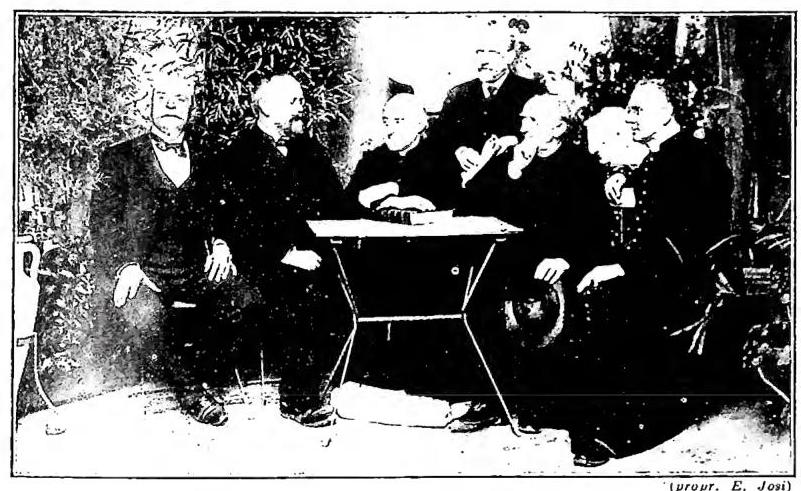
International Congresses of Christian Archaeology have always been very useful: the 1st at Spalato in 1894, presided over by F. Bulić; the 2nd at Rome in 1900, directed by L. Duchesne; the 3rd at Ravenna in 1932, presided over by G. P. Kirsch and C. Ricci, with reports on the latest discoveries relating to Christian archaeology; the 4th at Rome in 1938, presided over by P. Paschini, which dealt with places of worship.